
For most patios and decks, a hardwired outdoor speaker system like the Sonance Patio Series or Polk Audio Atrium line will outperform any portable Bluetooth speaker in both sound quality and weather survival. blank" rel="noopener noreferrer">ANSI/IEC 60529:2020 contents & scope (NEMA explanatory document) notes that NEMA/ANSI has an official publication/adoption of IEC 60529 (ANSI/IEC 60529:2020) and NEMA provides complimentary documentation that explains IP code scope, useful for precise editorial definitions of IP levels and testing implications for outdoor audio gear. But if you rent, move seasonally, or just want something working this weekend, a portable unit like the Sonos Move 2 (IP56, ~24 hours battery, Bluetooth 5.3) or JBL Charge series gets you there without a single wire. The right answer depends on how permanent your setup is, how large your outdoor space is, and whether you want a professional installer or want to do it yourself.
Bluetooth Patio Speakers Reviews: Best Picks & Buyer's Guide

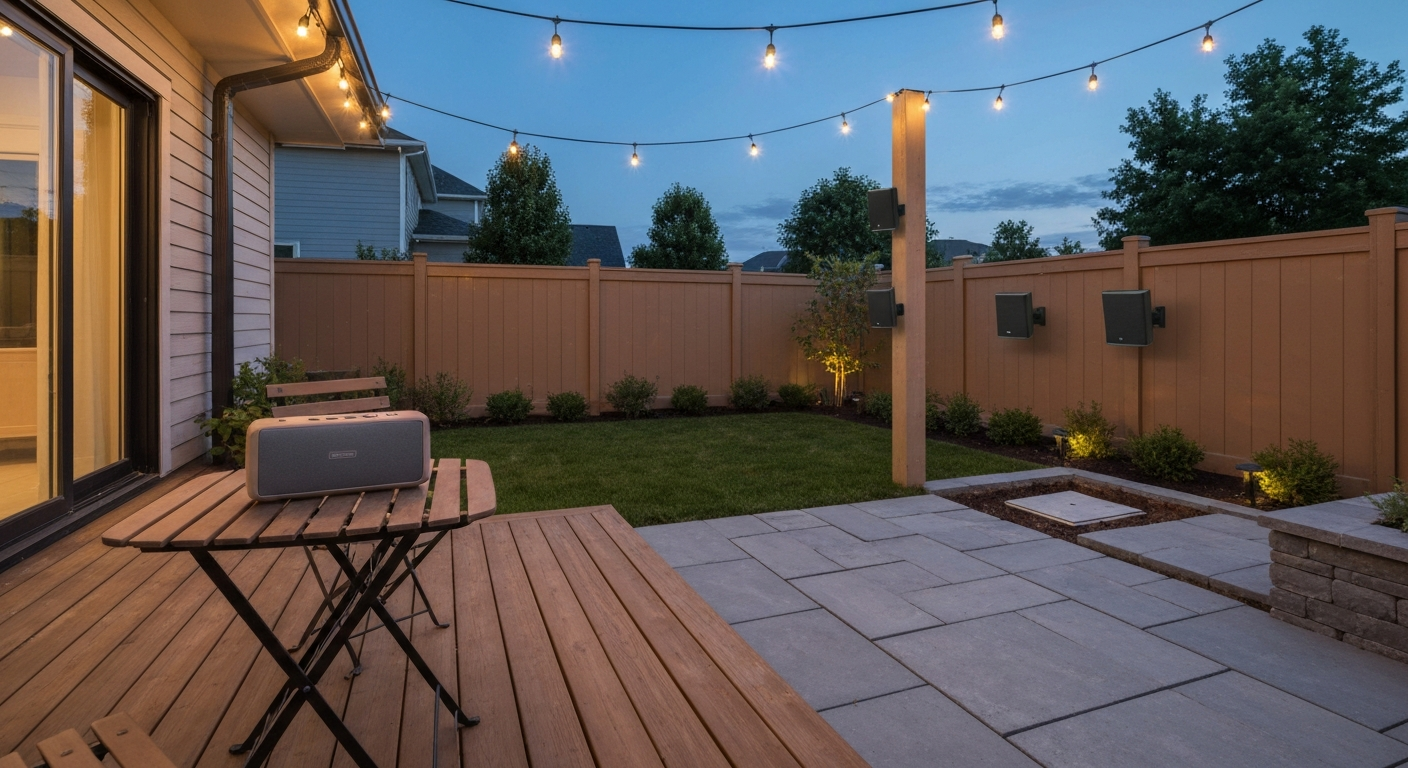
Quick buying summary: top picks by situation
If you want the fastest useful take before diving into the full guide, here it is broken down by situation. Every pick below is grounded in verified specs and recurring themes from customer reviews.
- Best for a permanent patio or deck (contractor install): Sonance Patio Series or Landscape Series (LS4T/LS6T satellites + LS12T sub) — IP66 rated, pivoting knuckle mounts, supports 70V/100V transformer wiring for multi-zone coverage.
- Best value hardwired option (DIY-friendly): Polk Audio Atrium 6 — 5.25" drivers, Dynamic Balance and PowerPort tech, easy bracket mounting, excellent price-to-performance ratio for standard deck sizes.
- Best premium portable: Sonos Move 2 — IP56, Bluetooth 5.3, Wi-Fi fallback, roughly 24-hour battery life, works on the patio and doubles as an indoor speaker when weather turns.
- Best budget portable: JBL Flip 6 — IP67 fully waterproof, compact, solid bass for its size, genuine Bluetooth 5.1 with verifiable spec sheet.
- Best for large landscapes or pool surrounds: Sonance Landscape Series with PowerZone Connect amplification — purpose-built for multi-zone DSP routing, in-ground sub options (LS12T, LS15T), commercial-grade weatherproofing.
- Best for coastal or high-humidity environments: Coastal Source Razor or Line Source bollard series — marine-grade corrosion resistance and proprietary connector systems designed for salt-air exposure.
- Best for pergolas and gazebos (semi-permanent): Yamaha NS-AW series (NS-AW992 or NS-AW592) — UV-resistant enclosures, supplied mounting brackets, straightforward Bluetooth amp pairing.
Who this guide is for and how to use it
This guide is written for four types of readers who all end up searching for bluetooth patio speakers reviews but need very different answers. For additional model comparisons and buyer feedback, see our patio speaker reviews for hands-on tests, long-term durability notes, and regional buyer reports. First, homeowners building or renovating an outdoor living space who want to know whether to hardwire speakers into a new patio project or just buy a portable. Second, DIYers who already have a patio and want to add audio without hiring anyone. Third, contractors and landscape professionals who want a quick reference on spec differences and what their clients are actually asking for. Fourth, regional shoppers looking to understand what local dealers carry and whether a product they've read about online is actually available and serviceable in their area.
Here's how to navigate: if you're in a hurry, the quick summary above and the comparison table in the next section are your starting points. If you're planning a new build or major renovation, go straight to the installation and placement section and the contractor checklist. If you're comparing two or three specific models, the deep-dive reviews and the types-of-systems section will give you the side-by-side detail you need. The guide is organized so you can jump around, but it's also structured to walk you from decision to installation in sequence if you read it end to end.
What actually matters when evaluating outdoor Bluetooth speakers
A lot of buyer guides list ten criteria that all sound equally important. In practice, for outdoor audio, three things determine whether a purchase works out: weatherproofing, coverage for the actual space, and how the Bluetooth connection behaves once you're outside. Everything else is secondary. That said, here's how each criterion should be weighed and measured.
Weatherproofing and IP ratings
IP ratings are defined by IEC 60529 (adopted as ANSI/IEC 60529:2020 in North America). The two digits after "IP" mean different things: the first digit rates dust protection (0-6), the second rates water protection (0-9). IP66 means total dust exclusion and protection against powerful water jets, that's what Sonance claims for the Landscape Series and it's genuinely useful for sprinkler zones and rain. IP67 means submersion up to 1 meter for 30 minutes, which is what makes the JBL Flip 6 safe on a pool deck. IP56 (Sonos Move 2) means dust-protected but not fully excluded, and directional water jets are fine, adequate for rain and light hose splash but not submersion. Anything below IP54 on an outdoor speaker is a red flag for year-round patio use. Be skeptical of terms like "weather resistant" or "all-weather" without a published IP number.
Bluetooth range and codecs
Outdoor Bluetooth performance degrades faster than most specs suggest because walls, furniture, and bodies absorb signal. A rated 100-foot range often becomes 40-50 feet in a real yard with a phone in your pocket. Bluetooth 5.0 and above gives you better range stability and lower latency than older versions. For audio quality, codec support matters: SBC is the baseline and universally compatible; AAC sounds noticeably better on Apple devices; aptX and aptX HD improve Android playback significantly. The Sonos Move 2 uses Bluetooth 5.3 and supports automatic codec negotiation, which is why it consistently gets good reviews for streaming quality versus older portable models. If a manufacturer doesn't publish the Bluetooth version and codec list, that's a gap worth noting before buying.
Power output and coverage
Outdoor spaces are acoustically demanding because there are no walls to reflect sound. As a rough rule, a 150-200 square foot deck needs at least 50 watts RMS total output from a stereo pair to fill the space at comfortable listening levels. A 400-600 square foot patio or pool surround with ambient noise needs at least 100 watts and ideally a subwoofer. Portable Bluetooth speakers typically output 20-60 watts and work well in small to medium spaces but struggle with large open areas. The Sonance PowerZone Connect amplifiers (1002/1502/2004/3004 series) are designed specifically to drive multi-speaker landscape installs with DSP routing and both high-impedance and low-impedance outputs, which explains why they're frequently paired with the Landscape Series in contractor-installed jobs.
Sound quality
This is subjective but not arbitrary. For outdoor listening, bass extension matters more than indoor because low frequencies scatter outdoors. Look for frequency response that extends to at least 50Hz for music without a subwoofer, or a system that includes a buried or surface sub. Polk Audio's PowerPort technology improves bass output at a given enclosure size, customers consistently mention the Atrium 6 sounds fuller than similarly priced outdoor competitors. Driver material matters outdoors too: poly or titanium tweeters handle UV and temperature cycles better than silk dome tweeters, which is one reason brands like Yamaha and Klipsch use their respective driver technologies in outdoor lines.
Mounting options
Most hardwired outdoor speakers come with a bracket that handles tilt and swivel to some degree. Sonance Landscape Series satellites include pivoting mounting knuckles, which matters when you're positioning them to cover irregular shaped patio areas. Polk Atrium series uses a detachable bracket that mounts to walls, eaves, and pergola posts. Niles Landscape Audio Series adds stake mounts and burial mounts for in-ground subwoofers, plus conduit entry options, worth knowing if you're running wire through a finished patio. Always check whether the mounting hardware is included or sold separately, because that's a common pricing gotcha.
Battery life and charging
For portable Bluetooth speakers this is a primary spec. The Sonos Move 2 is rated at approximately 24 hours at moderate volume, which is the benchmark in the premium portable category. JBL Flip 6 is rated at around 12 hours. Real-world numbers run about 20-30% lower at outdoor volume levels. Charging method matters: USB-C is now the baseline expectation and missing it (in favor of proprietary chargers) shows up repeatedly as a complaint in customer reviews of older models. If you're buying for pool-area use, check whether the charging port has an IP-rated cover.
Pricing and value
Outdoor audio has a wider price range than almost any other home audio category. A JBL Flip 6 runs around $130. Polk Audio Atrium 6 speakers are typically $100-130 per pair. Sonos Move 2 is around $450. A full Sonance Landscape Series system with amplification can run $3,000-8,000 installed depending on zone count and local labor rates. These aren't competing categories, they solve different problems. The mistake most buyers make is comparing a portable Bluetooth speaker to a hardwired system on price without accounting for installation costs, coverage area, and durability over 5-10 years.
Side-by-side: popular patio Bluetooth speaker models compared
| Model / Series | Type | IP Rating | Bluetooth | Power / Output | Key Strength | Notable Weakness | Approx. Price |
|---|---|---|---|---|---|---|---|
| Sonance Patio / Landscape Series (LS4T/LS6T + LS12T sub) | Hardwired outdoor (landscape) | IP66 | Via amp (PowerZone Connect) | Amp-dependent; multi-zone DSP available | Full-coverage landscape audio, professional install quality, 70V/100V support | Requires professional install; high upfront cost | $2,500–$8,000+ installed |
| Polk Audio Atrium 6 | Hardwired passive outdoor | All-weather (no published IP digit) | Via external amp/receiver | 100W max / 8-ohm | Strong bass via PowerPort, easy bracket mount, excellent value | No published numeric IP rating; needs separate amp | $100–$130/pair |
| Sonos Move 2 | Portable + Wi-Fi/BT hybrid | IP56 | Bluetooth 5.3 + Wi-Fi | ~30W estimated | 24-hr battery, dual-band Wi-Fi fallback, auto-codec | Heavy (3 lbs), expensive for a portable, IP56 not submersion-proof | ~$449 |
| JBL Flip 6 | Portable battery Bluetooth | IP67 | Bluetooth 5.1 | ~30W | Fully waterproof, compact, 12-hr battery, USB-C charge | No aux input, mono output (single unit) | ~$130 |
| Klipsch AW-650 / AWR-650 Rock | Hardwired passive outdoor | All-weather (rock enclosure) | Via external amp | Up to 125W / 8-ohm | High sensitivity, rock disguise option for landscape | Rock style is polarizing; no IP number published | $200–$350/pair |
| Yamaha NS-AW992 / NS-AW592 | Hardwired passive outdoor | All-weather UV-resistant | Via external amp | 130W max (992) / 8-ohm | UV-resistant enclosure, supplied brackets, wide dispersion | No subwoofer in line; bass light for large spaces | $80–$200/pair |
| Bowers & Wilkins AM-1 | Hardwired architectural outdoor | IP45 (published) | Via external amp | Up to 150W recommended | Audiophile imaging outdoors, premium build quality | Very expensive, specialist installation needed | $400–$600 each |
| Coastal Source Razor / Line Source Bollard | Hardwired landscape / bollard | Marine-grade (salt-air) | Via amp | System-dependent | Best-in-class corrosion resistance for coastal installs | Limited dealer network, premium pricing | $1,500–$5,000+ system |
A few honest notes on this table: the absence of a published numeric IP rating from Polk Audio and Klipsch on their residential outdoor lines is a legitimate gap. Both brands have long track records and customer reviews consistently report years of outdoor durability, but you're taking that on manufacturer reputation rather than a verified IEC 60529 test. For pools and coastal environments especially, prioritize products with published IP67 or IP66 ratings. Also note that pricing for hardwired systems excludes installation labor, which in most North American markets runs $75-150/hour for licensed audio or electrical contractors.
Types of outdoor Bluetooth audio systems: what they are and when to use each
Portable battery Bluetooth speakers
These are the speakers most people already own or are considering first. They're self-contained: battery, amplifier, driver, and Bluetooth receiver all in one unit. No wiring, no installation. The JBL Flip 6 and Sonos Move 2 are the most frequently reviewed examples at opposite ends of the price range. The core advantages are obvious: zero installation effort, you can move them inside when weather turns bad, and you're not committing to a permanent setup. For a detailed evaluation of how portable speakers perform in real patio environments, see the Body Under the Patio review. The limitations are real though. A single portable speaker, even a good one, will struggle to fill a 400+ square foot patio with consistent sound at outdoor listening levels. Stereo imaging is non-existent with a single unit. Battery life means you're either recharging mid-party or leaving it plugged in, which partially defeats the portability argument.
Best use cases: apartment balconies, rental properties, small patios under 200 sq ft, pool decks where you want something you can bring inside, and situations where you want Bluetooth without any installation complexity.
Hardwired outdoor speakers (passive, amp-driven)
This category includes Polk Audio Atrium, Klipsch AW and AWR lines, Yamaha NS-AW series, Sonance Landscape Series, B&W AM-1, and similar products. These are passive speakers that require an external amplifier or AV receiver. They're permanently mounted, weather-rated for year-round exposure, and typically sound significantly better than portable units at the same price point because the amplification budget isn't constrained by battery and enclosure miniaturization. The Bluetooth aspect comes from your amplifier or a Bluetooth receiver module, not the speaker itself. Adding a device like a Sonos Amp, a Yamaha receiver with Bluetooth, or a dedicated Bluetooth transmitter to your existing outdoor speaker wiring is a very common setup seen in customer reviews.
Best use cases: permanent patios, decks, pergolas, in-ground pool surrounds, multi-zone outdoor audio, new construction or major renovations where running wire is practical.
Bluetooth-enabled passive speakers with integrated amps or smart amplifiers
This is a hybrid category that's growing quickly. Products like the Sonance PowerZone Connect family are amplifiers with built-in DSP, network streaming, and multi-zone management designed specifically for driving outdoor speaker arrays. You run passive outdoor speakers (Sonance Landscape Series satellites and subs, for example) but the amp handles Bluetooth input, source switching, and even EQ for outdoor coverage patterns. The Sonos Amp is another example in this category, though more consumer-oriented. This approach gets you the sound quality and durability of hardwired passive speakers with the streaming flexibility of a connected Bluetooth/Wi-Fi receiver. The tradeoff is cost and installation complexity, you're running speaker wire and setting up an amplifier, which usually means a contractor.
Best use cases: high-end patio builds, poolside audio requiring multi-zone control, homeowners who want whole-home audio integration, and contractor-designed systems where future expandability matters.
Featured model deep dives
Sonance Patio Series and Landscape Series (LS4T / LS6T / LS12T)
Sonance is a professional-grade outdoor audio brand, and the Landscape Series reflects that. The blank" rel="noopener noreferrer">LS4T and LS6T are satellite speakers with pivoting mounting knuckles, IP66 weather rating, and selectable 70V/100V transformer options, that last feature is significant because it means you can run long wire runs to multiple speakers without impedance matching problems, which is how distributed-audio contractors wire commercial-style patio installations. The LS12T is an in-ground burial subwoofer designed to pair with these satellites and deliver bass in open outdoor spaces where it otherwise disappears. Verified installer notes and distributor documentation consistently describe these as a system sale: you buy the satellites, the sub, and the PowerZone Connect amplification together, and an integrator commissions it. The Sonance Patio Series (a slightly more consumer-accessible subset) shares the weatherproofing philosophy but is designed for simpler two-zone installs.
- Pros: IP66 rated, 70V/100V transformer support for long runs, pivoting knuckle mounts for precise aiming, excellent low-end from LS12T sub, multi-zone DSP via PowerZone Connect amps
- Cons: Requires professional installation to get full value, high system cost, limited consumer retail availability (dealer/distributor channel), Bluetooth is amp-side not speaker-side
- Best for: Permanent landscape audio, multi-zone poolside and patio installs, customers budgeting $3,000+ for outdoor audio
Polk Audio Atrium 6
The Atrium 6 is one of the most reviewed outdoor passive speakers in the $100-150 price range, and the customer feedback is consistently strong for the price. The 5.25-inch driver uses Polk's Dynamic Balance technology to reduce distortion artifacts, and the PowerPort bass port improves low-frequency output for an enclosure this size. Mounting is via a detachable bracket that handles wall, eave, and rafter installation. What I'd flag for buyers: Polk doesn't publish a specific IP rating for the Atrium series, describing it as "all-weather", and years of customer reviews from cold-climate regions (Midwest, Northeast, Pacific Northwest) suggest it holds up well through freeze-thaw cycles and rain, but for poolside placement within splash range or coastal environments with salt air, I'd want a published IP66 or IP67 number before committing. For more user experiences and durability reports, see Polk Audio Patio 200 reviews.
- Pros: Strong bass for price via PowerPort, Dynamic Balance drivers, easy DIY install, widely available, excellent reviews in moderate climates
- Cons: No published numeric IP rating, no built-in Bluetooth (needs amp), light on extreme-weather credentials
- Best for: Covered patios, decks under roof overhangs, moderate-climate DIY installs paired with a Bluetooth-capable receiver
Sonos Move 2
The Move 2 is the speaker I'd recommend to someone who wants near-audiophile portable quality and is willing to pay for it. IP56 protects it from rain and hose splash reliably. Bluetooth 5.3 with automatic codec negotiation means it sounds noticeably better streaming from a modern phone than older Bluetooth portables. The Wi-Fi fallback is genuinely useful, when you're within range of your home network, you get Sonos multi-room integration and full streaming service access without Bluetooth compression. Battery life of approximately 24 hours is class-leading among premium portables. The downsides are weight (around 3 lbs, noticeable if you carry it around) and the $449 price. It's not a pool-dunking speaker, IP56 is not submersion-rated, but for a patio, deck, or pergola where it lives most of the time and you occasionally bring it inside, it's hard to beat.
- Pros: IP56 rated, Bluetooth 5.3, Wi-Fi fallback, ~24-hour battery, Sonos ecosystem integration, premium sound quality
- Cons: IP56 is not submersion-proof (no pool-edge dunking), heavy for a portable, expensive, proprietary charging base
- Best for: Homeowners who want premium portable audio with smart home integration and don't need full submersion protection
JBL Flip 6
If you want a waterproof Bluetooth speaker for under $150 that you can confidently use at poolside, the Flip 6 is the benchmark. IP67 means full dust exclusion and submersion to 1 meter for up to 30 minutes, that's a real spec from the IEC 60529 standard, not marketing language. JBL publishes the spec sheet with Bluetooth 5.1, two-way driver configuration, and USB-C charging, which is what you want to see. Battery life is rated at 12 hours, and real-world reviews consistently report 9-10 hours at outdoor volume levels. The limitation is that a single Flip 6 is a mono speaker (one stereo signal through one enclosure) so for a large patio the coverage drops off fast. Two paired in stereo mode is a solid setup for spaces up to about 200 sq ft. The Charge series steps up battery life significantly if runtime is your primary concern.
- Pros: IP67 fully waterproof, USB-C charging, compact, strong bass for size, widely available and well-supported
- Cons: Mono single unit, 12-hour battery is adequate but not class-leading, Bluetooth range can drop in crowded RF environments
- Best for: Pool decks, beach use, small patios, anyone prioritizing portability and waterproofing over audio coverage
Klipsch AW-650 and AWR-650 (Rock)
Klipsch's all-weather lineup has a devoted following, and for good reason. The AW-650 uses Klipsch's copper-spun woofer and aluminum tweeter design, which handles temperature cycling and UV exposure better than fabric or plastic alternatives. Sensitivity is high, Klipsch speakers have historically been among the most efficient outdoor designs, meaning they sound loud at lower amp wattage. The AWR-650 takes the same internals and puts them in a rock-shaped enclosure designed for landscape placement where a speaker on a post would look out of place. The rock aesthetic is either perfect or terrible depending on your yard, but the audio engineering underneath it is legitimate. Neither model publishes a numeric IP rating on the current spec sheets, which I note as a gap, but the aluminum driver materials and the track record in reviews from hot/humid Southern U.S. markets suggest good long-term durability.
- Pros: High sensitivity (efficient with low-powered amps), aluminum/copper driver materials resist UV and heat, rock enclosure option for landscape integration
- Cons: No published numeric IP rating, rock enclosure style is divisive, needs external amp
- Best for: Landscape audio where visual integration matters, high-efficiency installs with modest amp power, hot/dry climate patios
Yamaha NS-AW series (NS-AW992 / NS-AW592)
Yamaha's NS-AW line is a dependable middle-ground option that gets underestimated. The NS-AW992 handles up to 130W, uses UV-resistant enclosures with treated driver surrounds, and comes with mounting brackets included, a small but real convenience since many competitors charge extra. Customer reviews note these hold up well in rainy Pacific Northwest and humid Southeast installs. Sound quality is adequate rather than exceptional: wide dispersion helps coverage but there's limited bass extension without a sub. Yamaha describes these as all-weather without publishing a numeric IP rating, which is consistent with the industry practice for this price segment. Where they shine is reliability over time and the straightforward installation experience.
- Pros: UV-resistant enclosure, brackets included, handles up to 130W, consistent long-term reviews in varied climates
- Cons: Bass-light without a subwoofer, no numeric IP rating, sound quality is functional rather than audiophile
- Best for: Budget-to-mid-range covered patio installs, pergola mounting, DIY installs in moderate to high-humidity climates
Matching speaker type to your outdoor space
Space geometry and use patterns drive the right choice more than any single spec. Here's how to think about it systematically.
| Space Type | Size Range | Recommended System Type | Top Model Options | Key Consideration |
|---|---|---|---|---|
| Small covered patio / balcony | < 150 sq ft | Portable Bluetooth OR compact hardwired pair | JBL Flip 6, Sonos Move 2, Polk Atrium 4 | Coverage is easy at this size; choose by portability needs |
| Standard deck (open) | 150–300 sq ft | Hardwired passive pair + Bluetooth amp | Polk Atrium 6 + Sonos Amp, Yamaha NS-AW592 | Open deck loses bass; get an amp with EQ or add a sub |
| Large patio / entertainment area | 300–600 sq ft | Hardwired multi-speaker + sub | Sonance Patio Series, Klipsch AW-650 pairs | Need multiple speaker positions for even coverage |
| Pergola / gazebo | Variable (semi-enclosed) | Ceiling or rafter-mounted hardwired speakers | Klipsch AW-650, Yamaha NS-AW992, Polk Atrium 6 | Mounting angle is critical; pivoting knuckles help |
| In-ground pool surround | Large, open, high humidity | IP66+ hardwired landscape system | Sonance Landscape Series (LS6T + LS12T), Coastal Source | Moisture and chemical resistance is non-negotiable |
| Coastal yard / saltwater exposure | Any | Marine-grade landscape system | Coastal Source Razor/Bollard, Sonance Landscape Series | Salt air corrodes standard outdoor speakers faster than you'd expect |
| Large landscape / multi-zone yard | 600+ sq ft or multiple zones | 70V/100V distributed audio with hardwired speakers | Sonance LS series + PowerZone Connect, JBL Control series | Multi-zone amp with DSP is the only practical solution at this scale |
Installation and placement: DIY steps, wiring tips, and when to hire a contractor
DIY installation: step-by-step for a basic hardwired outdoor system
- Plan speaker positions before buying anything. Stand in your patio at listening height and mark where you want sound to come from. For even stereo coverage, aim for speakers roughly 10-12 feet apart and positioned to create a triangle with your primary listening area. Sketch this and measure it.
- Choose your wire route. Outdoor speaker wire (16 AWG minimum, 14 AWG for runs over 50 feet) needs to be rated for direct burial or conduit use if it's going underground or through wet areas. Never use standard indoor speaker wire outdoors.
- Mount speaker brackets first. Most outdoor speaker brackets use #10 or #12 stainless screws into wood framing or masonry anchors into stucco/brick. Stainless hardware matters — zinc-plated screws corrode in 2-3 outdoor seasons and become impossible to remove.
- Run wire to mounting positions, leaving 18-24 inches of slack at each speaker location. Label each run at both ends before you terminate anything.
- Connect speaker wire to your amplifier or receiver using the correct polarity (positive to positive, negative to negative) on every channel. Reversed polarity in one speaker causes phase cancellation and kills bass response.
- Mount speakers to brackets, connect binding posts, and route wire neatly using UV-stabilized cable clips if running along soffits or fascia.
- Set your amplifier's impedance configuration for the speaker load you're driving. Two 8-ohm speakers in parallel = 4-ohm load; confirm your amp handles this. The Sonance PowerZone Connect documentation specifically addresses high-Z and low-Z outputs for multi-speaker configurations.
- Do an initial volume test at low level before full outdoor listen. Check polarity (put your ear near each speaker — bass should sound centered and full, not hollow), then walk the coverage area at normal listening volume to identify dead spots or hot spots.
- If dead spots exist, adjust speaker aim before finalizing any mounting. Pivoting knuckle mounts (Sonance Landscape Series) make this significantly easier than fixed-bracket designs.
Coverage planning fundamentals
Outdoor speaker coverage is roughly conical from the speaker's axis. For a speaker with a 90-degree dispersion pattern mounted 10 feet high, you're covering a roughly 18-20 foot diameter circle on the ground at the primary listening plane. Overlap your coverage areas by about 30% between speaker positions for even sound. In practice this means a 400 sq ft patio typically needs 4 speaker positions (2 stereo pairs) rather than just a single pair. Budget for this in your wire runs and amp channel count from the start, not as an afterthought.
Wiring best practices
- Use 16 AWG CL2-rated outdoor speaker wire for runs up to 50 feet; step up to 14 AWG for longer runs to avoid resistance losses.
- For underground runs, use direct-burial rated cable inside conduit where possible — conduit makes future replacement much easier.
- Terminate outdoor speaker connections with weatherproof wire nuts or waterproof twist connectors, not bare wire touches — corrosion at the connection point is a common source of dropouts and channel failures.
- Keep wire runs away from electrical conduit and HVAC lines where possible to avoid noise induction.
- Document your wire routes with photos before covering with mulch, concrete, or trim — you will need this information later.
When to hire a contractor instead of DIYing
The DIY approach works well for surface-mounted speakers on a deck or covered patio with straightforward wire runs. The calculation changes when you're doing any of the following: trenching wire through finished landscaping, integrating into a new patio construction project, running wire through masonry or stucco walls, installing in-ground subwoofers (Sonance LS12T/LS15T), setting up a multi-zone system with DSP amplification, or doing anything that requires an electrical permit in your jurisdiction. In those cases, the cost of getting it wrong, torn-up landscaping, failed in-ground wiring, voided equipment warranties, exceeds the cost of professional installation by a significant margin.
Contractor prep checklist
- Get at least three written quotes specifying speaker models, amp model, wire gauge and type, labor scope, and warranty terms — not just a single dollar figure.
- Ask whether the quote includes conduit or direct-burial wire, and how wire runs will be protected where they exit structures.
- Confirm whether the contractor holds a low-voltage license in your state or province — requirements vary significantly across North America.
- Ask for two or three references from outdoor audio installs specifically, not just general AV work.
- Request a one-year labor warranty on the installation separate from manufacturer equipment warranties.
- Clarify who handles warranty claims — do they coordinate with the manufacturer, or do you deal with it yourself?
- Check contractor reviews on aggregator sites that focus on outdoor living specialists in your region, particularly for recurring themes around communication, timeline accuracy, and post-install support.
- If this is part of a larger patio build, ask whether the audio contractor will coordinate with the patio contractor for wire conduit installation before concrete or pavers go down — this is the single most common expensive mistake in combined patio/audio projects.
Maintenance, troubleshooting, and what real owners report
Bluetooth pairing problems and dropouts
Dropout complaints are the single most common recurring theme in portable Bluetooth speaker reviews, and they're almost always environment-related rather than product defects. 2.4GHz Wi-Fi networks, microwave ovens, baby monitors, and neighboring Bluetooth devices all compete for the same spectrum. The fix is almost always to bring your phone closer to the speaker, switch your phone's Wi-Fi to 5GHz if possible to reduce 2.4GHz congestion, or make sure your phone OS hasn't put Bluetooth in a power-saving mode that throttles the connection. Bluetooth 5.0 and above handles co-channel interference noticeably better than older versions, which is one practical reason the spec version matters when you're buying.
Corrosion and weathering over time
The most predictable long-term failure point for hardwired outdoor speakers is the connection terminals, not the drivers. Bare copper wire oxidizes, binding posts corrode, and dissimilar metal connections fail at accelerated rates in coastal or humid environments. Annual inspection of all outdoor speaker terminals, looking for green or white oxidation, loose connections, and compromised wire jacket integrity, can extend system life significantly. Products with stainless steel grilles (Polk Atrium series uses this) and UV-stabilized enclosures outlast those with painted metal grilles and generic plastic. Coastal Source's emphasis on their proprietary connector system addresses exactly this failure mode, it's a legitimate differentiator for installs within a few miles of saltwater.
Warranty realities
Manufacturer warranties for outdoor speakers typically run 1-3 years with exclusions for corrosion damage, UV degradation, and "improper installation." That last exclusion is worth reading carefully, some manufacturers void warranty coverage if the product is installed by a non-authorized installer. Sonance, for example, sells primarily through authorized dealers and integrators, and the warranty terms reflect that distribution model. Polk Audio's Atrium series has a more consumer-friendly warranty because it's sold retail and DIY installation is expected. Check the warranty documentation before installation, not after, and keep your receipt and installation photos as documentation.
How to read aggregated reviews for outdoor speakers
Reading product reviews for outdoor speakers requires a specific filter. The most useful reviews are from people who have owned the product through at least one full seasonal cycle, so anyone reviewing in the first month is telling you about initial impressions, not outdoor durability. Filter for reviews that mention specific climate conditions ("after two Northeast winters," "in Florida humidity," "next to the pool") because durability varies dramatically by environment. Negative reviews that mention specific failure modes (binding post corrosion, grille discoloration, dropout frequency) are more informative than five-star reviews that just say "sounds great."
Regional availability patterns matter too. A speaker that gets strong reviews from buyers in the Pacific Northwest may behave differently in Phoenix heat or coastal Carolina salt air. When you're researching on aggregator platforms like this one, look for reviews from your climate region specifically, and note whether recurring complaint themes cluster around specific weather conditions. On Pool And Patio Reviews, the regional filter is particularly useful because customer experiences from local dealers and contractors reflect actual installation conditions in your market, not averaged national feedback that can obscure climate-specific failure patterns. For a model-specific perspective, see the Olympic Patio Tones review for hands-on testing and local-conditions notes. See Koda Patios reviews for installer experiences and durability reports specific to many regional patio builds. For region-specific dealer listings and customer feedback, see ford patio reviews for localized insights.
Decision flow: what's right for your budget and situation
Best-for-budget path (under $300 total)
At under $300, you're in portable Bluetooth territory or a single pair of hardwired passive speakers that still need an amp. For most buyers in this range, the JBL Flip 6 (~$130) or a second-generation portable from a reputable brand gives you genuine waterproofing and solid audio for small to medium spaces. If you have an existing receiver or integrated amp indoors that you can run wire from, the Polk Atrium 6 or Yamaha NS-AW592 at $80-130/pair is a better long-term investment for a deck or patio, the sound quality and coverage are genuinely better than any portable at that price point. The constraint is that running wire requires at least a weekend of DIY work.
Best-for-high-end path ($1,000 and up)
At $1,000 and above you're buying into systems, not individual speakers. The Sonance Patio Series or Landscape Series paired with PowerZone Connect amplification is the most complete purpose-built outdoor audio system available through dealer channels. Bowers & Wilkins AM-1 is the choice if audiophile imaging matters more than a multi-zone distributed system. Coastal Source is the choice for any installation within significant saltwater exposure distance. All of these require dealer engagement and professional installation to get the warranty and commissioning support that justifies the price. Use the contractor checklist above and ask specifically about each brand's dealer authorization requirements in your area.
Best-for-ease-of-install path
If minimum installation friction is the priority, the Sonos Move 2 is the answer: unbox, charge, pair, done. If you want hardwired simplicity, Polk Audio Atrium 6 with a basic Bluetooth AV receiver is about as straightforward as outdoor hardwired audio gets, both products have clear DIY documentation, wide retail availability, and straightforward mounting hardware. The Yamaha NS-AW series comes with brackets included, which sounds minor until you've ordered a speaker online and discovered the mounting hardware is $40 extra and ships separately.
Finding local dealers and contractors for outdoor audio
The gap between finding a great speaker system online and finding someone qualified to install it well is real, especially for higher-end hardwired systems. Sonance products specifically require authorized dealers for warranty coverage, and the quality of the installation directly affects both the sound and the long-term reliability of the system. JBL Professional's Control series is similarly specified and installed by AV contractors rather than DIY buyers.
When evaluating local dealers and contractors for outdoor audio work, the same principles that apply to patio and pool contractors apply here: ask for project-specific references (outdoor audio installs in your climate zone, not just general AV work), check whether they carry the specific brands you've researched, and confirm warranty support terms before signing anything. Regional platforms that aggregate verified reviews of outdoor living specialists, covering everything from patio contractors to pool builders to audio installers, are useful here because they surface real customer experiences from your market, including how contractors handle post-install service calls, which is often where the quality gap becomes visible.
If you're combining outdoor audio with a larger project (new patio, pool installation, deck build, pergola construction), coordinating wire conduit installation with the general contractor before hardscape goes down is the single most cost-effective move you can make. The cost of running conduit before concrete is negligible. The cost of trenching through finished pavers to add audio later is not.
Next steps checklist before you buy
- Measure your outdoor space and sketch speaker positions, noting coverage overlap requirements.
- Decide: portable Bluetooth, hardwired passive with external amp, or full landscape system with DSP amplification.
- Confirm IP rating requirements for your specific environment (pool edge = IP67 minimum; coastal = marine-grade preferred; covered patio = IP54 acceptable).
- Check whether any installation will require a permit (low-voltage wire in conduit, in-ground burial) in your municipality.
- If hardwired: verify your existing amp or receiver's impedance rating before buying passive speakers.
- If contractor-installed: get three written quotes with brand/model specifics, not just total price.
- Review regional customer feedback for shortlisted brands in your climate zone, filtering for reviews after at least one full outdoor season.
- Confirm warranty terms and authorized-dealer requirements before purchasing, especially for Sonance and professional-grade products.
- If part of a larger patio or pool project, coordinate conduit placement with your general contractor before any hardscape is finalized.
FAQ
What primary sources should I collect to verify claims in a Bluetooth patio speakers buyer’s guide?
Gather manufacturer product pages and spec sheets (Sonance Landscape Series, Polk Atrium, Klipsch AW/AWR, JBL Control/consumer pages, Sonos Move, JBL Flip), official manuals/installation guides (PowerZone Connect, Polk Atrium owner’s manual), authoritative standards (IEC 60529 / ANSI/IEC 60529 for IP ratings), and specialist vendor/installer pages (Coastal Source, Niles, Bowers & Wilkins reseller data). Use tier‑1 manufacturer docs for specs and tier‑2 specialist/press pages for installation variants and ecosystem context. Always capture URLs, publication dates and PDF/manual identifiers for traceability.
Which numeric data points must be extracted and tabulated for each product in the comparative snapshot?
Driver sizes, nominal impedance, sensitivity (dB SPL @ 1W/1m), frequency response, rated power handling (RMS/peak), recommended amplifier power, IP/‘all‑weather’ or NEMA rating, Bluetooth version/codecs supported (SBC/AAC/aptX/etc.), declared Bluetooth range, battery capacity & run time (for portables), Bluetooth transmitter power/profile, physical dimensions/weight, mounting types (stake/surface/knuckle/rock/bollard), transformer/70V options, warranty terms, MSRP/typical street price, and manufacturer‑published installation notes.
What lab/tests and field tests are required to produce verifiable performance claims and comparisons?
Perform or cite: (1) On‑axis and averaged off‑axis frequency response sweeps (pink noise, calibrated SPL mic at 1m) for sound signature and coverage; (2) Sensitivity measurement (1W/1m) and power compression at rated power; (3) Bluetooth range tests in open vs. obstructed patio environments noting max stable link and dropout points; (4) Codec/bitrate verification using supported devices to confirm AAC/aptX operation; (5) Water/UV exposure checks where possible (spray/ingress simulation consistent with IP claims) or cite manufacturer IP test reports; (6) Battery runtime under real‑world listening (playlist at representative SPL) for portables; (7) Latency measurement for syncing multiple units; (8) Corrosion/connector exposure inspection in salt/marine test installations or long‑term customer reports. If you cannot run tests, cite third‑party lab tests or reputable long‑term user tests and clearly label as vendor data vs independent test.
What verification questions should I ask manufacturers or installers when claims are ambiguous?
Ask for: exact test conditions for sensitivity and frequency response (measurement distance, on‑axis/off‑axis, mic type); formal IP test reports or test labs used; exact transformer/70V tapping tables and power handling at each tap; Bluetooth transmitter power (dBm), supported codecs and profiles, and firmware update history; recommended amplifier power ranges and wiring diagrams; corrosion resistance treatment and connector metallurgy; recommended installation clearances and contractor wiring best practices. Request dealer/installer references for local installs and any published case studies.
How should I structure the comparative product snapshot to be SEO‑friendly and verifiable?
Use a compact table/summary for each model with: one‑line tagline (use case), 8–10 key spec bullets (as listed above), 3 verified pros and 3 verified cons tied to specific sources (link/manufacturer spec/testing note), and a citation field that lists the exact URL/PDF/manual line used. Group products into categories: portable battery units, hardwired outdoor speakers (landscape/rock/bollard), and Bluetooth‑enabled passive speakers/amps. Include a short testing note (who tested, method, date) for any performance claims not straight from manufacturer specs.
What evaluation criteria should I explain and how do I measure/verify each?
Sound quality: cite frequency response sweeps and sensitivity tests. Weatherproofing: report IP/NEMA ratings and any lab/field ingress tests. Bluetooth range/codecs: measure stable range in meters and verify codec negotiation. Power & matching: use nominal impedance, sensitivity and recommended amp power to compute SPL and headroom. Mounting & placement: list supported mount types and installation clearances from manuals. Battery life: use manufacturer runtime and independent real‑world run tests. Pricing/value: compare MSRP vs street price and total installed cost estimates (equipment + labor). For each criterion, state whether data is manufacturer‑published, independently measured, or aggregated from verified customer reports.
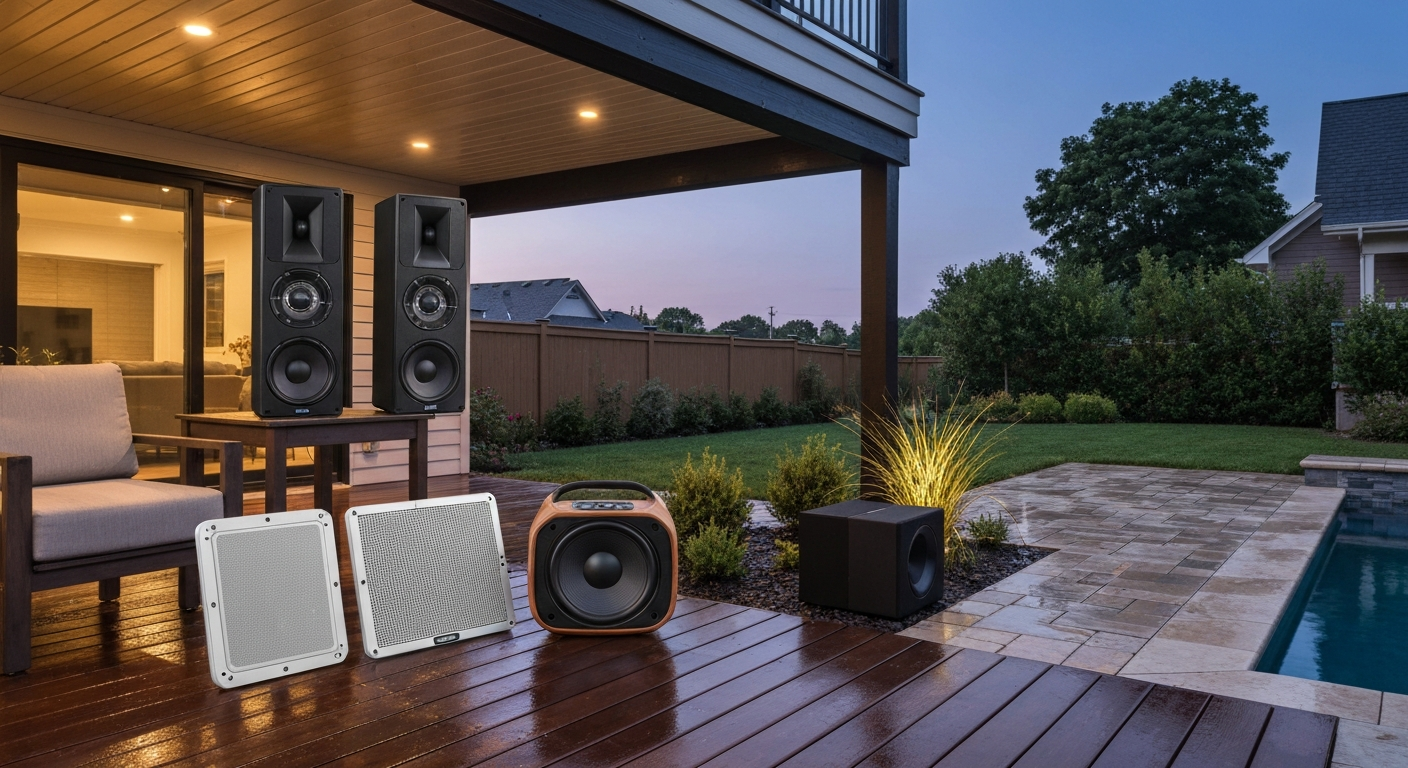
Patio speaker reviews: expert roundup, buying guide, top models, weatherproofing, installer tips for patios & decks
olympic patio tones review: real-world sound, durability, installation tips, pricing, and buyer checklist
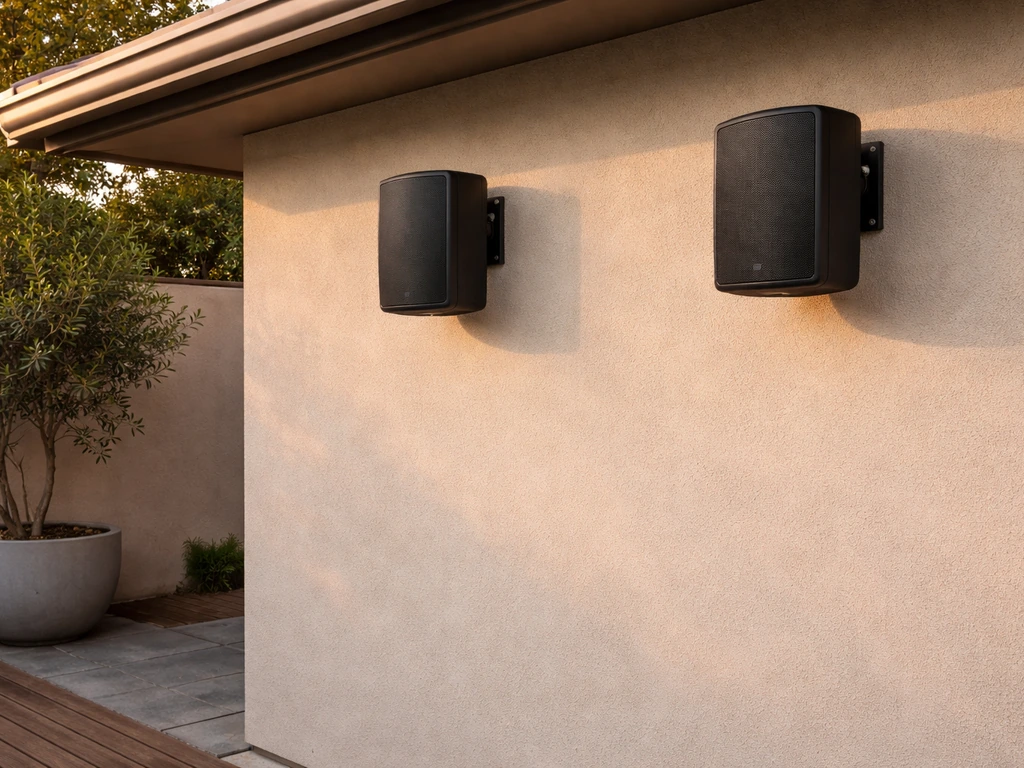
Polk Audio Patio 200 reviews with real outdoor sound, durability, setup tips, power needs, and troubleshooting for low v