
Pool And Patio Reviews lets you search for top rated patio builders near you by region, read verified customer accounts, and compare companies side by side before you ever make a single phone call. The site aggregates reviews across builders specializing in patio covers, enclosures, custom decks, outdoor kitchens, and sunrooms, so instead of wading through scattered Google results, you get organized, editorially reviewed profiles in one place. If you're in the Greater Houston area, for example, you'll find detailed guides covering companies like Your Texas Patio, Lone Star Patio Builders, Boyd's Custom Patios, Houston Patio Covers, Texas Custom Patios, and Old Katy Patio all within a few clicks.
Top Rated Patio Builders Near Me: Search, Vet, Hire Guide

Maren Lawson
23 Jul 2026
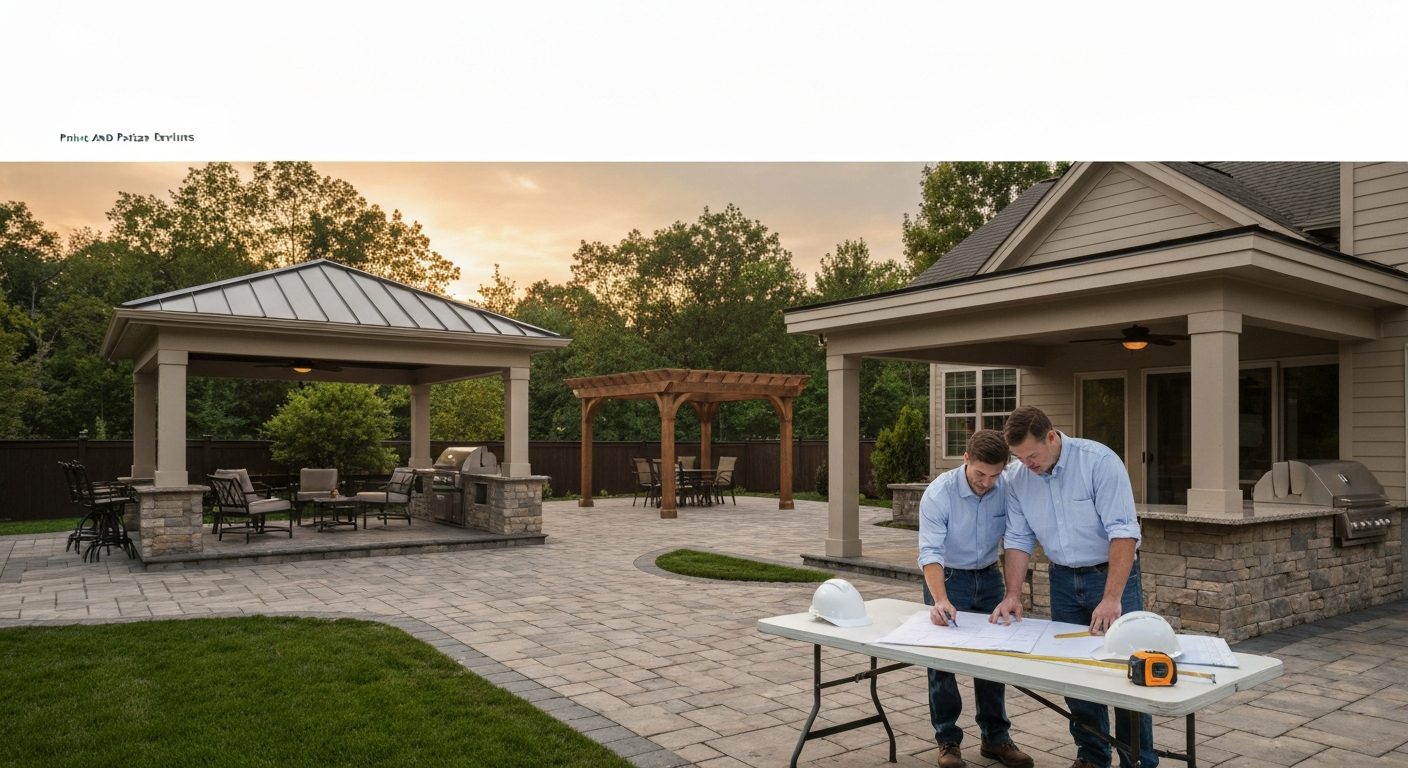
Finding top rated patio builders near me with Pool And Patio Reviews
The core problem homeowners run into when searching for a patio builder is that the local contractor market is genuinely fragmented. A Google search for 'patio builders near me' returns a mix of paid ads, map listings, and review snippets that don't tell you much about actual work quality, communication, or whether that 5-star rating came from 8 reviews or 800. Pool And Patio Reviews was built specifically to solve that. The site's editorial focus, led by Outdoor Living and Contractor Reviews Editor Maren Lawson, is on collecting customer stories, analyzing contractor feedback patterns, and organizing that information into regional and company-specific guides. That means you're not just seeing a star average. You're seeing what real customers said about timelines, material quality, crew behavior, and whether the final product matched the original proposal.
The site covers patio contractors, pool builders, sunroom specialists, and outdoor living companies across North America, with strong regional depth in Texas markets including Houston, San Antonio, and Austin. Whether you're planning a basic patio cover or a full outdoor living space with a kitchen and screened enclosure, the starting point is the same: use the site to build a shortlist of three to five local builders before you request a single estimate.
Why Pool And Patio Reviews is worth your time before hiring anyone
Most homeowners either over-trust a single platform or skip review research altogether and go straight to a referral. Both approaches have real costs. A neighbor's recommendation is useful, but it reflects one project scope, one budget range, and one personality type. Platforms like Google or Yelp give you volume but not context: a company can have 200 five-star reviews and still have a pattern of late-start projects or vague contracts that only shows up when you read the three- and four-star reviews carefully.
Pool And Patio Reviews addresses this by doing the cross-referencing work for you. The editorial team pulls from BBB complaint histories, Angi and HomeAdvisor project-specific feedback, Houzz portfolio galleries, Thumbtack, and Google, then identifies repeating themes rather than just tallying stars. The guidance built into the site's regional articles is explicit: weight reviews from the last 12 to 24 months more heavily than older ones, because a company's crew, ownership, or material suppliers may have changed. Reading three- and four-star reviews often gives you the most realistic picture because those reviewers tend to be specific about what went right and what didn't.
How to run an effective local search on the site
Start at the homepage and navigate by category. The main topical categories include Patio Cover Reviews, Patio Enclosure Reviews, and Regional Pool Reviews, among others. From there, use the regional pages to narrow by geography. If you're in Texas, the regional landing pages will surface Houston-area, San Antonio-area, and Austin-area contractors separately, which matters because permitting rules, climate considerations, and even typical pricing ranges vary significantly between those markets.
The location filters let you drill down from state to metro area to suburb. This is particularly useful in sprawling metros like Houston, where a company headquartered in Katy may not readily serve the Clear Lake area, and vice versa. For homeowners in Katy, check Old Katy patio reviews to compare local contractor feedback and recent project examples before contacting builders. Once you've used the filters to pull up builders serving your specific zip code or suburb, you can sort by review volume, recency, or service type. Aim to identify at least five candidate companies at this stage so you have room to cut the list down after deeper vetting.
Using company profiles to read reviews for specific builders
The company profile pages are where the real research happens. Each profile aggregates customer reviews, documents the builder's stated service area, lists the types of projects they handle, and in many cases links to or summarizes portfolio examples. Here's a quick snapshot of several Houston-area and Texas builders you'll find covered on the site, which gives you a sense of what the profiles look like in practice. See T&T Trucks and Taps patio reviews for customer feedback and ratings on that specialty installer.
| Company | Verified Rating / Review Count | Service Area | Specialty Focus |
|---|---|---|---|
| Your Texas Patio | 4.9 stars / 193+ reviews | Houston and surrounding areas | Patio covers, outdoor living |
| Lone Star Patio Builders | 4.9 stars / 308+ reviews | Greater Houston (FM 1960 area) | Patio covers, pergolas, screened enclosures |
| Boyd's Custom Patios | ~4.5 stars / 270+ reviews | Houston metro | Custom patio builds, covers |
| Texas Custom Patios | Active profile / project galleries | Greater Houston suburbs | Patio covers, outdoor living rooms, design |
| Houston Patio Covers | Portfolio documented | Houston area | Patio cover installation, project galleries |
| Old Katy Patio | Katy / West Houston profile | Katy and West Houston | Patio design and installation |
| Texas Statuary Patio & Garden | Directory-verified with photos | San Antonio | Patio and garden features, statuary |
| T&T Trucks and Taps Patio | Profile available on site | Texas region | Outdoor patio dining/entertainment spaces |
When you open a company profile, don't just read the top reviews. Scroll for the most recent entries first, then read the critical ones in the three- and four-star range. On a profile like Lone Star Patio Builders, for example, you want to know whether blank" rel="noopener noreferrer">the 308 reviews are spread across several years or concentrated in the last 18 months, and whether any recent reviews mention scheduling gaps or subcontractor quality issues. The same applies to Your Texas Patio's 193-review profile: a 4.9 average is impressive, but reading 10 to 15 individual reviews will tell you far more than the number alone. Texas Statuary Patio and Garden in San Antonio is a useful comparison point if you're in the San Antonio market and need to see how a specialty garden and patio company stacks up against full-service outdoor living builders. See Texas Statuary Patio and Garden reviews for customer feedback and project examples in San Antonio.
How to interpret verified customer reviews and ratings
A verified review means the platform has confirmed the reviewer had an actual transaction with the business, not just an opinion. When you're reading reviews on Pool And Patio Reviews' aggregated profiles or cross-referencing on BBB, Angi, or Google, look for four specific quality signals beyond the star count.
- Recency: Reviews from the last 12 to 24 months reflect the current crew, management, and supplier relationships. Anything older than three years tells you about a company that may no longer exist in the same form.
- Volume: A 4.8-star rating based on 12 reviews is far less reliable than a 4.6 based on 280. Higher volume smooths out outliers in both directions.
- Photos: Customer-submitted photos of completed projects are the most useful proof point in any review. They let you see actual build quality, material finishes, and how the final product matches what was promised.
- Specificity: Reviews that name the project manager, describe the installation timeline in weeks, or mention a specific product (such as a Temo or VISTA enclosure system) are almost always genuine. Vague superlatives with no project detail are less reliable.
The most informative reviews are rarely the five-star ones. A reviewer who gives four stars and writes 'the crew was great but the permit took three weeks longer than quoted' is telling you something concrete and useful. That kind of detail helps you ask better questions when you call the company: 'What's your current permit timeline in my city, and do you handle the application or do I?'
Spotting suspicious or misleading reviews
Not every review you read is legitimate, even on aggregator platforms. The red flags are consistent across platforms and you'll start recognizing them quickly once you know what to look for.
- Clusters of five-star reviews posted within a short window (days or weeks) with no prior review history for those accounts.
- Generic praise with no project details: 'Great company, highly recommend!' with nothing about what was built, where, or when.
- Reviewer profiles with only one review ever posted, especially if that review is exceptionally effusive.
- A sudden spike in positive reviews immediately following a period of negative reviews, which can indicate a solicitation campaign to bury complaints.
- Overly polished language that reads like marketing copy rather than a homeowner writing about their yard project.
- One-star reviews that describe implausibly bad experiences with specific dollar amounts that seem designed to damage rather than inform.
The best counter to review manipulation is cross-platform verification. If a company has 150 five-star reviews on one platform and a pattern of unresolved BBB complaints, that gap is a data point. Pool And Patio Reviews' editorial approach specifically recommends checking BBB for complaint resolution history alongside high-volume review platforms, because a complaint that was resolved professionally says something very different about a builder than one that was ignored or disputed aggressively.
Comparing services and specialties: what each project type actually involves
Not all patio builders do the same work, and this is one of the most common mismatches homeowners make when shortlisting contractors. A company that excels at patio covers may have no experience building a full outdoor kitchen with gas lines, and a custom deck builder may not be licensed for the electrical work a screened enclosure requires. Understanding the main service categories before you start contacting builders saves significant time.
| Service Type | What's Involved | Key Contractor Qualifications to Confirm | Typical Permit Required? |
|---|---|---|---|
| Patio Cover (attached) | Roofed structure attached to house; framing, roofing, drainage | General contractor registration (local), structural knowledge | Yes in most Texas cities |
| Freestanding Pergola | Post-and-beam structure, no attachment to house | Carpentry/construction experience, footing knowledge | Sometimes, depends on size |
| Screened Enclosure | Framed screen room, often aluminum systems | Specialty enclosure installer, sometimes electrical | Yes for attached structures |
| Custom Deck | Raised or grade-level deck; wood, composite, or PVC | Deck/framing experience; structural if elevated | Yes if attached or above threshold height |
| Sunroom / Four-Season Room | Insulated, conditioned addition; HVAC, electrical, glazing | GC plus licensed HVAC and electrical subs | Yes, typically treated as addition |
| Outdoor Kitchen | Counters, grill, sink, potentially gas and electric | Plumbing and gas sub, electrical sub, GC coordination | Yes for gas and electrical rough-in |
| Full Outdoor Living Space | Combination of above; may include fire features, audio, lighting | GC with strong subcontractor network | Multiple permits often required |
Companies like Lone Star Patio Builders list patio covers, pergolas, and screened enclosures as core services, which tells you they're set up for that mid-range structural work. Texas Custom Patios and Boyd's Custom Patios both emphasize outdoor living room design alongside patio covers, suggesting a broader design-build capability. If your project includes an outdoor kitchen or gas features, confirm explicitly whether the builder self-performs that work or coordinates licensed subcontractors for it, and ask to see examples of completed kitchens in their portfolio.
Matching your project to the right builder's specialties
Before you contact anyone, write down your project scope in plain terms: what structure you want, the approximate square footage, whether it's attached to the house, whether you want utilities (gas, water, electric) run to the space, and your rough budget range. That single document will immediately filter your shortlist. A builder whose portfolio is full of aluminum-framed patio covers at 200 to 400 square feet probably isn't the right fit for a 1,200-square-foot composite deck with built-in lighting and a wet bar, no matter how good their reviews are.
When you review company profiles on Pool And Patio Reviews, look specifically at the project examples described in customer reviews, not just the company's own marketing claims. If multiple reviewers at Houston Patio Covers mention specific products installed or describe the aluminum cover system by name, that tells you what those customers actually received. See our Houston patio covers reviews for detailed customer feedback on local aluminum cover systems. Cross-check that with the company's own project gallery, which Houston Patio Covers maintains on its official site. If your project type appears repeatedly in both customer reviews and the portfolio, that's a strong signal of genuine specialization.
Credentials and insurance: what to verify before signing anything
Texas does not license general contractors at the state level. That's an important and often misunderstood fact. What the state does regulate are specific trades: electricians and HVAC contractors, for example, are licensed through the Texas Department of Licensing and Regulation (TDLR), and you can verify those licenses directly on the TDLR website. For the general construction work of building a patio cover or deck, licensing happens at the local level. Some Texas municipalities require home improvement contractor registration to pull permits; others don't. You need to check your specific city or county rules.
Regardless of what's legally required, the documents you should always request from any builder before signing a contract are consistent. Pool And Patio Reviews' vetting guides are explicit about this list, and I'd add that these aren't optional requests: a builder who balks at providing any of them is a builder to cross off your list immediately.
- Current Certificate of Insurance (COI) for general liability, naming you as additionally insured for the project duration.
- Workers' compensation certificate covering the crew working on your property.
- Confirmation that all required permits will be pulled before work starts, with permit numbers provided once issued.
- Written itemized scope of work describing exactly what is being built, with materials specified by name and grade.
- Payment schedule tied to project milestones, not calendar dates.
- Written change-order policy explaining how scope changes are priced and approved before work proceeds.
- Warranty documentation for both labor and materials, with specific term lengths in writing.
For projects involving electrical, gas, or HVAC work, ask specifically which licensed subcontractors will handle those trades and request proof of their licenses separately. TDLR's online license lookup is free and takes about two minutes per contractor. Use it.
Timelines and availability: what's realistic and what's a red flag
Patio and outdoor living projects in Texas tend to run on tight schedules in spring and fall, when demand peaks. A builder quoting a start date six to ten weeks out during peak season is being honest with you. A builder promising to start in two weeks when every other company in your area is booked out eight weeks deserves a harder question: why are they available? It could mean they're organized and efficient, or it could mean they've lost crews or are taking on work they can't properly staff.
Ask for a realistic timeline broken into phases: permit application and approval, material procurement, construction start, construction duration, and final inspection. Permit timelines vary significantly by city. San Antonio's residential permitting process and Austin's Development Services Department both require applications that include construction documents for attached structures, and approval times can range from two weeks to six weeks depending on the city and project complexity. Any contractor who doesn't factor permit time into their project timeline is giving you an unrealistic schedule.
Understanding pricing: cost drivers and what a good estimate looks like
Patio project pricing in Texas varies widely based on structure type, size, materials, and site conditions. A basic aluminum patio cover in the Greater Houston area might run $8,000 to $18,000 installed depending on size and style. A screened enclosure on a comparable footprint can run $15,000 to $35,000 or more. A full outdoor kitchen with a covered structure, gas, and electrical can easily reach $40,000 to $80,000 depending on appliances and finishes. These are directional ranges, not guarantees, and your site's specific conditions (soil type, existing slab condition, distance from gas and electrical panels) can push costs in either direction.
The key is not the total number but what's in it. A legitimate line-item estimate breaks out material costs, labor, permit fees, and any subcontractor costs separately. It specifies product names and grades (not just 'aluminum cover' but the specific manufacturer and product line). It notes what's explicitly excluded. An estimate that's just a single number or a vague paragraph is not an estimate you can compare against anything, and it will not protect you if scope disputes arise later.
- Material costs: specified by product name, manufacturer, grade or gauge, and quantity.
- Labor costs: broken out from materials, with crew type noted (in-house vs. subcontracted).
- Permit fees: listed as a line item, even if estimated.
- Site preparation: grading, existing slab removal or modification, drainage.
- Utility rough-ins: gas, electrical, plumbing listed separately with licensed sub confirmation.
- Exclusions: what the estimate does not cover (landscaping restoration, painting, furniture, appliances).
- Allowances: placeholder amounts for items not yet selected (tile, light fixtures) with a clear overage policy.
Warranties and contract terms you need in writing
Warranty terms vary significantly between builders and product lines. Some aluminum patio cover manufacturers offer lifetime structural warranties transferable to future homeowners. Labor warranties from contractors typically run one to five years. The contract should specify both separately: the product warranty (manufacturer's, tied to specific product registration) and the workmanship warranty (the builder's own guarantee on installation quality). If the builder installs a product with a lifetime frame warranty but only warrants their own labor for one year, you need to know that distinction before you sign.
Beyond warranties, the contract should include a lien waiver provision (protecting you from subcontractor or supplier liens if the GC doesn't pay them), a dispute resolution clause, and a clear project completion definition. 'Substantial completion' and 'final completion' are different things, and a final payment should be tied to the latter, meaning all inspections passed, all punch-list items resolved, and all permit closeouts confirmed. Never release final payment before the final inspection is signed off by your local building department.
Your step-by-step search and shortlist process
- Define your project scope in writing: structure type, size, utilities, budget range, and target completion season.
- Go to Pool And Patio Reviews and use regional pages and location filters to pull up builders serving your city or suburb.
- Read company profiles for at least six to eight builders, focusing on recency, review volume, and specificity of customer accounts.
- Cross-reference your top candidates on BBB (complaint history and resolution), Google (volume and recency), and Houzz or the company's own site (portfolio photos).
- Cut any builder with unresolved BBB complaints, a pattern of communication complaints in reviews, or no verifiable physical address.
- Confirm that your top three to five candidates actually specialize in your project type by checking their portfolio and asking one direct question by phone.
- Request estimates from three builders minimum. More than five estimates rarely adds useful information and stretches the process out unnecessarily.
- Collect all required documents (COI, workers' comp, license confirmations) before or alongside the estimate visit.
Evaluation checklist for estimate visits
Use this checklist during or immediately after each estimate visit to score each builder consistently before you compare proposals.
- Did they measure the site specifically, or give a quote from your description alone?
- Did they identify any site-specific challenges (soil, drainage, existing structures) proactively?
- Did they explain what permits will be required and who pulls them?
- Did they provide a clear project timeline with phase breakdowns?
- Did they show you product samples, material specs, or manufacturer brochures?
- Did they give you references from projects similar in type and size to yours?
- Did they provide a COI and workers' comp certificate without being asked twice?
- Did they explain their payment schedule and tie it to milestones?
- Did they answer your questions directly, without deflecting or being vague about subcontractors?
- Did you feel confident they understood what you want, not just what they prefer to build?
Key questions to ask on the first call and at the estimate
The first phone call is a screening call, not a sales call. You're testing responsiveness, clarity, and whether the builder is a realistic fit for your project. Keep it to five questions.
- Do you build [your specific project type] regularly, and can you send me two or three examples from the last 12 months?
- What's your current lead time from signed contract to project start in [your city]?
- Do you pull permits for all required work, and do you handle the application or does the homeowner?
- Are your crews in-house or subcontracted, and do the same crews typically start and finish a project?
- Can you provide a COI and workers' comp certificate before the estimate visit?
At the estimate visit, go deeper on the specifics of your project. Ask about the exact materials they plan to use and why. Ask what the three most common complications are on a project like yours and how they handle each one. Ask to see a sample contract from a completed project (with the client's personal details removed). Ask what happens if material prices change between signing and the start of construction. These are not adversarial questions. Any experienced builder has answered all of them before.
Common red flags when vetting builders and reading reviews
- Requests a large upfront deposit (more than 10 to 15 percent) before permits are pulled or materials are ordered.
- Cannot provide a COI or workers' comp certificate, or provides one that is expired.
- Gives a verbal quote with no written follow-up, or delays providing a written estimate.
- Has no verifiable physical business address or lists only a P.O. box.
- Review profile shows a sudden cluster of five-star reviews after a period of one-star complaints.
- Cannot name specific materials, manufacturers, or product lines when asked.
- Pressures you to sign immediately with a 'today only' discount.
- Has multiple unresolved complaints on BBB, especially around contract disputes or incomplete work.
- Crew shows up without pulling permits, or builder suggests permits aren't necessary for your project when your city's rules say otherwise.
- Subcontractors are vague or unnamed, particularly for electrical and gas work.
Comparing written estimates side by side
Never compare patio estimates by total price alone. Two estimates that look $5,000 apart may actually be quoting completely different scopes. Build a simple comparison grid before you evaluate the numbers.
| Comparison Point | Builder A | Builder B | Builder C |
|---|---|---|---|
| Structure type and size | Check | Check | Check |
| Material brand and grade specified | Check | Check | Check |
| Permit fees included | Check | Check | Check |
| Labor cost broken out | Check | Check | Check |
| Subcontractor work identified | Check | Check | Check |
| Exclusions listed explicitly | Check | Check | Check |
| Allowances noted with overage policy | Check | Check | Check |
| Payment schedule tied to milestones | Check | Check | Check |
| Labor warranty term | Check | Check | Check |
| Product warranty term and transferability | Check | Check | Check |
| Projected start and completion dates | Check | Check | Check |
Any line where one estimate is silent and others are specific is a conversation to have before you make a decision. Call that builder and ask them to clarify or add the missing detail in writing. If they can't or won't, that's informative. A builder who provides a complete, itemized proposal is showing you how they communicate before the project starts, which is usually a reliable preview of how they'll communicate during it.
Next steps: contacting references, negotiating, and making the hire
Once you've compared estimates and have a clear finalist, ask for two to three references from projects completed in the last 18 months that are similar in type to yours. Contact all of them. Ask each reference specifically: Did the project finish on time? Did the final price match the estimate? Were there any change orders, and were they handled fairly? Would you hire this builder again for a larger project? Those four questions will surface almost everything you need to know.
Negotiation is reasonable and expected. You can negotiate on scope (removing or deferring elements), material upgrades, or payment schedule structure. What you should not negotiate away is insurance coverage, permit compliance, or warranty terms. If a builder offers you a lower price in exchange for skipping the permit, walk away. You'll own that liability when you try to sell the house or if an uninspected structure causes damage.
Before signing, read the full contract, not just the scope and price pages. Confirm the lien waiver terms, dispute resolution process, and the definition of project completion. If anything is unclear, ask for it to be clarified in writing as an addendum. Verbal assurances during a sales conversation are not contractually binding.
What to expect after you hire: communication, change orders, and the final walkthrough
Establish communication expectations before work starts. Agree on a single point of contact at the company, a preferred communication method (text, email, or phone), and a regular check-in cadence. For a typical patio cover project taking two to three weeks, a brief update every two to three days is reasonable. For a larger outdoor living project running six to ten weeks, a weekly written update is standard.
Change orders will happen on most projects of any complexity. A change order should always be in writing, signed by both parties, and priced before the work it covers is started. Never allow a builder to proceed with out-of-scope work on a verbal agreement with the promise to 'figure out the cost later.' That arrangement creates disputes at the worst possible moment, usually just before the final payment is due.
Before you release the final payment, do a thorough walkthrough with the project manager or lead carpenter. Bring your original scope of work document and check every line item. Note anything that's incomplete, damaged, or different from what was specified. That punch list should be resolved before final payment, not after. Once you've confirmed all inspections are closed with your local building department and all punch-list items are complete, you're clear to make final payment and request all warranty documentation in writing.
Final tips for hiring a top rated patio builder near you with confidence
The homeowners who have the best experiences with patio builders are almost always the ones who did the research upfront and communicated clearly throughout. Start on Pool And Patio Reviews to build a grounded shortlist using verified reviews and regional profiles. Cross-reference on BBB and Google. Request complete documents and line-item estimates from your top three candidates. Visit the references. Read the contract. The process feels like a lot of steps when you're staring at the beginning of it, but most of it takes an afternoon or two of focused work, and it's the best insurance you have against a costly, stressful project experience.
The builders you'll find reviewed on Pool And Patio Reviews across Texas markets, from Houston companies like Your Texas Patio, Lone Star Patio Builders, and Boyd's Custom Patios to San Antonio specialists like Texas Statuary Patio and Garden, are all operating in a competitive, review-driven market where their reputation is genuinely tied to their work quality. That's a good thing for you as a homeowner. Use the reviews as your first filter, use the credentials and estimates as your second, and use your gut instinct about communication quality as the tiebreaker. The builder who answers your questions clearly and completely before you've signed anything is almost always the builder who'll treat your project the same way.
FAQ
How do I start a local search for “top rated patio builders near me” using Pool And Patio Reviews?
Begin on PoolAndPatioReviews.com and use its regional pages (e.g., Texas pools & patios) to find curated lists and company profiles. Use the site’s filters and search to narrow by service (patio covers, enclosures, sunrooms, outdoor kitchens). Cross-reference names you find there with Google, BBB, Angi/Thumbtack, Houzz and Birdeye to capture volume, recency and portfolio photos. Save 6–8 candidates from the regional pages and directory matches for the next vetting step.
What’s a quick, actionable search-and-shortlist process I can follow?
1) Search PoolAndPatioReviews regional pages for your city/region. 2) Add any companies with 4.5+ combined signals (high star average + many recent reviews) to a list. 3) Cross-check each company on Google, BBB and a review aggregator (Birdeye/Porch/Houzz). 4) Verify service type and coverage area on company profiles and project galleries. 5) Narrow to 3–5 contractors with matching specialties and available timelines to request estimates.
How should I interpret verified customer reviews and ratings?
Give extra weight to recent reviews (last 12–24 months) and look for repeating themes across platforms instead of relying on a single star rating. Treat 5-star clusters without detail cautiously; prioritize detailed 3–5 star reviews that describe scope, timeline, change orders and warranty. Use Pool And Patio Reviews’ advice pages to read “how to read reviews” guidance and compare complaint/resolution history on BBB.
Which company profile details on Pool And Patio Reviews and other directories should I verify first?
Confirm: service categories (patio covers, enclosures, decks, sunrooms, outdoor kitchens), physical address and service area, project gallery photos, contact phone number, and any stated warranties or guarantees. Cross-check those items with the company’s official site and independent listings (Birdeye, Porch, Google Business). If a company’s presence is inconsistent or unverifiable, remove it from your shortlist.
What credentials and documents should I request before signing anything?
Ask for: current general liability Certificate of Insurance (COI) and workers’ compensation proof (if applicable), contractor registration or trade licenses for regulated specialties, copies of sample contracts with itemized scope of work, a written payment schedule tied to milestones, written change-order policy, warranty documentation (materials and workmanship), and permit/permit-number responsibilities. Pool And Patio Reviews specifically recommends these documents as part of vetting.
What questions should I ask contractors during estimates?
Ask: Are you licensed/registered for this work in my city? Who will pull permits and obtain inspections? What’s the detailed scope and what’s excluded? What’s the projected start and completion timeline? What is the payment schedule and accepted forms of payment? How do you handle change orders? What warranties do you offer (length and coverage)? Can you provide three recent local references and permit/inspection records for similar projects?
Next Articles
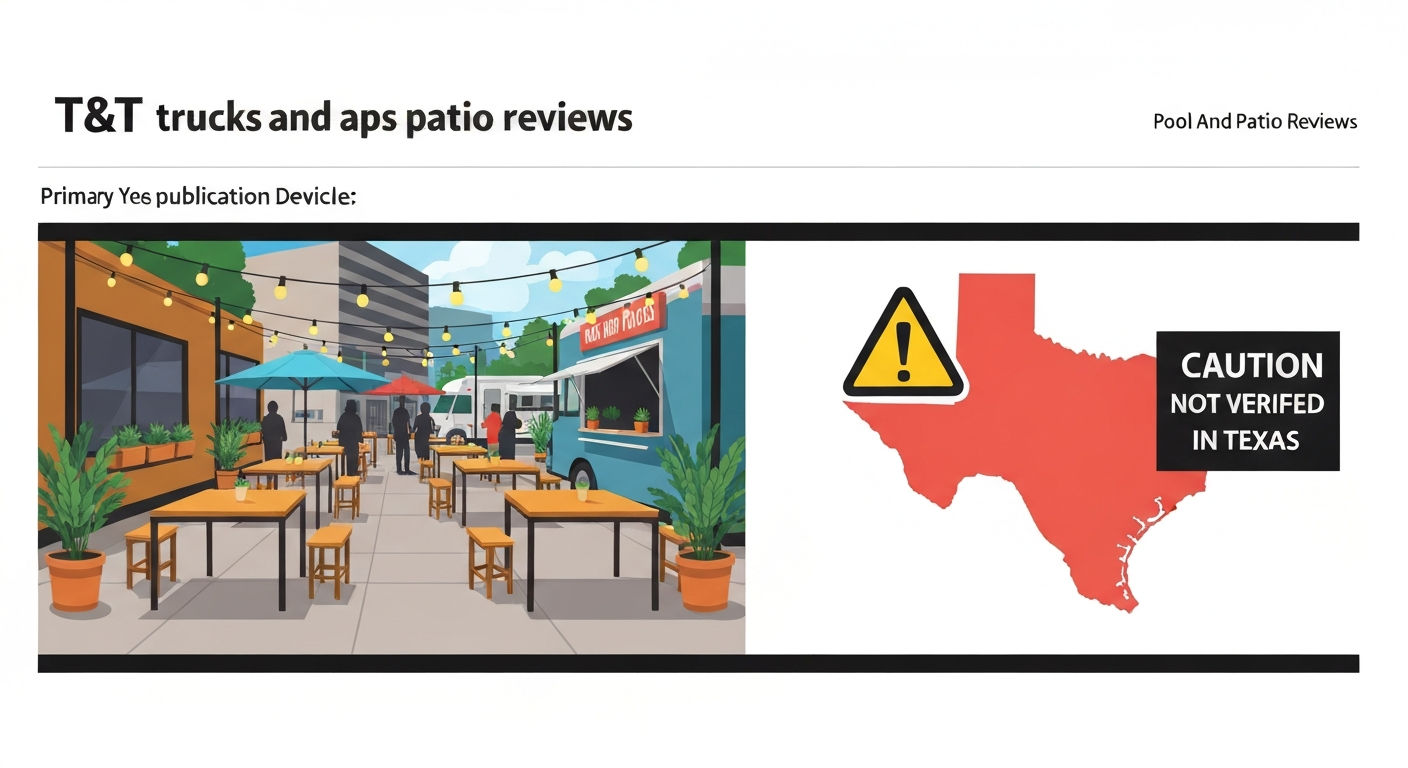
T&T Trucks and Taps Patio Reviews: Houston Patio Guide Tips!
T&T Trucks & Taps patio reviews: unbiased verdict, service area, customer pros/cons, pricing & hiring checklist.
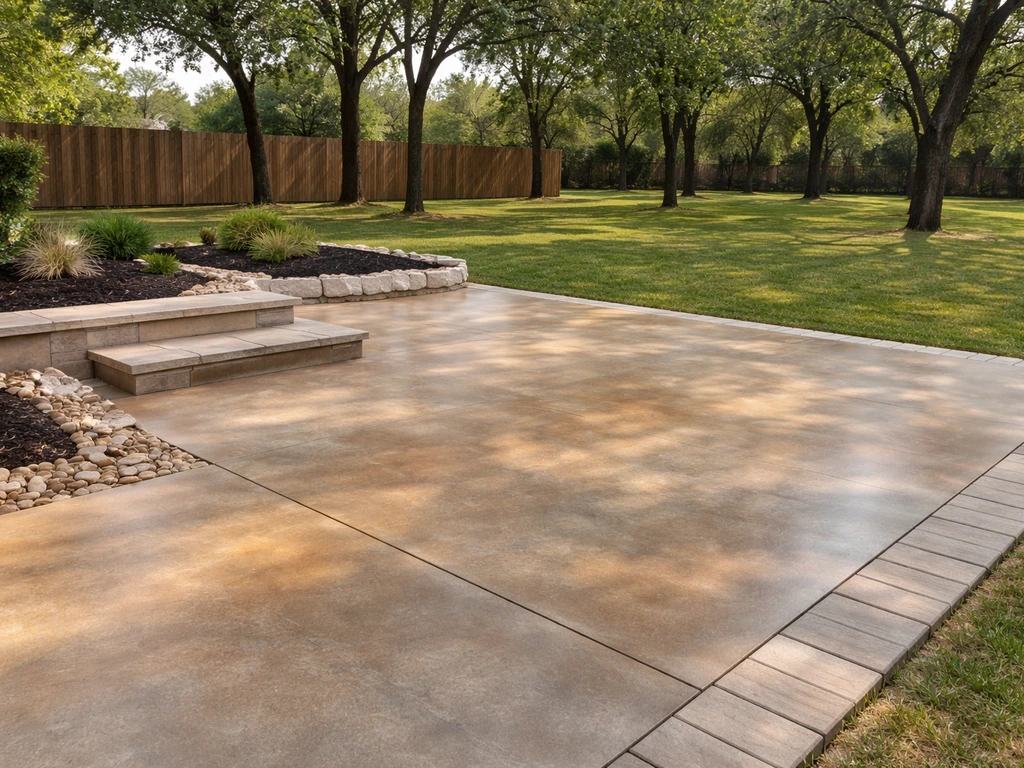
Texas Custom Patios Reviews: How to Evaluate Contractors
Learn how to read and compare Texas custom patio reviews and spot red flags, then ask the right questions to hire safely
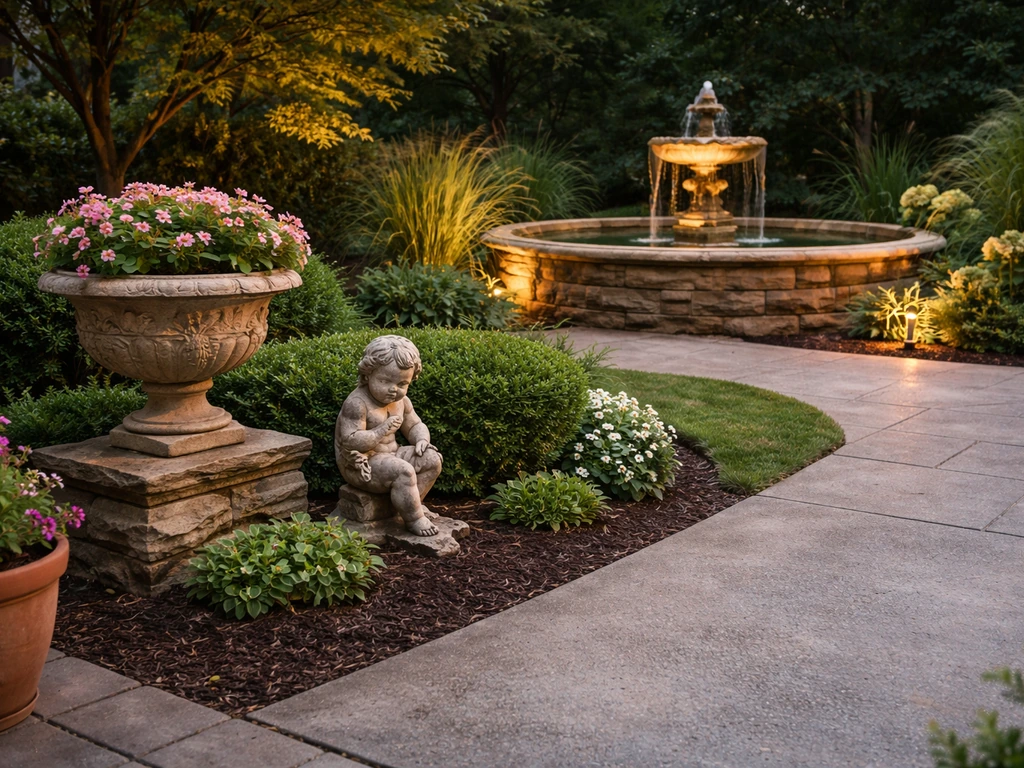
Texas Statuary Patio and Garden Reviews: Services and Red Flags
Texas patio and garden reviews guide to judge contractor quality, red flags, and due diligence steps fast.