
In Austin, 'patio enclosures' almost always means one of two things: a screen room (aluminum frame with mesh panels that keeps bugs out while letting air in) or a more enclosed three-season or sunroom structure with glass or acrylic panels that adds real weather protection. Screen rooms are by far the most popular choice here, and for good reason.
Patio Enclosures Austin Reviews: How to Choose a Contractor

Maren Lawson
27 Jun 2026
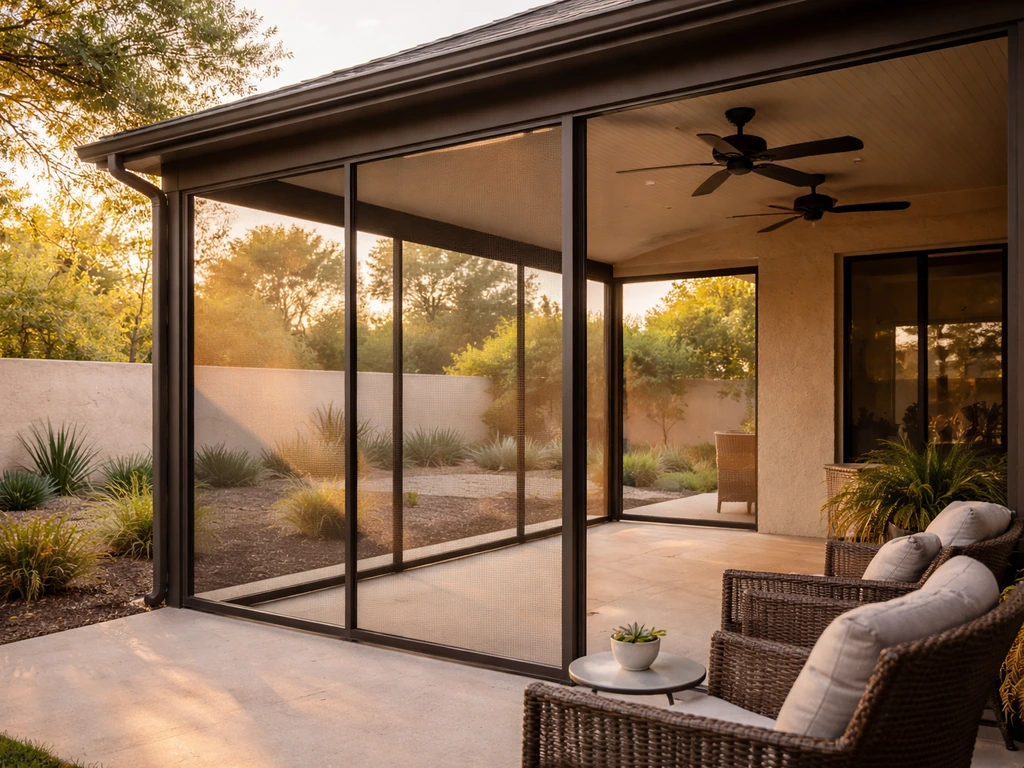
Austin's mosquito season runs basically year-round, the sun is brutal from May through October, and a screened structure costs a fraction of full glass. Texas Patio Covers emphasizes Austin-specific concerns like insect and mosquito season length and wind-resistance when choosing screen enclosures Austin's mosquito season runs basically year-round.
Most Austin homeowners searching for patio enclosure reviews are trying to figure out which local contractor will actually show up on time, pull the right permits, and build something that doesn't leak by the second rainstorm. To make the search easier, start with american patio enclosures reviews that focus on real Austin installs, not vague star ratings patio enclosure reviews. This guide walks you through exactly that.
What 'patio enclosures' actually means in Austin
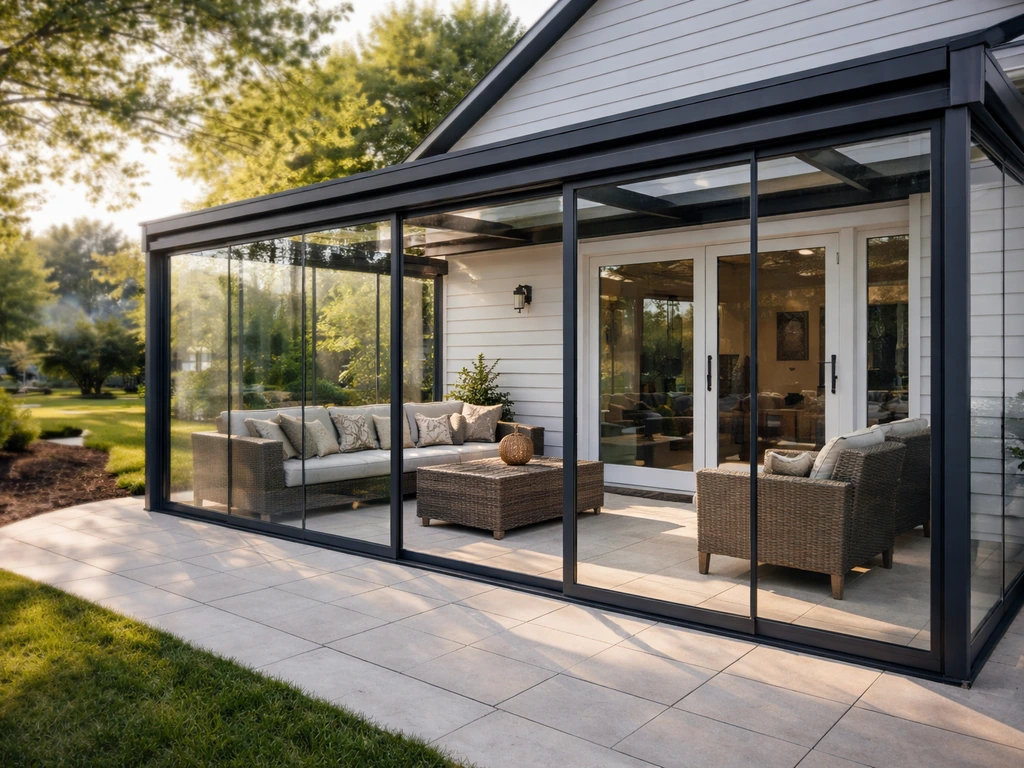
Austin's climate shapes what gets built more than almost anywhere else. Because of the heat and intense UV exposure, full glass enclosures (four-season sunrooms) are less common here than in northern cities. What you'll see most are screen rooms and alumawood or aluminum-framed screen enclosures with either a solid insulated roof panel or an open lattice top. Three-season rooms with tempered glass or polycarbonate panels do exist, and some homeowners go that route for a more finished look, but they cost significantly more to install and maintain.
Here's a practical breakdown of what each type delivers for Austin conditions:
| Type | Best For | Bug Protection | Sun/Heat Control | Weather Protection | Typical Cost Range |
|---|---|---|---|---|---|
| Screen room (aluminum frame) | Year-round outdoor living, fresh air, bug control | Excellent | Moderate (depends on roof) | Light (wind/light rain) | $7,500 to $32,000 |
| Three-season glass enclosure | Cooler months, more formal space, partial climate control | Excellent | Good with low-e glass | Strong (rain, wind) | $20,000 to $60,000+ |
| Insulated patio cover (no screening) | Shade, UV block, no enclosure | None | Very good | Partial (roof only) | $8,000 to $25,000 |
The screen room range ($7,500 to $32,000) reflects real Austin market pricing based on 2026 data. Size, mesh type (standard fiberglass vs. tighter no-see-um or pet-resistant mesh), and roof system drive the spread. A basic 12x16 screen room lands near the low end; a large custom enclosure with an insulated roof panel and privacy screens pushes toward the top. If a bid you receive falls well outside this range for comparable scope, that's worth questioning.
How to use Austin patio enclosure reviews to actually pick someone

The biggest mistake people make with contractor reviews is filtering by star rating alone. A company with a 4.2 average across 80 reviews often tells you more than a company with a 4.9 across 11 reviews. Volume matters because it's harder to fake or manage 80 experiences. More importantly, the content of reviews tells you things a star rating never will.
When you're reading Austin patio enclosure reviews on this site, look for reviews that include specific project details: what type of enclosure was built, roughly where in Austin (Cedar Park, South Austin, Round Rock, etc. If you are specifically searching for patio enclosure services in St. Louis, pay close attention to the patio enclosures St Louis reviews that include project details, timelines, and warranty follow-up. ), how long the project took, and what the post-install experience was like. Vague five-star reviews that say 'great job, highly recommend' without any specifics are nearly useless for your purposes. Reviews that mention the contractor by name, describe the material used, or reference a permit inspection carry much more weight.
One useful verification move: Austin's Open Data portal publishes issued construction permits. You can cross-reference a contractor's claimed work history against actual permit records by address. This isn't something most homeowners do, but if you're comparing two contractors and one has a history of verifiable permits while the other's reviews never mention permits at all, that's a real signal. More on permits below.
If you're comparing Austin contractors against national brands, it's worth knowing that some national enclosure companies also serve this market. Patio Enclosures (the national brand by Great Day Improvements) has an Austin presence and publishes reviews on Google, Facebook, and BBB. That gives you a useful baseline for comparing how a large brand's review pattern differs from a local independent shop's. Both have legitimate use cases depending on your budget and how much you value a local service relationship post-install.
What to compare across reviews: the four categories that actually matter
Not all review topics are equally predictive of your experience. Here are the four areas where review patterns give you the most reliable signal:
Build quality and materials
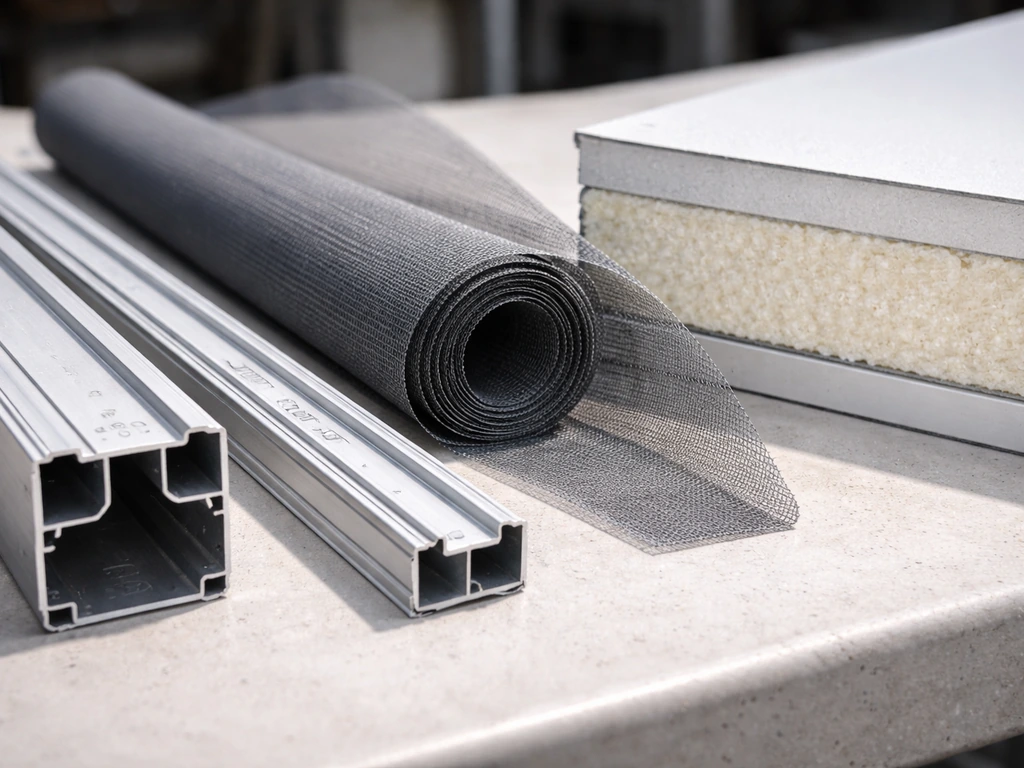
Look for reviews that mention specific materials: aluminum gauge, spline quality, mesh type, roof panel insulation values. Reviews that complain about screen looseness or spline failures are describing a real installation quality issue. Screen mesh is held in place by a spline pressed into a channel on the frame. When this is done poorly or with undersized spline, the mesh loosens, gaps appear, and you lose bug protection. Reviews mentioning this problem more than once across a contractor's history point to a systemic installation issue, not a one-off.
Timeline and communication
Austin's patio season creates real scheduling pressure from March through May, and again in September. Many homeowners book during peak season and get pushed back weeks without updates. Look for review patterns that mention whether the contractor communicated proactively about delays, showed up on the scheduled start date, and completed the job in the timeframe quoted. A single delay complaint matters less than three or four reviews all describing the same 'disappeared for two weeks mid-project' pattern.
Permits and inspections
This one trips up more Austin homeowners than anything else. Attached patio structures typically require a City of Austin building permit and a final inspection under the city's adopted codes, which include the 2024 International Building Code and 2024 International Energy Conservation Code. Not every enclosure project triggers a permit (some small detached structures may be exempt), but attached enclosures almost always do. The city's Development Services department publishes permit categories and exemption criteria, so you can verify this before signing anything.
In reviews, permit handling shows up in subtle ways. Positive reviews from careful homeowners will mention 'the inspector came out and passed it' or 'they handled all the permitting.' Red-flag reviews might describe work that started and finished in a few days with no inspection, or a contractor who said permits 'weren't necessary' for a clearly attached structure. If a contractor builds without required permits, you own that liability when you sell the house.
Post-install service and warranty support
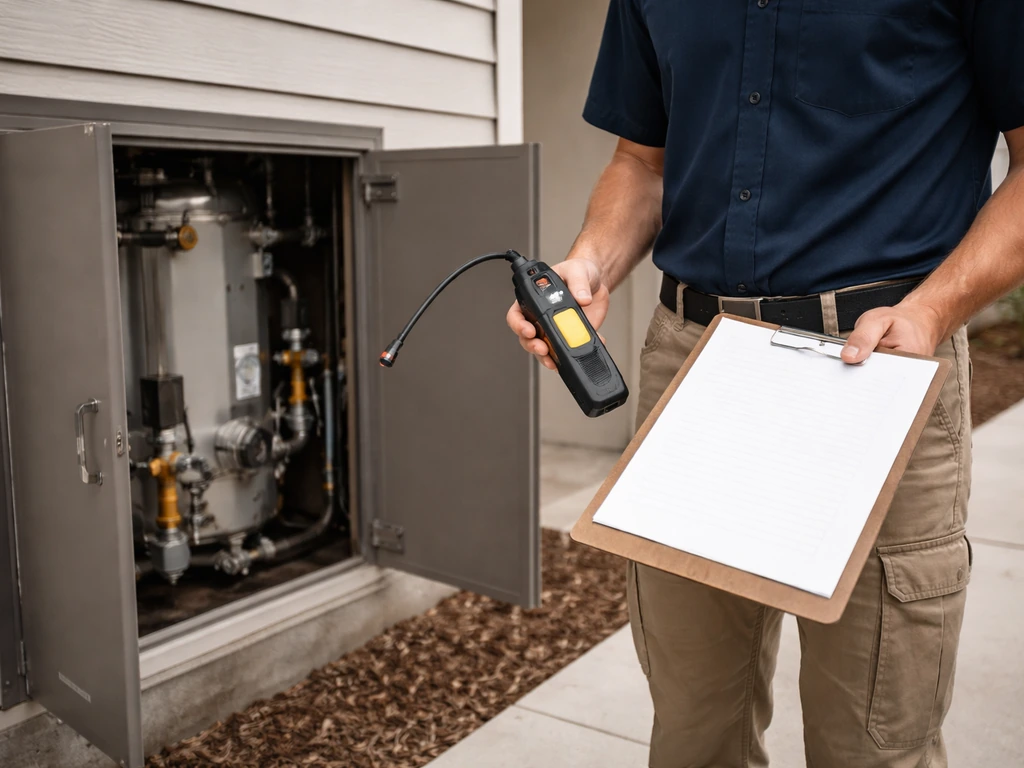
This is where most contractor reputations are actually made or broken. A leak that gets fixed on the first callback visit is a very different experience from a leak that gets three rounds of caulking over six months and never resolves. When reading reviews, specifically look for what happened when something went wrong. A real-world example that shows up in review patterns: a contractor installs a screen room, it leaks at the roof junction, and the crew returns twice to add more caulking without addressing the underlying flashing issue. That pattern of repeated temporary fixes without root-cause repair is a serious red flag. Look for reviews that describe the warranty claim experience, not just the installation.
For reference, a reasonable warranty baseline in this market looks like: aluminum structural components covered for at least five years, labor covered for at least one year. Some contractors offer limited lifetime warranties on aluminum products (with exclusions for moving parts like door hardware). Lone Star Patio Builders publishes its limited lifetime warranty language for its aluminum patio cover products, including how coverage works and which parts are excluded limited lifetime warranties on aluminum products. If a company's reviews never mention warranty support at all, that's worth asking about directly.
Green flags and red flags in Austin patio enclosure reviews
Here's how to read review content as signal rather than noise:
| Green Flags | Red Flags |
|---|---|
| Reviewer mentions specific materials, measurements, or project address | Vague reviews with no project detail ('great company!') |
| Permit and inspection mentioned as part of the normal process | Contractor said permits 'weren't needed' for an attached structure |
| Negative review was addressed publicly and resolved | Owner responses to negative reviews are defensive or dismissive |
| Timeline matched or was close to what was quoted | Multiple reviews describing mid-project disappearances or week-long silences |
| Post-install issue resolved in one service visit | Repeated callbacks for the same leak or structural problem |
| Warranty terms documented in writing before signing | Verbal warranty promises only; nothing in the contract |
| Reviews span multiple years (not a recent surge) | Sudden spike of five-star reviews in a 60-day window |
| Reviewer describes the crew by name or notes consistent team | Reviews mention different crews with inconsistent quality |
One pattern worth calling out specifically: a sudden surge of detailed-sounding five-star reviews over a short period, especially if they share similar phrasing, is a known manipulation tactic. Compare review dates. A contractor with 15 reviews spread over three years is more trustworthy than one with 40 reviews all from the past four months.
Also, don't dismiss companies based on one or two negative reviews. What matters is whether the negative reviews describe the same problem repeatedly (systemic) or whether they seem like isolated mismatches in expectations. A one-star review that says 'they didn't match the paint on my house' is very different from four reviews all describing leaking within six months of installation.
What drives patio enclosure pricing in Austin
Austin screen rooms range from roughly $7,500 to $32,000 for the most common configurations. Three-season glass enclosures start higher, typically $20,000 and up. Several factors drive where your project lands within that range:
- Size: Larger square footage increases both material and labor cost linearly. A 12x12 screen room and a 20x24 screen room are very different projects.
- Roof system: An open lattice roof is cheaper than a solid insulated panel. An insulated panel with a ceiling fan rough-in costs more. Adding a metal or tile roof to match your home adds significant cost.
- Mesh type: Standard fiberglass screening is least expensive. No-see-um mesh (tighter weave for smaller insects), pet-resistant mesh, or solar screen material all cost more per square foot.
- Aluminum quality and finish: Thicker-gauge aluminum framing and powder-coated finish options (especially custom colors) increase material cost.
- Permit fees and engineering: Austin permit fees are based on project valuation. For larger or more complex enclosures, wind-load engineering documentation may be required, which adds cost.
- Site conditions: Second-story enclosures, difficult access, or existing structures that need modification before installation all increase labor.
- Contractor overhead model: National brands typically have higher base pricing than local independents but may offer stronger warranty infrastructure.
When comparing bids, make sure you're comparing the same scope. A quote that looks $4,000 cheaper may be excluding permit fees, using thinner aluminum, or quoting a different mesh type. Ask each contractor to itemize: materials, labor, permit costs, and any engineering fees. That's the only way to do an honest apples-to-apples comparison.
Questions to ask on every quote, and documents to request

Before you sign anything, get answers to these questions in writing (or at minimum confirmed by email):
- Will this project require a City of Austin building permit? If yes, who pulls it and when? If no, what specifically exempts it?
- What aluminum gauge are you using for the framing, and what finish/color options are included in this price?
- What mesh type is included? Is no-see-um or pet-resistant mesh available, and what's the upcharge?
- What is the roof system, and what's the insulation R-value if it's a solid panel?
- What is the timeline from contract signing to completion, and what causes that to change?
- How do you handle a leak or installation defect discovered after the job is complete? What's the callback process?
- What does your warranty cover, for how long, and what's excluded? Do I get that in writing?
- Do you carry general liability insurance and workers' comp? Can I see current certificates?
- Are your installers employees or subcontractors? Does that change the warranty responsibility?
Documents you should request before signing:
- A detailed written contract with line-item scope, materials spec, start date, and completion estimate
- Written warranty terms (not a verbal promise, not a website URL: an actual document you keep)
- Current certificate of general liability insurance (you as homeowner should be listed as additionally insured)
- Proof of workers' compensation coverage, or a written explanation if they're exempt as a very small contractor
- Contractor's license number (verify with the Texas Department of Licensing and Regulation if applicable to their scope)
- A copy of the permit application once it's submitted, and the permit card before work starts
If a contractor resists providing any of these, that's more informative than any review you'll read. Legitimate contractors have this documentation ready to share.
Your step-by-step checklist from shortlist to booking
- Define your enclosure type before you start calling. Decide whether you want a screen room, a three-season glass enclosure, or a covered patio with screening. This prevents contractors from up-selling you during the quote process.
- Build a shortlist of three to five Austin-area contractors using verified reviews. Look for contractors with at least 20 reviews, a review history spanning more than one year, and specific project details in the feedback.
- Check permit history on Austin's Open Data portal. Search by contractor name or address to see whether their claimed projects show permit records. Gaps are worth asking about.
- Verify insurance and licensing before scheduling a site visit. You can confirm this over the phone in two minutes. If they can't confirm it, don't book the visit.
- Get at least three quotes with the same scope documented. Use the itemized format: materials, labor, permits, engineering. Tell each contractor exactly the same things about your project.
- Read the negative reviews for each finalist specifically. Look for patterns, not one-off complaints. Focus on post-install service behavior and whether the company resolved problems.
- Ask each contractor for two or three recent local references you can call. If they can't provide any, that's a red flag regardless of their online reviews.
- Review the contract line by line before signing. Confirm the permit plan, materials spec, timeline, payment schedule (avoid paying more than 30 to 40 percent upfront), and written warranty.
- Confirm the permit is pulled before work starts. Do not let crews begin before you see the permit card posted or have written confirmation the permit is active.
- Do a walkthrough at completion before final payment. Check screen tension (push gently on panels; tight and consistent is correct), door operation, roof junction seals, and drainage direction. Get any punch list items in writing before writing the last check.
One final note: even a contractor with mostly positive reviews should get your full scrutiny on the documentation side. Positive reviews often reflect the installation experience, not the warranty experience. Those two things can be very different. The companies that hold up well over time are the ones who make the callback and warranty process as smooth as the original install. That's ultimately what the best Austin patio enclosure reviews will tell you if you know how to read them. If you are looking at Great Day Improvements reviews, use the same checklist to confirm materials, timeline, and the way they handle warranty callbacks Austin patio enclosure reviews.
FAQ
How can I tell from reviews whether a patio enclosure will actually keep bugs out in Austin?
Pay attention to mentions of mesh type and how it stays tight. Reviews that specifically cite spline quality, mesh loosening, gaps around corners, or repeated “bugs getting in” complaints are the most predictive. Also look for whether the reviewer describes fixes that corrected the underlying fit (re-spline or rework) rather than just adding a patch or spray.
Are screen rooms or three-season glass enclosures better for resale value in Austin?
Most buyers in Austin tend to favor screened structures for cost and comfort, but the key resale factor is whether the enclosure is permitted, properly flashed, and easy to maintain. If a review mentions clean permit closeout, clear documentation, and straightforward warranty support, that typically signals a better long-term ownership experience than reviews that focus only on the install-day appearance.
What should I ask contractors if their bid is much lower than others in the Austin patio enclosures reviews I’m seeing?
Ask for a line-item scope that includes permit fees, insulation (if any), mesh specification, roof type, and hardware details. Then compare whether they are quoting the same size, roof pitch, and attachment method. A low bid that does not clearly match the same materials or roof system usually indicates thinner components, different mesh, or omissions that get billed later.
If a contractor says permits are not needed, what is the safest way to handle that?
Require the contractor to confirm in writing whether your enclosure is attached, whether it triggers a permit, and which exemption they believe applies (if any). Then verify against Austin Development Services exemption criteria before paying. Reviews that mention “permits not necessary” for clearly attached structures are a major risk signal.
How do I interpret reviews that complain about delays during March to May or September?
Treat delays as meaningful only when the review describes poor communication and repeated missed milestones. Look for whether the contractor provided proactive updates, revised schedules in writing, and confirmed crew arrival dates. One late-review may be an anomaly, but multiple reviews describing the same “no updates for weeks” pattern are a consistent operational red flag.
What should I look for in reviews about leaks, especially at roof junctions?
Look for root-cause repair details. Reviews that describe only temporary caulking or multiple callbacks without addressing flashing, roof-panel seals, or the junction design are a sign the underlying installation issue was never corrected. The best reviews explain what component failed and how it was rebuilt or re-flashed.
Do patio enclosures warranties typically cover frame and roof components, or mainly labor?
Use the reviews as a clue, then confirm the warranty in writing. A common baseline mentioned by contractors is longer coverage for aluminum structural components and shorter coverage for labor, but the exclusions matter (moving parts, door hardware, specific roof elements). If reviews never mention warranty callbacks or describe long response times, ask directly about claim timelines and what “covered” means for your exact issue.
What documents should I request specifically to protect myself if I ever sell my home?
Ask for permit application and permit closeout details, any final inspection paperwork, and a copy of product specifications for the enclosure materials (mesh type, frame details, roof system). These are often not obvious in general “documentation” lists, but they are what you will want to share during a future buyer’s inspection or a home disclosure.
How can I spot potential fake or manipulated reviews in patio enclosure listings?
Compare review dates and phrasing patterns. A sudden spike of highly detailed five-star reviews over a short period, especially if multiple reviews read similarly, is a caution flag. Also prioritize reviews that include specific project details like installation location area, timeline, and the warranty or callback experience.
What’s the most useful question to ask to compare two contractors who both have good patio enclosures austin reviews?
Ask how they handle the full “from permitting to callbacks” process: who pulls the permit, how inspections are scheduled, and what happens when there is a leak or gap after install. Contractors who can describe the callback workflow clearly, mention inspection sequencing, and provide written timelines usually perform better than those who only talk about the build-day experience.
Next Articles
Patio Enclosures St Louis Reviews: How to Choose a Pro
Use St. Louis patio enclosure reviews to compare pros: options, local durability, costs, red flags, and pre-hire questio
Patio Enclosures by Great Day Improvements Reviews: Worth It?
Reviews breakdown of Great Day Improvements patio enclosures: workmanship, materials, install timeline, warranty, red an
American Patio Enclosures Reviews: What to Check Before Hiring
Learn how to judge American Patio Enclosures reviews: services, costs, durability, red flags, and questions to hire conf