
Reading reviews for pools, patios, decks, and outdoor living contractors is genuinely useful, but only if you know what to look for. The goal isn't to find a company with a perfect score. It's to figure out whether their typical project matches your project, spot the failure patterns that keep showing up, and walk into your first call armed with the right questions. Done right, this process will save you from the most common outdoor contractor disasters: scope creep, hidden change orders, drainage problems, and projects that stall halfway through.
Pools Patios Decks and More Reviews: Hire the Right Contractor

Maren Lawson
27 May 2026
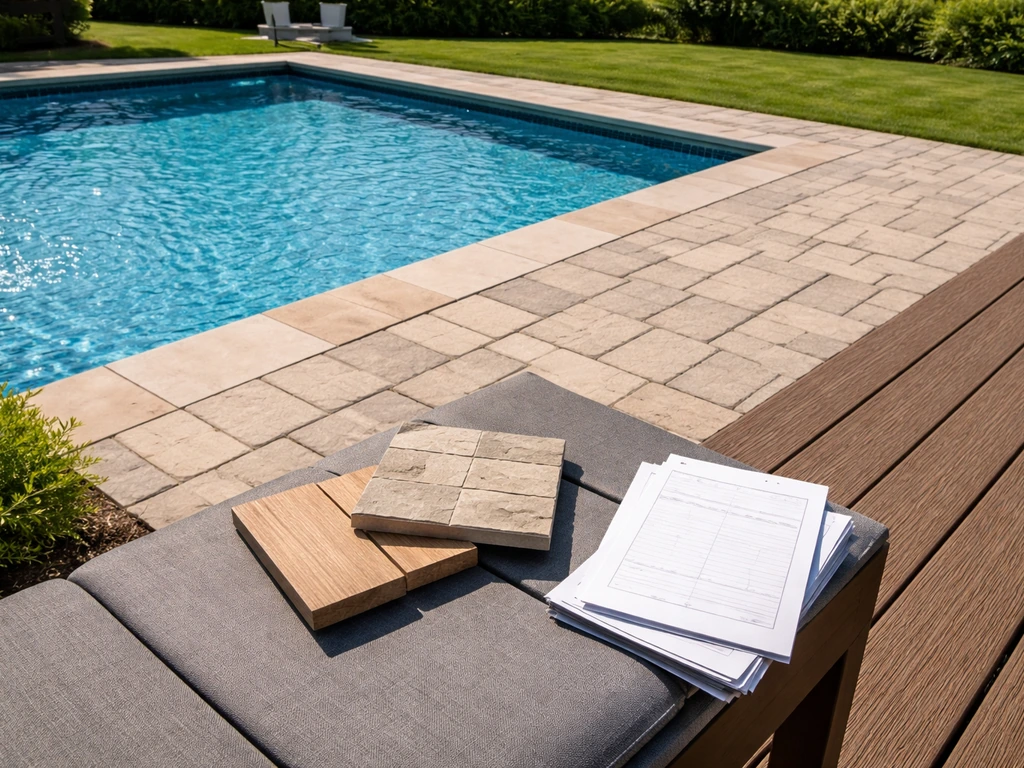
What 'pools, patios, decks and more' coverage actually means
The phrase covers a surprisingly wide range of work, and that range matters when you're reading reviews. A contractor who builds stunning custom pool decks may have no real experience with sunroom enclosures. A patio company that pours concrete slabs might not touch deck framing. Review sites like this one organize these specialties so you can filter to the right type of contractor, but it's still worth understanding how the categories break down before you start reading.
- Pool construction and renovation: in-ground pools, above-ground pools, pool deck design and construction, water features
- Patio construction: concrete slabs, pavers, flagstone, covered patios, patio drainage and grading
- Deck building: wood, composite, PVC, multi-level decks, deck-to-pool connections
- Enclosures and sunrooms: screen enclosures, sunroom design and construction, pergolas, gazebos, covered structures
- Outdoor living specialists: full outdoor kitchen and living area builds that combine multiple categories above
One contractor's profile on a platform like Houzz might legitimately list deck building, patio construction, pool deck design, and sunroom construction all at once. That breadth is possible, but it also means you need to dig into their actual completed projects, not just their listed services. Reviews and project photos will tell you what they do most often and what their real quality looks like. If you are specifically looking into Watson's pools and patios reviews, compare the concrete and finishing details shown in their project photos against what the reviewers describe.
How to evaluate the reviews themselves

Not all reviews carry the same weight. A verified review tied to a confirmed project is worth far more than an anonymous one-liner. Platforms like Angi and Thumbtack explicitly flag verified reviews, meaning the reviewer has been confirmed as a real customer (not a competitor, not a family member, not a bot). When a platform says it may contact reviewers to confirm they're genuine, that friction actually improves reliability. Start by filtering to verified reviews and ignoring unverified star ratings.
Beyond verification, look for specificity. A useful review says something like: 'they installed 400 square feet of travertine pavers, the drainage was graded correctly, and they came back within a week to fix a wobble in one corner.' A useless review says 'great work, very professional.' When you're scanning a contractor's review history, you want detail: what was built, how long it took, whether it matched the quote, and how the company handled problems. Those specifics tell you far more than the star rating itself.
Recency also matters. On platforms like Yelp, older reviews can appear above newer ones depending on sort logic and voting patterns, so don't assume the first review you see is the most current. Manually sort by date to get a sense of whether quality has improved, declined, or stayed consistent in the last 12 to 18 months. A contractor with great reviews from three years ago but several complaints in the past six months is showing you a trend you need to take seriously.
Reviewer credibility signals worth checking
- Review is verified by the platform as coming from a real, confirmed customer
- Reviewer describes specific project details (size, materials, timeline, price range)
- Review mentions both positives and negatives, rather than reading like a marketing blurb
- Reviewer has a history of other reviews (not a single-review account created the same week)
- The contractor's response to negative reviews is calm, specific, and solution-oriented rather than defensive
Comparing contractors: ratings, scope, and project fit
Once you've built a shortlist from review aggregators, the comparison isn't just about who has the higher rating. If you're comparing contractors with pettis pools & patio reviews, still prioritize scope alignment and project-fit over a single overall rating. A 4.7 contractor who primarily does high-end custom pools may be a terrible fit for a straightforward composite deck. You need to compare scope alignment, not just scores.
| What to Compare | Why It Matters | Where to Find It |
|---|---|---|
| Typical project type | Ensures the contractor's core work matches your project | Project photos, review descriptions, service listings |
| Materials commonly used | Reveals whether they work with your preferred material (pavers, composite, concrete, etc.) | Review mentions, contractor portfolio |
| Average project size/complexity | Flags whether custom work or standard installs are their strength | Detailed reviews, before/after photos |
| License verification | Confirms legitimacy; platforms like Houzz offer a Verified License badge with license details | Contractor profile badge or state licensing board |
| BBB standing and complaints | Reveals dispute patterns that reviews alone may not show | BBB.org company listing |
| Design/build vs. install-only | Determines whether they handle planning and permits or just labor | Service description and review context |
Don't skip the license check. A Verified License badge on a contractor's profile means they've submitted their license information and it's been confirmed. For pools specifically, most states require a separate pool contractor license. For decks and enclosures, building permits are nearly universal. A contractor who isn't properly licensed for your project type is a red flag even if they have five-star reviews, because unlicensed work can create permitting problems when you sell your home.
It's also worth knowing how regional specialists compare. Contractor groups like those reviewed under Texas Pools and Patios, AMD Pools and Patios, Unique Patios and Pools, Watson's Pools and Patios, and Pettis Pools and Patio each reflect different regional strengths, service mixes, and customer experiences. If you're searching for texas pools and patios reviews, compare how local contractors handle similar projects, timelines, and drainage issues in your area.
Reading reviews across multiple providers in your region gives you a realistic baseline for what to expect from local contractors in terms of pricing, timelines, and common issues. If you're looking for Pettis Pools & Patio reviews specifically, use the same approach to compare verified project details and scope fit. For a closer look at unique patios and pools reviews, compare specific project outcomes, not just overall star ratings.
Questions to ask before you sign anything
This is where most homeowners skip steps. Reviews get you to the shortlist. The questions you ask in person determine whether you actually hire the right contractor. Here's what to cover in every contractor conversation, based on what professional contractor checklists (including NARI's standard guidance) and real BBB complaint patterns show matter most. Sweeten recommends reviewing before-and-after photos and permit sign-off context, and also asking contractors how they price and approve change orders, including requesting a sample change-order form.
Scope and contract
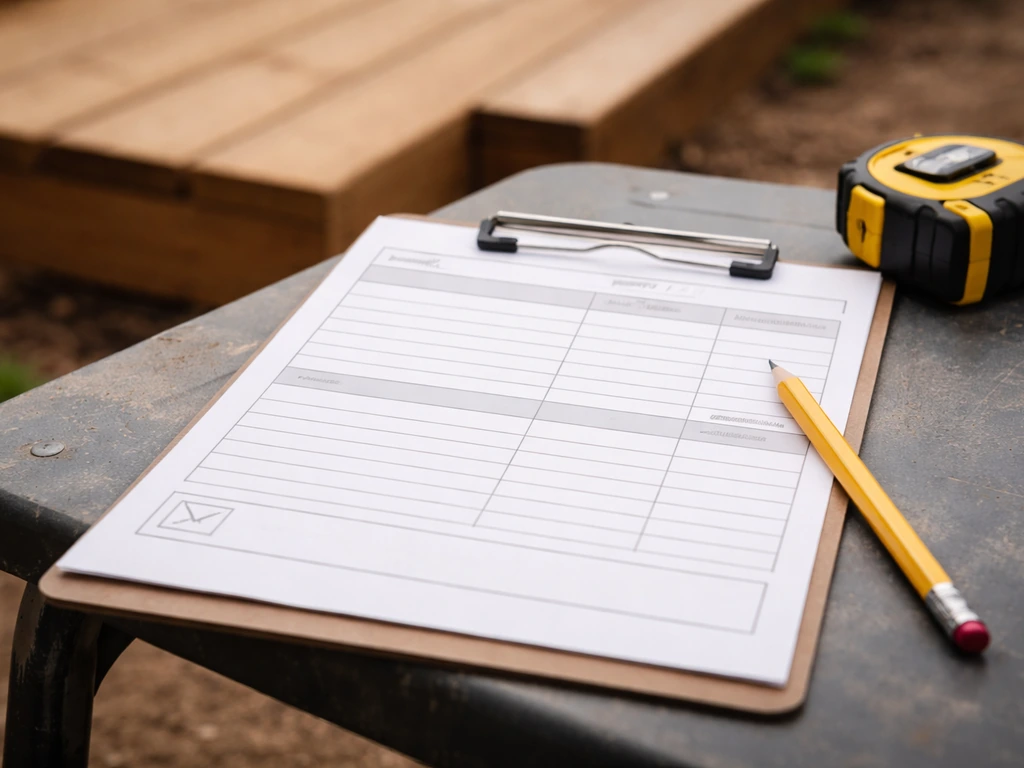
- Can I get a written, itemized estimate that specifies materials, quantities, and labor separately? Vague lump-sum bids are a warning sign.
- What is your change-order process? Ask them to walk you through exactly how scope changes are documented, priced, and approved. Better yet, ask for a sample change-order form so you can see how they track added labor hours, materials, and days.
- What happens if material costs rise between signing and construction? Do they lock in prices or pass increases to you?
- What is specifically excluded from the contract? Get exclusions in writing.
Permits and inspections
- Does this project require a building permit? For virtually any deck, pool, or enclosure, the answer should be yes.
- Who pulls the permit, you or me? The contractor should pull it. If they want you to pull it, ask why.
- Will inspections be scheduled and documented? Keep copies of all permit approvals and inspection sign-offs.
- Have you built this type of project in this municipality before? Local code familiarity speeds up inspections and reduces surprises.
Timeline and communication
- What is the realistic start date and completion date, in writing?
- How many crews or subcontractors will be on site, and who manages them?
- How will you communicate with me during the project (calls, texts, a project management app)?
- What is the typical reason your projects run over schedule, and how do you handle that?
Warranties and cleanup
- What workmanship warranty do you offer, and what does it cover specifically?
- Are product/material warranties separate, and how do you help me file a claim if needed?
- What does your cleanup process look like at the end of each work day and at project completion?
- Who is responsible for restoring any landscaping, irrigation, or surfaces disturbed during construction?
Red flags that keep showing up in reviews
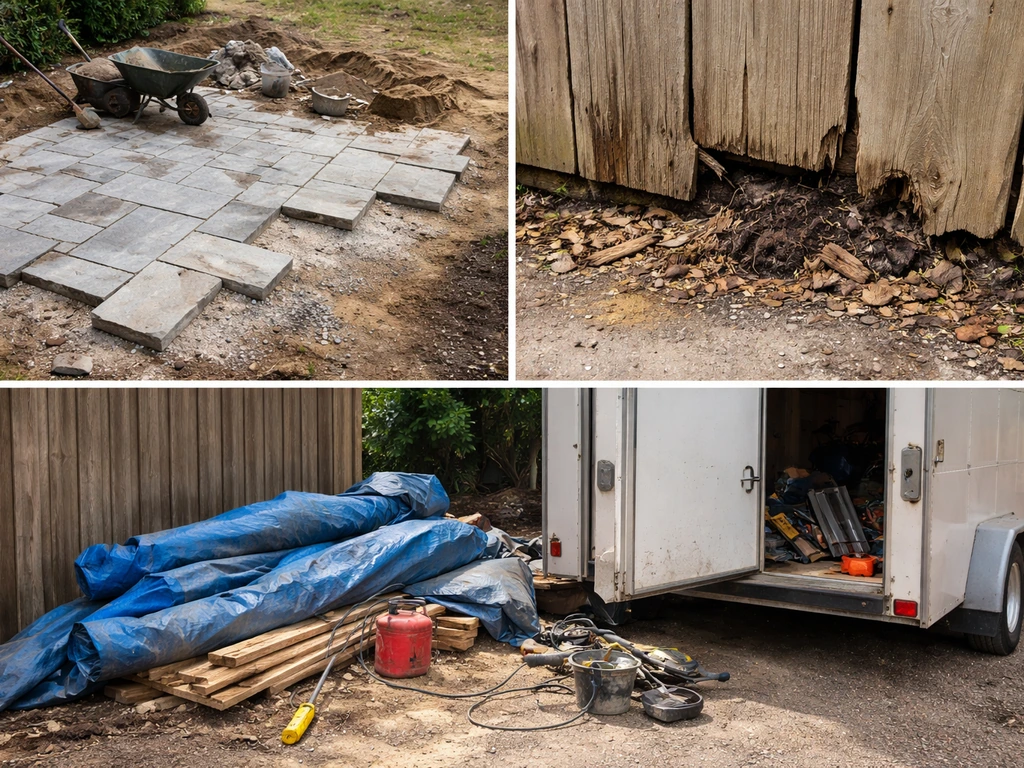
When you read through enough contractor reviews and BBB complaints for outdoor living companies, certain problems appear repeatedly. These aren't random bad luck. They're systemic failure patterns that a good review-reading approach will help you spot before you sign.
- Contract expectations vs. final work: A signed contract doesn't guarantee the work will match what was described. Look for reviews that mention disputes over quality after completion, especially where the contractor became unresponsive once problems were raised. This is the most common complaint pattern in BBB filings for pool and patio companies.
- Disappearing after deposit: Reviews that describe a contractor collecting a substantial deposit, then going quiet or showing up inconsistently, are a serious warning. If several reviews mention this pattern, walk away.
- Poor drainage and grading: For patios, pool decks, and driveways, bad drainage is the most technically damaging failure. Permeable paving and proper slope design matter. Reviewers who mention water pooling near their foundation after a patio installation are describing a problem that can cost thousands to fix.
- Freeze-thaw failures in cold climates: Concrete that isn't properly jointed and sealed in freeze-thaw climates will crack and heave within a few winters. Expansion joints at the interface between a patio slab and a house foundation are required by good practice, not optional. Reviews mentioning cracking in the first winter are a red flag about the contractor's technical standards.
- Scope creep through verbal change orders: If a contractor describes changes verbally but doesn't put them in writing, you have no recourse when the bill comes in higher than expected. Reviews that say 'the final cost was double the estimate' almost always involve verbal scope changes.
- Permit problems discovered after the fact: Some contractors skip permits to speed up the job. The homeowner discovers the problem when they try to sell the house. Reviews rarely mention this directly, but ask former customers explicitly whether permits were pulled and inspections were completed.
- Subcontractor quality gaps: A contractor with great reviews for their own work may subcontract specialties (electrical for outdoor lighting, plumbing for water features) to subs they don't supervise closely. Ask who does each part of your project.
How to shortlist and get quotes efficiently
Here's a practical process you can run this week, not eventually. It works whether you're looking for a pool builder, a patio contractor, or someone to build a full outdoor living space.
- Build your initial list: Use this site and at least one other platform (Angi, Houzz, or Thumbtack) to find 6 to 8 contractors in your area who specialize in your specific project type. Don't rely on a single source.
- Filter to verified reviews and check recency: Only consider contractors with verified reviews, a minimum of 10 reviews total, and at least a few reviews from the past 12 months. Sort by date to spot trends.
- Cross-check BBB and license boards: Look up each contractor on BBB.org and your state's contractor licensing board. Verify that their license covers the specific type of work you need (pool construction licenses are separate from general contractor licenses in most states).
- Narrow to 3 contractors: Cut anyone with unresolved BBB complaints, license issues, or a clear pattern of unresponsiveness in reviews. Your shortlist should be 3 contractors you'd genuinely be comfortable hiring.
- Request detailed written quotes from all three: Give each contractor the same written project description so you're comparing like for like. Ask for itemized estimates with materials, labor, and exclusions listed separately.
- Ask the questions from the hiring checklist above: Run through every question in person or on a call. How they answer tells you as much as the answer itself. A contractor who gets defensive about change-order processes is showing you something important.
- Check references: Ask each contractor for two or three recent customers whose projects match yours in size and type. Call them and ask specifically about how the contractor handled problems, not just whether they're happy overall.
- Compare and decide: Weigh price, scope alignment, license status, communication style, and the quality of their written contract. The lowest bid almost never produces the best outcome for outdoor construction.
Regional considerations across North America
Where you live shapes almost every technical decision in your outdoor project, and it should shape how you read regional reviews too. A glowing review for a pool contractor in Phoenix tells you nothing about whether that contractor's approach would hold up in Minnesota. When you're reading reviews and comparing contractors, filter to reviewers in your climate zone, not just your city.
Cold climates (Canada, upper Midwest, Northeast US)
Freeze-thaw cycles are your biggest technical risk. Concrete patios, pool decks, and pavers all expand and contract with temperature swings, and a contractor who doesn't install proper expansion and control joints, or who uses materials with poor freeze-thaw ratings, will produce work that fails within a few seasons. Ask specifically about joint placement standards and the concrete mix specifications they use. Permits are also heavily enforced in most Canadian provinces and northern US states, so a contractor comfortable with local inspectors is genuinely valuable.
Hot and humid climates (Southeast US, Gulf Coast, Florida)
Pool enclosures and screen rooms are far more common here than in other regions, and the review landscape reflects that. You'll find more contractors with genuine enclosure experience, but also more complaints about hurricane-related damage clauses and post-storm responsiveness. Drainage is critical: the combination of heavy rainfall and flat terrain means any patio or pool deck built without proper slope and runoff management will have standing water problems. EPA guidance on permeable pavement highlights that runoff-management design choices matter, and permeable surfaces can reduce runoff and the need for conventional drainage features. Check reviews specifically for drainage complaints, especially in Florida markets.
Arid climates (Southwest US)
Pool construction is extremely common here, and many contractors are highly experienced. The main technical risk shifts from freeze-thaw to heat expansion, UV degradation of materials, and water efficiency design. The EPA's WaterSense program provides guidance on water-efficient pool design that matters significantly in drought-prone states like Arizona, Nevada, and California. Ask contractors about their experience with water-efficient pool systems and permeable paving options that reduce runoff and water use.
Seasonal scheduling across regions
In northern climates, the outdoor construction season is compressed into roughly May through October, which means contractor availability gets tight fast. If you're reading reviews in spring and planning a summer project, you're likely already behind schedule for the best contractors. In southern states, the calendar is longer but summer heat can slow concrete work. The practical advice: start your review research and contractor outreach 3 to 4 months before your target start date, regardless of where you live. The contractors with the best reviews are booked earliest.
FAQ
How can I tell if reviews are signaling a risk of hidden change orders?
Ask for a written line-item breakdown that matches your quote scope, including concrete subbase prep, drainage plan, joint/cut layout, coping, and any landscaping tie-ins. If the quote is lump-sum without these items, it commonly turns into change orders once measurements and subgrade conditions are confirmed.
What should I look for in reviews to spot drainage problems before I hire anyone?
Look for wording about “as-built” or “final grade,” not just “finished.” A contractor who plans drainage in advance will describe slope direction, where runoff goes (inlet, swale, or dry well), and how they protected drainage during construction, not after the patio is already laid.
If a review doesn’t mention soil or subgrade, what questions should I ask to cover that gap?
In your contractor call, ask whether they design around your soil conditions and how they handle soft spots. For example, you want to hear what they do for compaction testing, removal of unsuitable fill, and whether they adjust the base thickness based on what they find on site.
How do I verify a contractor will handle permits and inspections correctly?
Request their permit workflow and inspection schedule, including who submits (contractor vs homeowner) and how they handle failed inspections. In reviews, prioritize contractors whose problems were described as resolved with rework and passed reinspection, not simply “they fixed it later.”
What are common review clues that a contractor may not use freeze-thaw appropriate methods?
Freeze-thaw failures often show up as cracking, heaving, or shifting pavers within a few seasons. Ask what joint spacing standards they follow, what they use for the edge restraint, and whether they use freeze-thaw rated products for your exact climate, then compare those answers to any past review complaints about repeated repairs.
How can I assess the likelihood of settlement, wobble, or uneven surfaces?
For pavers and decks, ask who is responsible for leveling, what leveling system they use (sand mix type, base compaction depth), and whether they return to correct any settlement within a specified timeframe. Reviews that mention “after a rain it shifted” or “wobble returned after a fix” are especially telling.
If a contractor lists pools, patios, decks, and enclosures, how do I confirm they truly match my project type?
When a contractor offers a broad specialty mix, ask them for at least two recent projects that match your exact structure type (for example, deck framing plus railings, or pool deck plus coping) and request to see photos from every stage, base work through finish. If they can’t walk you through stages, the reviews may be more marketing than proof.
Should I weigh reviews from different climates differently?
Filter to reviews that include measurable scope, timelines, and problem handling, then check whether the reviewer’s project location is similar in climate. A strong review from a different region may still be useful for craftsmanship, but it is less reliable for drainage, freeze-thaw, heat expansion, and weather durability outcomes.
How can I use reviews to judge material quality instead of just professionalism?
Ask for the materials specifications (freeze-thaw rating, UV rating, thickness, and mortar/adhesive type). Reviews that only say “high quality materials” are weaker than reviews describing exact product performance, such as fading, scaling, peeling, or staining after storms.
What questions help me prevent schedule stalling during a multi-week outdoor build?
Request a written schedule with dependencies (permits, ordering, excavation, curing time, and inspection milestones). Then ask how they handle weather delays, what work continues during heat or storms, and whether they have a rescheduling policy that affects your milestone payments.
How do I protect myself from surprises in pool enclosure or screen room hurricane clauses?
For enclosed spaces and pools, ask whether they follow manufacturer install requirements, what their storm response process is, and whether they include exclusions for hurricane or high-wind events. In reviews, look for details about response time, assessment, and what was covered or not covered, since that’s where disputes often begin.
What should I ask about water efficiency if I’m building a pool in a drought-prone area?
Ask about their water efficiency approach, including filtration upgrades, leak detection practices, and how they plan for drought conditions. If reviews mention high evaporation losses, inefficient pumps, or frequent adjustments, that can point to weak water system design even if the pool build itself looks good initially.
How can I use reviews to negotiate a warranty I can actually rely on?
A good next step is to compare the contractor’s warranty terms to the failure patterns mentioned in reviews. Specifically, ask what triggers warranty service, how long coverage lasts for structural versus surface items, and whether they charge travel or labor for warranty callouts.
What should I check regarding insurance and property protection before the work starts?
Ask for a current insurance certificate and confirm the type and limits, then ask how they protect neighboring property and landscaping during excavation and installation. Reviews that repeatedly mention damages to existing structures, landscaping cleanup issues, or missing protection during work are strong indicators of operational gaps.
Next Articles
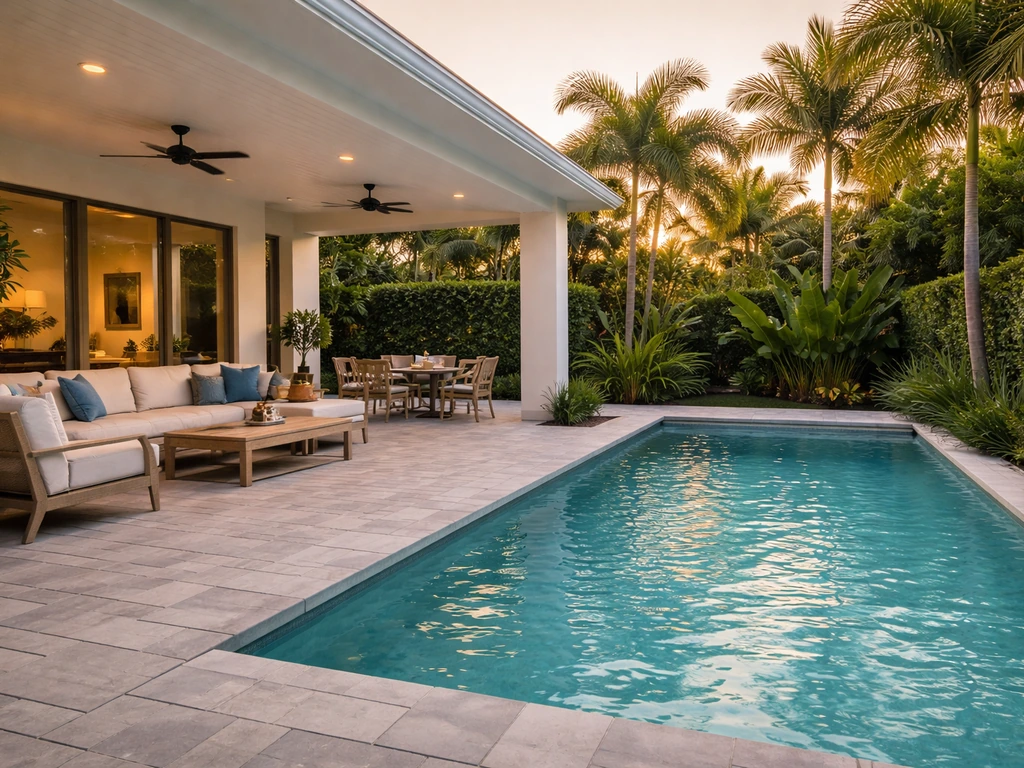
Unique Patios and Pools Reviews: How to Verify Fit
How to verify Unique Patios and Pools via reviews, spot red flags, and compare patio and pool contractors before hiring.
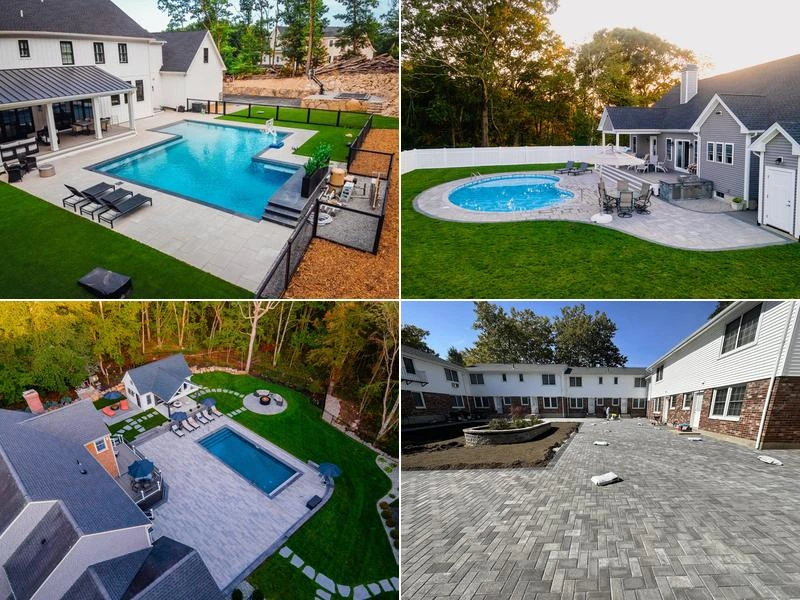
AMD Pools and Patios Reviews: How to Choose the Right Contractor
Compare AMD Pools and Patios reviews to pick the right contractor using key signals, red flags, and a hiring checklist.
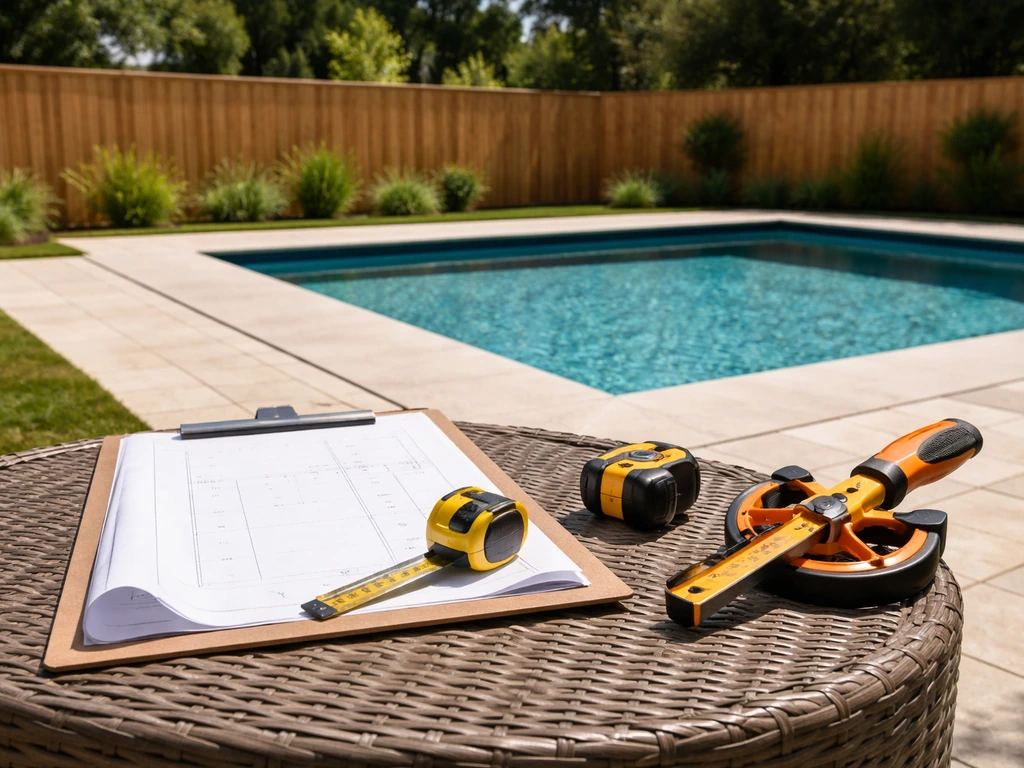
Texas Pools and Patios Reviews: How to Vet the Builder
Step-by-step guide to vet Texas Pools and Patios reviews, spot red flags, and shortlist a pool or patio builder fast.