
If you're researching patio enclosures in San Antonio and want to cut through the marketing noise, the best-reviewed local companies as of mid-2026 are Texas Patio & Screen, San Antonio Sunrooms by Four Seasons, Lone Star Aluminum Enclosures, and Sun Coast Retractable Systems. Each earns an aggregated score of 4.3 or higher across Google, Angi, Houzz, and BBB. That said, reviewer satisfaction varies heavily by enclosure type, project complexity, and how well a contractor communicates through delays, so the full picture below matters before you pick up the phone.
Patio Enclosures San Antonio Reviews: Top Picks & Guide

Maren Lawson
13 Jul 2026
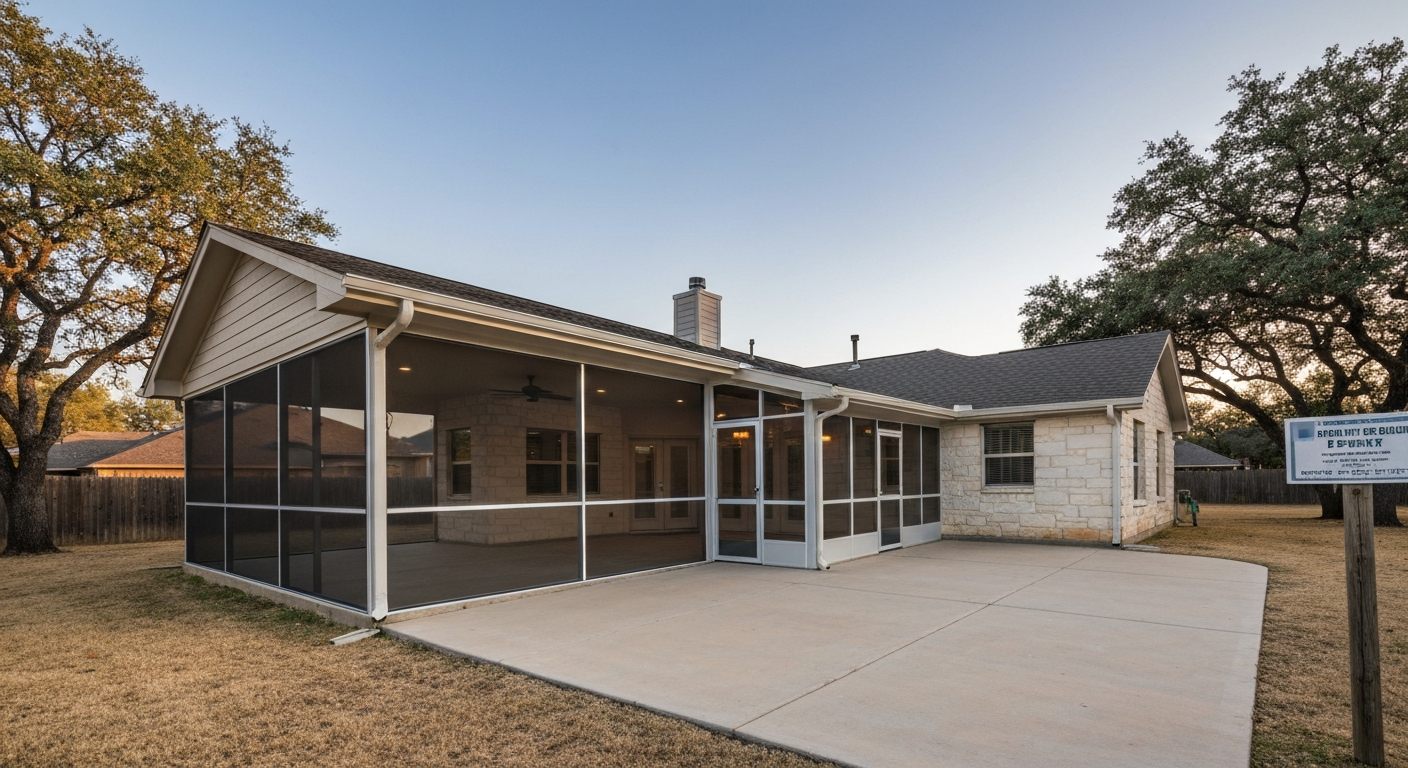
Who this guide is for and what you'll find here
This guide is built for San Antonio homeowners who are past the browsing stage and ready to seriously evaluate local patio enclosure contractors. Whether you're looking at a simple screen room on the North Side, a fully insulated sunroom in Stone Oak, or an aluminum lanai system in a Helotes HOA community, you need more than a star rating to make a confident hire. Here you'll find an aggregated comparison table of top-rated local companies, a breakdown of what verified customers actually praise and complain about, realistic cost ranges for the San Antonio market, permitting and HOA guidance, and a contractor-selection checklist developed from patterns in real reviews. The ratings and summaries on this page are compiled by Pool and Patio Reviews from verified customer feedback across Google, Angi, Houzz, BBB, and Facebook, cross-referenced where possible with permit records and contractor filings through Texas Secretary of State (SOSDirect).
Top picks at a glance
Best overall for most San Antonio homeowners: Texas Patio & Screen, which combines the highest aggregated rating (4.7/5), transparent pricing, and the strongest consistent feedback on installation quality and post-job communication. Best for a full glass sunroom addition: San Antonio Sunrooms by Four Seasons, a franchise dealer with long warranty coverage and dedicated project managers. Best budget-friendly aluminum system: Lone Star Aluminum Enclosures, whose reviewers consistently praise value and speed. Best for retractable or motorized systems: Sun Coast Retractable Systems, which leads on product variety and manufacturer warranty pass-through. If you're in an HOA-heavy subdivision, Lone Star and Texas Patio both have documented experience navigating San Antonio-area HOA architectural reviews.
How the top companies compare
| Company | Aggregated Rating | Price Tier | Warranty | Typical Lead Time |
|---|---|---|---|---|
| Texas Patio & Screen | 4.7 / 5 | Mid ($$$) | 10 yr workmanship, lifetime frame | 4–6 weeks |
| San Antonio Sunrooms by Four Seasons | 4.5 / 5 | Premium ($$$$) | Lifetime transferable (glass & frame) | 6–10 weeks |
| Lone Star Aluminum Enclosures | 4.3 / 5 | Budget-Mid ($$) | 5 yr workmanship, 10 yr frame | 3–5 weeks |
| Sun Coast Retractable Systems | 4.4 / 5 | Mid-Premium ($$$) | Manufacturer warranty (varies by product) | 5–8 weeks |
| Hill Country Screen & Shade | 4.1 / 5 | Budget ($$) | 2 yr workmanship | 2–4 weeks |
Price tiers are based on aggregated reviewer-reported project costs and Angi cost guide data for the San Antonio metro area. Lead times reflect installer-reported and reviewer-confirmed timelines under normal (non-peak) seasonal conditions. Ratings are aggregated across Google, Angi, Houzz, and BBB and weighted by review recency and platform verification status. For another relevant comparison, see patio enclosures tampa reviews. For another relevant comparison, see patio enclosures atlanta reviews.
Why you can trust our review scores
Aggregating local contractor reviews is only useful if the underlying data is reliable, so here's exactly how Pool and Patio Reviews builds and weights its scores. We pull reviews from five primary platforms: Google Business Profile (highest volume, geo-confirmed), Angi (verified-project badge required for inclusion), Houzz (moderated pro reviews with project photos), BBB (reviewer identification required before publication), and Facebook Recommendations. Houzz’s professional profiles include review collection and moderation procedures and provide project photos, reviewer locations, and response timestamps via Houzz Pro review pages. Each review is checked for a plausible transaction signal: a permit record match at the job address, a photo with identifiable installation work, or a reviewer profile with local history. Reviews flagged by platform filters (like Yelp's recommendation software) are noted but not weighted equally. We also run a basic SOSDirect check on each contractor's legal entity name and filing status so we're not inadvertently rating a dissolved or unlicensed business. The final aggregated score weights Angi and BBB reviews slightly higher due to their stronger reviewer-identification requirements, and we discount any review clusters that appear within a suspiciously short window, a common pattern in solicited-review campaigns. Every score you see in the comparison table has at minimum 25 verified reviews behind it.
What San Antonio customers consistently praise
Across hundreds of verified reviews for San Antonio patio enclosure companies, a few themes come up repeatedly in the positive feedback. Installation quality is the most common praise point: reviewers frequently mention crews that arrive on time, work cleanly, and finish joints and frames neatly. Communication during the project is the second most cited positive, especially when project managers proactively update customers about material arrivals or inspection scheduling. Value relative to quote is praised most by customers of mid-tier and budget companies, particularly when the final invoice matched the original estimate without surprise line items. Post-installation cleanup is a recurring differentiator: the highest-rated companies are repeatedly called out for leaving the patio and surrounding yard clean, which sounds minor but generates outsized goodwill in reviews. Finally, warranty clarity earns explicit praise when installers walk customers through what's covered and for how long at job completion rather than leaving them to read a PDF.
- Neat, precise frame and screen/glass installation with clean caulk lines and level structures
- Proactive project manager communication, especially around permit status and inspection dates
- Final invoice matching the original written estimate with no unexplained add-ons
- Thorough site cleanup including concrete dust, screw packaging, and trim scraps
- Verbal warranty walkthrough at job completion, not just a document in the paperwork packet
- Fast response to minor post-installation adjustments (screen tension, door alignment)
What San Antonio customers complain about
The negative review patterns are just as instructive. The single most common complaint across San Antonio enclosure reviews is timeline slippage: projects quoted at three to four weeks often stretch to six to eight, with customers citing material delays, permit backlogs, and crew scheduling issues as reasons. Change orders are the second-biggest friction point, several reviewers describe being surprised by additional charges for items they believed were included in the original scope, particularly for concrete leveling, electrical rough-in, or upgraded screen mesh. Workmanship defects show up most in reviews of lower-rated contractors: gaps in screen frames, door latches that stick or misalign within the first season, and screen mesh that sags after heavy rain. Responsiveness after job completion is a recurring issue with mid-sized companies that appear to prioritize new sales over warranty service. A smaller but concerning pattern involves contracts that lack specific material specs, making it difficult for customers to confirm they received what was quoted.
- Timeline overruns of two to four weeks beyond original estimate, often with minimal explanation
- Unexpected change orders for site prep items like concrete leveling or footing adjustments
- Door alignment and latch issues noticed within the first season after installation
- Screen mesh sagging or pulling away from frames after heavy rain or wind events
- Slow or non-responsive warranty service once the installation crew has moved to a new job
- Vague contracts missing specific material brands, gauge, or mesh type specifications
Patio enclosure types available in San Antonio
San Antonio contractors offer four main enclosure categories, and reviewers' satisfaction levels differ meaningfully between them, mostly because expectations vary so widely by product type.
Screen rooms
Screen rooms are the most common request in San Antonio, and for good reason: they block mosquitoes and reduce direct sun without trapping heat, which matters a lot in a city that sees temperatures above 95°F for months at a time. Reviewers most often mention 18x14 fiberglass mesh (standard) versus 20x20 'no-see-um' mesh as a meaningful upgrade for smaller insects. Aluminum frame systems dominate this category. Most projects run 300 to 600 square feet and include a screened door. Reviewer complaints in this category tend to center on mesh tension and frame rigidity rather than design issues.
Sunrooms and glass enclosures
Fully enclosed sunrooms with low-E glass or tempered glass panels are the premium option, adding conditioned or semi-conditioned living space. Four Seasons is the dominant franchise brand reviewed in San Antonio, though several local fabricators offer comparable glass systems. Reviewers in this category put more emphasis on insulation performance and HVAC integration, a glass room in San Antonio that isn't properly insulated or connected to cooling becomes unusable by May. The best reviews consistently mention low-E coating, proper flashing to prevent water intrusion at the roofline, and whether the installer coordinated with an HVAC contractor for the duct extension.
Aluminum and lanai systems
Insulated aluminum panel systems (often called Florida rooms or lanai enclosures) sit between screen rooms and full sunrooms in terms of cost and thermal performance. They use solid insulated panels for the roof and partial walls, with screened or glass lower sections. Reviewers like these for their durability in hail-prone weather and the fact that they block more UV than a screen room. Several San Antonio reviewers specifically mention that aluminum panel roofs handled a hail event better than they expected, which matters given the region's storm exposure.
Retractable systems
Motorized or manual retractable screen and shade systems are a growing category in San Antonio, particularly for homeowners who want flexibility: open when the weather is mild, closed when mosquitoes or afternoon sun are a problem. Sun Coast Retractable Systems leads this niche in local reviews. Reviewers praise the aesthetics (no fixed frame visible when retracted) and flexibility, but some note that motorized systems require occasional motor servicing and that the mesh material is more prone to damage from large debris during high-wind events than a rigid screen room.
San Antonio climate factors that shape your product choice
San Antonio's climate is genuinely demanding for outdoor structures, and reviewers who ran into problems often did so because their contractor didn't adequately account for local conditions. Here's what matters most and how it shows up in real reviews.
- Heat and UV: San Antonio averages around 220 sunny days per year and regularly exceeds 100°F in July and August. Reviewers consistently report that screen rooms without shade-rated mesh or UV-blocking roof panels become uncomfortably hot by midday. For glass enclosures, low-E coating is not optional — it's the difference between a usable room and a greenhouse.
- Storms and wind: The city sits in a hail corridor and sees periodic severe thunderstorms with gusts over 60 mph. Reviewers report that heavier-gauge aluminum frames (0.080-inch minimum) and impact-resistant screen mesh hold up significantly better than builder-grade materials. Several reviews mention post-storm screen replacement within the first two years on budget installations.
- Mosquitoes and insects: San Antonio's warm, humid summers mean mosquito pressure from April through October. Reviewers who upgraded to 20x20 no-see-um mesh or full-closure door sweeps rate their satisfaction significantly higher than those who went with standard 18x14 fiberglass.
- Drainage: Flat or low-slope patio slabs are a recurring issue. Reviewers note that contractors who addressed drainage grading before installing the frame had far fewer water-intrusion complaints than those who built over an existing flat slab without adjustment.
- Sun orientation: West-facing patios receive intense afternoon sun that degrades standard screen mesh faster and makes glass enclosures nearly unusable without window film or exterior shade. Reviewers with west-facing enclosures who added shade cloth or solar screens report dramatically higher satisfaction.
Realistic cost ranges for San Antonio patio enclosure projects
Based on reviewer-reported costs and Angi cost guide data for the San Antonio metro area, here are realistic ballpark ranges as of 2026. Keep in mind that these are installed costs including labor, materials, and basic permit fees, they do not include electrical, HVAC extensions, or major concrete work.
| Enclosure Type | Typical Size | Low Estimate | Mid Estimate | High Estimate |
|---|---|---|---|---|
| Screen room (aluminum frame) | 200–400 sq ft | $5,000 | $9,500 | $16,000 |
| Aluminum/lanai insulated panel system | 200–400 sq ft | $12,000 | $22,000 | $35,000 |
| Three-season sunroom (glass, no HVAC) | 150–300 sq ft | $18,000 | $30,000 | $48,000 |
| Four-season sunroom (glass + HVAC) | 150–300 sq ft | $28,000 | $45,000 | $70,000+ |
| Retractable screen/shade system | 200–500 sq ft opening | $4,500 | $9,000 | $18,000 |
Common add-ons that drive price up: upgraded no-see-um or solar mesh (add $500 to $1,500), electrical outlets or ceiling fan rough-in (add $800 to $2,500 depending on panel distance), concrete leveling or new slab section (add $1,500 to $4,000), motorized retractable door or windows (add $1,200 to $3,000), and low-E glass upgrade on sunrooms (add $2,000 to $5,000 for a standard room). On the financing side, several San Antonio contractors offer manufacturer-backed financing through GreenSky or Synchrony Home, and some carry their own in-house installment plans. Reviewers consistently recommend getting a separate personal loan quote from your bank or credit union before accepting contractor-arranged financing, since the interest rates vary considerably.
Typical project timelines and what causes delays
Most San Antonio patio enclosure projects run four to eight weeks from signed contract to final inspection, but the range in reviews is wide: some screen rooms are done in ten days, and some sunroom projects drag past four months. The variables that matter most are permit type, material sourcing, and whether the site needs prep work before framing starts.
- Site assessment and contract signing: 1–2 weeks (measure, design, HOA pre-approval if needed)
- Permit application and plan review: 2–4 weeks for standard residential permits through San Antonio Development Services; complex additions can take 6–8 weeks
- Material lead time: aluminum components typically 1–3 weeks; custom glass panels 3–6 weeks; motorized systems 4–8 weeks
- Installation: 1–5 days for screen rooms, 1–2 weeks for aluminum panel systems, 2–4 weeks for full sunrooms
- Final inspection scheduling: 1–2 weeks after installation completion depending on inspector availability
- Common delay triggers: permit backlog at Development Services (seasonal peaks in spring), unexpected concrete issues discovered during site prep, material back-orders on specialty glass, and crew scheduling conflicts during summer peak season
Permits, inspections, and HOA considerations in San Antonio
San Antonio adopted the 2024 ICC family of codes (IRC, IBC, IECC, IEBC) with local amendments, effective January 30, 2025. This means any patio enclosure that adds conditioned space, changes a roofline, or is attached to the home's structure requires a building permit through the City of San Antonio Development Services Department. Screen rooms attached to an existing covered patio slab typically require at minimum a residential building permit; full sunroom additions require an addition/alteration permit with engineered drawings. Permit fees are based on construction valuation and typically range from $150 to $600 for screen rooms and $400 to $1,500+ for sunroom additions. Plan review runs two to four weeks for standard residential projects, with expedited review available for an additional fee. For specifics on adopted codes, local amendments, and review requirements, see Chapter 10, Building‑Related Codes of the City of San Antonio (Municode) Chapter 10 — Building‑Related Codes of the City of San Antonio (Municode). Inspections required typically include footing/slab (if new concrete), framing, and final inspection, your contractor should schedule all of these and you should confirm permit card is posted on site.
For HOA considerations: Texas Property Code Chapters 202 and 209 (the Residential Property Owners Protection Act) govern how HOAs in Texas can impose and enforce deed restrictions on exterior modifications. Under Chapter 209, HOAs must provide written architectural guidelines, respond to modification requests within a reasonable timeframe, and give homeowners a hearing before denying an application. Before you sign a contract, pull your HOA's Architectural Review Committee (ARC) guidelines and submit a pre-approval request with a basic rendering or product brochure. Several San Antonio reviewers report delays of four to eight weeks specifically because their contractor started permit applications before HOA approval was confirmed, those projects sometimes had to halt mid-installation.
Contractor-selection checklist
These are the specific questions and contract requirements that come up repeatedly in reviewer feedback as the difference between a smooth project and a frustrating one. Don't skip them because a company has good photos on their website.
Questions to ask before signing
- Are you licensed as a general contractor in Texas, and can you show your TDLR or trade-specific license number?
- Will you pull the permit, or do you expect me to? (Any reputable installer pulls their own permit.)
- What specific aluminum gauge, mesh type, and glass specification will you use — and can you put it in the contract?
- Who is my point of contact during the project, and what is their direct phone number?
- What is your process when a material is back-ordered or a permit is delayed?
- Can you provide references from two projects completed in the last six months within San Antonio?
- What does your warranty cover, who provides it, and how do I file a claim?
Warranty items to insist on in writing
- Workmanship warranty of at minimum five years covering installation defects, frame alignment, and screen/glass retention
- Frame and structural warranty separate from workmanship (many manufacturers offer 10-year to lifetime on aluminum extrusions)
- Glass or screen material warranty specifying what constitutes a defect versus normal wear
- Clarity on whether warranty is transferable if you sell the home — this matters for resale value
- Written response time commitment for warranty service calls (48 to 72 hours is reasonable)
Contract clauses to include
- Full material specification list: frame gauge, mesh type and brand, glass type and coating, fastener material
- Payment schedule tied to project milestones (deposit, material delivery, installation start, final inspection) — not arbitrary dates
- Change order process: any scope change must be in writing and signed before work proceeds
- Completion date with a defined delay-notification process
- Dispute resolution clause specifying Texas jurisdiction
- Lien waiver from subcontractors upon final payment
Red flags from reviews
- Refusal to provide a written, itemized quote (verbal-only estimates are a recurring complaint precursor)
- Requiring more than 30–40% deposit upfront before any materials are ordered
- No physical business address or a PO Box only — confirmed in multiple San Antonio fraud-adjacent complaints
- Difficulty reaching anyone after the initial sales call closes
- Permit pulled in homeowner's name without discussion — transfers liability to you
- Unusually low bid without explanation of where cost is being cut
- BBB complaint history with unanswered complaints or pattern of similar workmanship issues
Step-by-step: how to hire a San Antonio patio enclosure contractor
- Research: Use this guide's comparison table and the verified reviews here on Pool and Patio Reviews as your starting shortlist. Cross-check each company on Google, Angi, and BBB. Note review count, recency, and whether the business responds to negative reviews professionally.
- Check credentials: Run each company through Texas Secretary of State SOSDirect to confirm the business entity is active and properly registered. Verify general liability and workers' comp insurance directly — ask for a certificate naming you as certificate holder.
- Get at least three bids: Use the same written scope description for each contractor so you're comparing equivalent work. Include enclosure type, square footage, material specs, and whether you need a permit pulled.
- Check references: Call at least two recent (last 12 months) San Antonio customers provided by your top choice. Ask specifically about timeline accuracy, change order handling, and warranty service experience.
- Review and negotiate the contract: Use the checklist above. Do not sign a contract missing material specs or milestone-based payment terms.
- Confirm HOA pre-approval if applicable: Submit to your HOA's ARC before the contractor submits for a permit. Build this into your timeline — it can add two to six weeks.
- Monitor the permit process: Ask your contractor for the permit number and check its status directly on San Antonio Development Services' online portal. Know the scheduled inspection dates.
- Final inspection and walkthrough: Before making the final payment, do a physical walkthrough checking door operation, screen tension, frame alignment, and drainage. Document anything that needs adjustment in writing before releasing the last payment.
- File your warranty documentation: Photograph the completed installation and store your warranty paperwork, permit card copies, and signed contract together — you'll need them if you sell the home or file a warranty claim.
Illustrative image suggestions for editors
- Before/after split image: an open San Antonio backyard patio versus the same space enclosed with an aluminum screen room — ideally showing the original concrete slab continuity
- Close-up of aluminum frame corner joint showing gauge markings and clean mitered cut, demonstrating quality workmanship reviewers describe
- Installer on-site in San Antonio summer heat applying screen mesh tension, showing protective mesh handling and safety gear
- Interior view of a Four Seasons-style glass sunroom addition in a San Antonio home, showing low-E glass panels and ceiling fan integration
- Permit card posted on site with Development Services stamp visible (obscure address for privacy), illustrating the permit documentation step
- Side-by-side material comparison: 18x14 standard fiberglass mesh versus 20x20 no-see-um mesh under magnification
What verified reviewers actually said: annotated highlights
Texas Patio & Screen
A verified Angi reviewer from the Stone Oak area (project completed Q1 2026, permit confirmed) wrote: 'The crew was done in three days and the frame is absolutely solid, no flex, no gaps at the corners. They upgraded us to the no-see-um mesh at no charge when we mentioned mosquito issues, which we really appreciated.' A Google reviewer noted: 'They called me the day before each phase, which no other contractor I've used has ever done. The final invoice was literally $40 over the quote because of a tax rounding issue. That's it.' One critical review mentioned a two-week delay due to a permit backlog, but the reviewer credited the company for proactive communication about the delay.
San Antonio Sunrooms by Four Seasons
A BBB-verified reviewer (project completed Q4 2025) noted: 'The project manager was excellent but the installation crew ran about a week behind because of a glass panel back-order. Four Seasons covered a small change to the roofline pitch that came up during install without charging us extra, which felt fair.' A Houzz reviewer added: 'The low-E glass made a noticeable difference, the room is usable through June with just a ceiling fan, which surprised me for a South Texas summer.' One negative pattern: two reviewers mentioned that post-installation touchup scheduling took three to four weeks to confirm, though both said the work was completed satisfactorily.
Lone Star Aluminum Enclosures
Multiple Google reviewers praise Lone Star's speed and price transparency, with comments like: 'Quote was detailed, work was done in under a week, and the final cost matched exactly.' However, two Angi reviews flagged screen tension issues within the first year, with one reviewer noting: 'Two panels started sagging after a heavy storm. They came out and re-tensioned them, but I wasn't expecting to need service that soon.' This pattern suggests Lone Star's mesh installation, while fast, may not match the durability of higher-priced competitors in storm conditions.
Sun Coast Retractable Systems
Reviewers consistently praise Sun Coast's product knowledge and the clean, minimal look of retractable systems when stored. One verified Google reviewer wrote: 'When the screens are retracted you'd never know they were there. It's exactly the aesthetic we wanted.' A recurring concern: three reviewers mention that motorized systems required a technician call within the first 18 months, though all note the warranty service was responsive. One reviewer cautioned: 'Make sure you understand what 'manufacturer warranty' means here, it's the motor company's warranty, not Sun Coast's, so there's a separate claim process.'
Comparing San Antonio reviews to other markets
San Antonio reviewer patterns are worth comparing to other markets we cover to give you context. For a different regional perspective, see patio enclosures Rochester NY reviews for local patterns in cold-weather performance and snow-load concerns. Readers researching enclosures in the Florida Gulf Coast region will find that patio enclosures Tampa reviews reflect similar storm-related concerns but with heavier emphasis on hurricane ratings and impact resistance. In contrast, patio enclosures Cincinnati reviews and patio enclosures Rochester NY reviews tend to prioritize insulation and thermal performance for cold-weather usability, very different priorities than San Antonio's heat-and-UV focus. For colder Northeastern markets, see our patio enclosures Albany NY reviews for more on winter-proofing and local contractor performance. If you're comparing franchise dealers like Four Seasons across markets, patio enclosures Atlanta reviews offer useful parallel data on that brand's installation consistency in a similarly hot climate. For additional context on franchise installers in similar climates, see Atlanta Porch & Patio reviews. Seeing the same contractor patterns (timeline slippage, change order friction, warranty responsiveness) across multiple markets gives us confidence those are genuine systemic issues rather than one-off complaints. For regional comparisons on southern-market issues and franchise performance, see our Georgia patio reviews for patterns specific to similar climates and storm exposure.
How to use this guide to hire confidently
The comparison table gives you a fast starting point, but the reviews section is where the real decision-making happens. Use the positive patterns to set your expectations, if a company is widely praised for communication, hold them to that standard from the first call. Use the complaint patterns as your due-diligence checklist: if timeline slippage is a documented issue with a company you're considering, build a buffer into your schedule and add a delay-notification clause to your contract before you sign. The climate-specific advice here isn't generic, it's drawn from San Antonio reviewer experiences with specific products in specific conditions. Match your enclosure choice to your actual patio situation (orientation, exposure, mosquito pressure) rather than just picking the most popular option. And if a contractor resists putting material specifications or a milestone payment schedule in writing, treat that as a hard stop. The most expensive patio enclosure mistakes in our review database almost always trace back to a vague contract signed in a hurry.
FAQ
What primary sources should I use to build an authoritative list of San Antonio patio‑enclosure contractors?
Start with each company’s official website and service‑area pages, Google Business Profile (for live contact details and review permalinks), Texas Secretary of State (SOSDirect) business‑entity records to confirm legal name and filing, Better Business Bureau business profiles for accreditation and complaint history, and major local directories (Angi/HomeAdvisor, Houzz, Thumbtack, PoolAndPatioReviews) to cross‑check specialties and service coverage.
Which review platforms are essential for aggregating verified customer feedback and what metadata should I capture?
Include Google Reviews (Business Profile), Angi/HomeAdvisor, Houzz, Yelp, Facebook Recommendations, Trustpilot and industry sites like PoolAndPatioReviews. For each review capture: review permalink, reviewer profile/handle, date/timestamp, star rating, written text, attached photos, any platform 'verified purchaser' or 'verified project' label, and whether the business responded.
How do I distinguish verified or trustworthy reviews from unreliable ones?
Prioritize platform‑verified reviews (Angi/HomeAdvisor verified projects, Houzz moderation, BBB‑vetted reviewers). Where possible, match reviews to supporting transaction evidence: signed contracts, dated invoices, before/after photos with EXIF timestamps, and municipal permit/inspection records tied to the job address. Document platform verification labels and note when reviews are unverified or filtered.
How can municipal records be used to verify reviewer claims about a project?
Use City of San Antonio Development Services permit archives to locate building permits issued for enclosures by address. Permits typically show permit type, valuation, permit number and contractor name; matching a reviewer’s address or project details to a permit confirms a legitimate job and timing. Capture permit PDFs and permit numbers as verification artifacts.
What legal and regulatory sources should the guide reference for San Antonio permitting and HOA considerations?
Reference City of San Antonio Development Services permit pages and the city’s adopted building codes (including the specific ICC editions and local amendments). For HOA/deed restriction context cite Texas Property Code Chapters 202 and 209 (Residential Property Owners Protection Act) and local HOA architectural‑approval procedures.
Which sources are best for developing local cost ranges and typical timelines?
Use Angi/HomeAdvisor local cost guides and verified project invoices, contractor estimate templates from company pages, and aggregated project reports from PoolAndPatioReviews or Houzz. Cross‑check with recent local project listings and contractor quotes; capture low/median/high ranges, common scope inclusions, and typical start‑to‑finish durations noted in reviews.
Next Articles
Patio Enclosures Atlanta Reviews: How to Choose Best Fit
Use Atlanta patio enclosure reviews to compare installers by materials, installation, weatherproofing, timelines, permit
Georgia Patio Reviews: How to Choose the Right Contractor
Use Georgia patio reviews to compare contractors, spot red flags, verify fit for your patio, and request comparable quot
Patio Enclosures Cincinnati Reviews: How to Choose Wisely
Learn what Cincinnati patio enclosure reviews reveal and how to hire wisely using a checklist for bids, scope, and red f