
If you search 'Long Island pool and patio reviews,' you're looking for one thing: proof that a contractor actually delivers what they promise, on time, without blowing up your budget or leaving your backyard half-finished. The most reliable way to get there is to read reviews like a skeptic, not a fan. That means knowing where to find reviews that are tied to real transactions, what details separate genuine feedback from marketing fluff, and how to translate patterns in the reviews into concrete questions you ask before signing anything.
Long Island Pool and Patio Reviews: How to Choose a Pro

Maren Lawson
22 May 2026
Why you should trust (or not trust) pool and patio reviews
Not every star rating tells the truth. Fake reviews are a real problem in the home improvement space, and the outdoor-living category is no exception. The Better Business Bureau points out that red flags for fake reviews include generic reviewer profiles, reviews with only a word or two of text, overly enthusiastic language, and clusters of similar ratings posted within a short window. Cornell research cited by the BBB found that truthful reviews tend to include concrete, service-specific details, while fake ones are more likely to 'set the scene' with vague praise rather than describe an actual project.
That said, verified platforms genuinely do filter for legitimacy. BBB customer reviews require a confirmed marketplace interaction before posting, and the business gets a chance to respond. Angi's process is designed so reviews come from real customers, not bots, family members, employees, or competitors, and flagged reviews can be held pending verification. Yelp uses a combination of recency, user voting, and review-quality signals to order results, which means a flood of sudden five-star reviews from new accounts can get buried. None of these systems are perfect, but they're meaningfully better than an unmoderated Google review section or a contractor's own testimonial page.
The practical takeaway: trust reviews most when they're specific, include a project type, mention a timeline or a named crew member, and appear on a platform with a verified-interaction policy. Trust them least when they sound like ad copy, lack any complaint or nuance, or come in a suspicious burst.
Where to find Long Island-specific reviews and how to filter them

Long Island is a big, fragmented market. A contractor with glowing reviews in Nassau County may not service eastern Suffolk, and a company that specializes in above-ground pools in Hicksville is a very different operation from one doing custom in-ground gunite builds in the Hamptons. When you're reading reviews here, you need to filter by service area first, then by project type.
Start with review aggregators that organize contractors by region and service category, which is exactly what this site does. Then layer in BBB's local chapter (Better Business Bureau Serving Metropolitan New York covers Long Island), Angi, and Yelp. On each platform, use the location filter aggressively. Search the contractor's name plus a town or zip code. If a company has 80 reviews but only three mention a Long Island address, that company may be pulling reviews from branches in other states, which tells you very little about who will actually show up at your house.
Also filter by project type. Pool installation reviews and patio reviews are different animals. If you want a quick sanity check, look specifically at Cliff's Pools and Patios reviews for how they handle patio and pool projects from start to finish. A company that builds beautiful Trex decks may subcontract every pool, or vice versa. Look for reviews that specifically describe the service you need, whether that's a new in-ground pool, a paver patio, a pergola, an outdoor kitchen, or a pool enclosure. If a company does all of these under one roof, that's a legitimate plus, but only if the reviews for your specific service type are strong.
What to look for in credible pool reviews
Pool projects are among the most complex and expensive residential jobs a homeowner will ever hire for. A credible pool review will mention more than 'it looks great.' Here's what to look for:
- Build quality specifics: Does the reviewer mention the pool shell material (gunite, fiberglass, vinyl liner)? Do they describe the finish, coping, tile, or equipment installed? Vague praise like 'beautiful pool' is far less useful than 'the gunite shell was poured on schedule and the plaster finish is still flawless after two seasons.'
- Timeline accuracy: Pool installs on Long Island typically take 8 to 16 weeks from permit to water depending on size and site conditions. Reviews that mention whether the company hit their projected timeline, and why or why not, are gold. Repeated complaints about projects running months over schedule are a serious pattern.
- Permit and inspection handling: Long Island municipalities require permits for pool installation. A good review might mention the contractor pulled permits correctly, coordinated inspections, and handled the certificate of completion. If multiple reviews mention permit problems or inspection failures, walk away.
- Drainage and site conditions: Long Island's water table is notoriously high in many areas, especially in Nassau County and low-lying parts of Suffolk. Credible reviews from local customers might reference de-watering during excavation, hydrostatic pressure valves, or drainage solutions. These details tell you the contractor understands local soil conditions.
- Warranty and post-install service: Look for reviews that describe what happened when something went wrong. A pump failure, a liner leak, a cracked coping stone. How fast did the company respond? Did they honor their warranty without a fight? This is where character shows up.
- Equipment and subcontractor transparency: Some pool companies do everything in-house; others subcontract electrical, plumbing, and decking. Reviews that mention who showed up on-site and whether the company owned the whole process help you understand what you're actually hiring.
What to look for in credible patio and outdoor living reviews
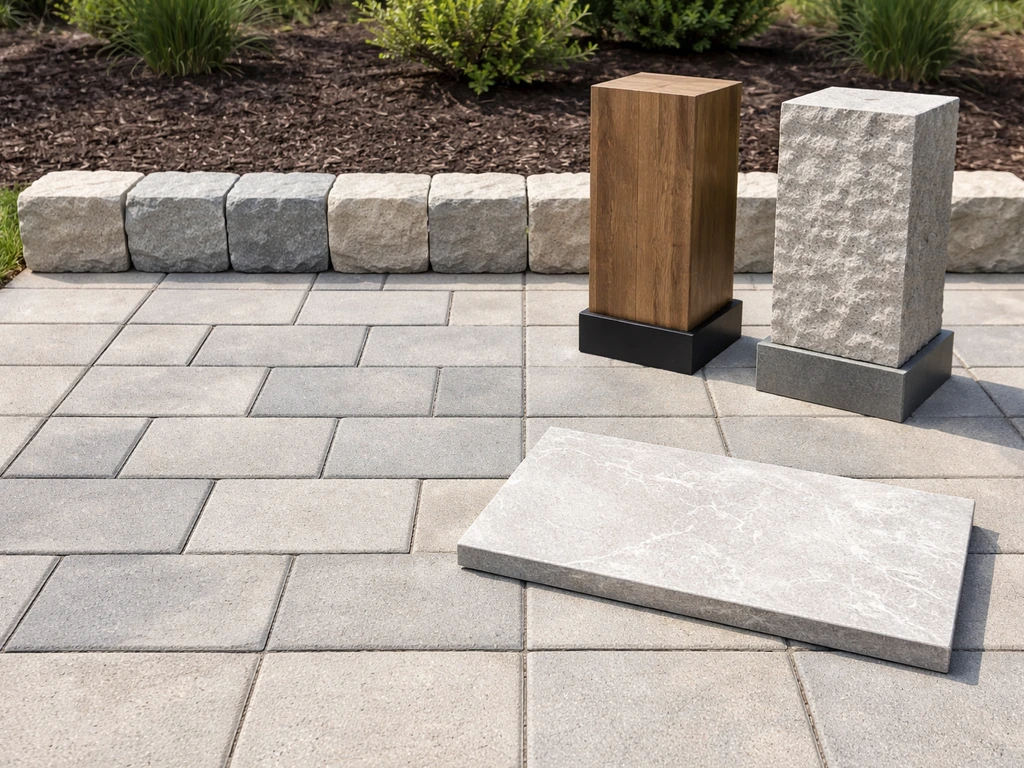
Patio and outdoor living projects (pavers, pergolas, outdoor kitchens, decks, enclosures, and sunrooms) have their own set of review signals worth tracking.
- Materials and sourcing: A credible patio review names the materials. 'They used EP Henry Cambridge pavers with a tumbled edge' is useful. 'Nice patio' is not. Look for reviews that confirm the materials installed match what was quoted.
- Drainage and grading: Long Island's flat terrain and clay-heavy soil in some areas means poor drainage is a common complaint. Reviews mentioning proper slope, French drains, or dry wells are a sign the contractor thinks beyond aesthetics.
- Finishing and cleanup: Patio and deck installs generate a lot of waste. Reviews that specifically mention site cleanup, polymeric sand finishing, sealing, and final walkthrough quality tell you about the company's professionalism from start to finish.
- Design fit: Outdoor living projects are visible for decades. Credible reviews describe how well the finished project matched the original design rendering or plan, and whether the contractor offered useful design input or just did what they were told.
- Weather and seasonal timing: Long Island winters can damage improperly installed hardscape. Reviews from customers who are now in their second or third season with a patio, deck, or pergola are more valuable than brand-new glowing reviews. Look for language like 'still looks perfect after two winters' or, conversely, 'pavers shifted after the first frost.'
- Enclosure and sunroom specifics: If you're looking at patio enclosures or three-season rooms, reviews should mention insulation ratings, screen or glass options, how the enclosure handles wind (Long Island coastal areas see real wind loads), and whether the structure feels solid year-round.
Red flags and green flags when comparing contractors
Once you've read through a decent sample of reviews (aim for at least 15 to 20 per contractor, across platforms), patterns emerge. Here's how to read them:
| Signal | Red Flag | Green Flag |
|---|---|---|
| Communication | Multiple reviews mention going weeks without updates, ignored calls, or discovering problems on their own | Reviewers describe proactive updates, named project managers, and same-day responses to concerns |
| Timeline | Recurring mentions of projects running months over the promised schedule with no explanation | Reviews confirm projects finished on time or describe honest delay communication with a clear reason |
| Cost transparency | Customers report surprise charges, change orders that weren't explained, or final bills far above the quote | Reviews mention pricing was clear, written scope was followed, and any change orders were explained before proceeding |
| Permits and compliance | Any reviews mentioning unpermitted work, failed inspections, or the homeowner having to chase permits themselves | Reviews confirm the contractor handled permits, passed all inspections, and provided documentation at project close |
| Warranty follow-through | Reviews describe the company becoming hard to reach after payment clears | Reviews describe quick warranty responses, return visits without argument, and standing behind the work 1 to 2 years later |
| Review authenticity | Cluster of 5-star reviews with no text, or reviews that read like press releases | Mix of 4 and 5-star reviews with specific project details, plus a few honest 3-star reviews that the company responded to professionally |
| Long Island familiarity | No mention of local conditions: soil, water table, town permit offices, or coastal requirements | Reviews and contractor responses mention local specifics like Town of Hempstead or Babylon permits, high water table planning, or salt-air material choices |
One thing worth noting: a company with a handful of negative reviews is not automatically a bad company. What matters is how they responded. A contractor who replies to a critical review with professionalism, acknowledges the problem, and explains what they did to fix it is showing you exactly how they'll treat you if something goes sideways on your project. A contractor who argues with every negative reviewer or dismisses complaints is showing you something else entirely.
Turning reviews into a shortlist: questions to ask and documents to request

Once reviews have helped you narrow your list to two or three contractors, it's time to move from reading to verifying. Before you call, collect your own project information so the conversation is productive: rough measurements of the area, your must-have features, your preferred materials if you have them, your realistic budget range, and your target start date. Contractors take homeowners more seriously when they come prepared, and you'll get more useful answers.
Then build your question list directly from the review themes you noticed. If multiple reviewers mentioned delays, ask: 'What does your current project schedule look like, and how do you communicate timeline changes?' If reviewers mentioned a specific crew lead who was great, ask whether that person would be on your job. If drainage came up, ask how they handle Long Island's water table and what drainage solutions they build into patio projects.
- Ask for proof of licensing and insurance specific to New York State and your county. A pool contractor in Nassau or Suffolk County needs to be properly licensed. Ask for the license number and verify it.
- Request a list of three to five references from projects similar to yours, completed in the last 12 to 18 months, on Long Island. When you call those references, ask specifically about timeline accuracy, how problems were handled, and whether they'd hire the contractor again.
- Ask to see examples of completed projects in your area, ideally with before-and-after photos. Review photos on the company's website or social media often show only the best-case outcomes; a reference who lets you visit their completed pool or patio is worth more than any photo gallery.
- Request a written, itemized proposal that specifies materials by brand and grade, labor scope, permit responsibility, payment schedule, and warranty terms. Compare proposals across contractors line by line, not just by total price.
- Ask directly: 'Who pulls the permits for this project, and which municipality will we be working with?' The answer tells you whether the contractor knows your town's requirements.
- Ask about subcontractors. If portions of the work will be subcontracted, you want to know who those subs are and whether they're licensed and insured as well.
It's also worth checking whether the contractors on your shortlist have profiles on outdoor-living review aggregators beyond the big platforms. Regional review collections like this site let you see feedback specifically from homeowners who hired for the same types of projects you're considering, whether that's comparing an in-ground pool build to a patio renovation or an outdoor kitchen installation. If you've been researching contractors who operate in nearby markets, such as central New Jersey, the North Shore versus the South Shore, or even metro-adjacent areas, you may find useful context by looking at review patterns for those areas as well, since some contractors serve overlapping regions. If you're specifically looking for Syracuse pool and patio reviews, compare what nearby homeowners say about similar projects and timelines to spot consistent performance review patterns for those areas. If you are specifically looking for central New Jersey pools, patio work, and related services, you can narrow your search using reviews that match your exact scope so you can see what customers truly experienced.
Next steps: scheduling estimates, comparing bids, and protecting yourself
Get at least three written estimates before making a decision. This isn't just about price. It's about seeing how three different contractors interpret your project. If one bid is dramatically lower than the others, ask why. It often means a different material grade, fewer included features, or a contractor who plans to make it up with change orders. If one is much higher, ask what's included that the others left out.
Never pay more than 10 to 20 percent upfront as a deposit. New York State has guidelines on contractor deposit limits for home improvement contracts, and a reputable contractor won't demand 50 percent before a shovel hits the ground. Structure payments to milestones: deposit at signing, draw at excavation or framing, draw at substantial completion, and final payment only after your walkthrough sign-off and any punch-list items are resolved.
Before signing, confirm the contract includes: a start date and estimated completion date, a detailed materials list, a change-order process that requires your written approval before any additional cost is incurred, warranty terms in writing (not just verbal), and a clause that ties the final payment to your satisfaction with the work.
Finally, register the project with your town. Most Long Island municipalities require homeowner notification for pool and major hardscape projects. Knowing your town's requirements before work starts protects you from fines and ensures the contractor's permit work is above board. If you're in an area with a homeowner's association, get HOA approval in writing before signing with any contractor.
Reviews got you to the shortlist. Due diligence gets you to the right hire. Use the feedback you've read to ask smarter questions, catch inconsistencies between a contractor's reputation and their pitch, and feel confident that the company you choose has a real track record of delivering for Long Island homeowners with projects just like yours. If you're trying to compare options, you can also look at southern ledge pools and patios reviews to see how other Long Island homeowners rated real patio and pool work. If you are looking for oasis pools and patios annapolis reviews, use the same due-diligence approach to verify real projects and timelines Long Island homeowners. If you're specifically looking for stay cool pools and patios LLC Maryville reviews, compare what customers say about scheduling, craftsmanship, and how the company handles any issues after installation. Once you have a shortlist, Rhodes pools and patios reviews can help you sanity-check whether past clients saw the same results you want, especially for timelines and finish quality.
FAQ
How can I tell if “Long Island pool and patio reviews” are actually relevant to my specific job (in-ground vs. pavers vs. enclosures)?
Yes, but only if the reviews show projects that match your scope and location. If a company’s majority of feedback is for above-ground pools, deck work, or a different town, treat those reviews as directional at best. In your screening, look for posts that mention specific features you want (for example, paver thickness, drainage type, coping style) and confirm the timeline and crew mentioned line up with Long Island service patterns.
Are verified reviews enough, or do I still need to assess review quality beyond star ratings?
A “verified interaction” badge is helpful, but you should still evaluate whether the review describes an on-site outcome. Scan for details like the start date, whether permitting inspections were referenced, what material brand or product line was installed, and whether the reviewer lists any issues that were corrected. If the review only praises the company but never describes workmanship, timeline, or communication, it is still not a strong signal.
What are common red flags when a contractor has good ratings but the reviews seem inconsistent or hard to validate?
Check whether the contractor consistently appears with the same entity name, phone number, and address across platforms. Look for mismatches like reviews under one business name and estimates under another, or repeated reviewer language that mirrors marketing tones. A practical step is to ask the contractor to provide photos of jobs that match the review’s town and timeframe, plus the name of the foreman or crew lead referenced in reviews.
If reviews mention delays, what should I ask to understand whether it’s a one-off issue or a systemic scheduling problem?
If you see a pattern of delays across multiple reviews, ask for their current scheduling method: whether they book a start date that is tied to permit approval, inspections, and material lead times. Also ask what happens when materials are delayed, and whether they provide interim work (for example, excavation, rough grading, subbase) so the project keeps moving.
How do I avoid the “the review sounded great, but my estimate is missing key details” problem?
Compare what is described in the review to what is promised in the estimate. A common mismatch is that reviews mention “repairs” or “cleanup” while the written scope is missing items like site protection, base preparation, edging details, and post-install sealing or leveling requirements. Ask the contractor to itemize those elements line by element so you can see whether the estimate truly reflects what reviewers experienced.
How should I evaluate how a contractor responds to criticism in reviews?
Look at the response quality on negative reviews, and also whether the contractor offers a resolution that is actionable rather than vague. For example, a strong response often references a specific correction plan, a timeline to make it right, and whether the reviewer can be contacted. If responses blame the homeowner without facts or refuse to discuss specifics, assume you may get the same tone if issues arise on your job.
What should I focus on in patio reviews if drainage and grading are big concerns for my yard?
Yes, especially for drainage and water-related concerns. Long Island’s soil and water table conditions can affect pavers and pool bases, so reviews that mention “water pooling,” “settling,” “overflow,” or “washout” matter. Ask the contractor to explain their drainage design approach for patios and how they prevent base erosion or surface water migration near the pool area.
Should I worry if reviews say “great work” but don’t clarify who actually performs each phase of the job?
Many contractors handle pool projects with multiple trades, so ask whether the company’s own crew does the concrete, stonework, and coping, or if they subcontract. Use review patterns to guide this question, for example if reviews praise a specific crew member or complain about coordination. Then require the contractor to name who will be on your site for key phases and how subcontractors are managed.
If the reviews mention change orders or scope surprises, how do I prevent that from happening to me?
If reviews describe frequent change orders, ask what typically triggers them and request a change-order process that includes written approval before costs increase. Also ask for a contingency approach for site conditions, for example unexpected utilities, unsuitable subgrade, or unforeseen drainage issues, and confirm the contract defines how those are handled.
How do I confirm whether the “great crew” mentioned in reviews will actually be on my project?
Yes. If reviews mention a specific project lead, superintendent, or foreman, ask whether that person will be assigned to your job and when they are on-site. If they cannot commit, ask who will replace them, how communication will work day to day, and whether there is a single point of contact during construction.
What’s the best way to question a bid that is much cheaper or much more expensive than the others?
When pricing is dramatically lower or higher, don’t just ask “why.” Ask what exact inclusions differ, such as liner type, pump equipment, filter system specs, coping materials, paver base thickness, edge restraint, and finish/sealing products. Then ask each contractor to provide a line-item comparison so you can see whether the low bid omitted key scope items that could lead to later add-ons.
How can I use reviews to judge warranty and post-install service, and what should I confirm in the contract?
Yes. Reviews often indicate whether warranty support is responsive, but you should still verify the warranty terms in the contract. Ask whether workmanship and materials are covered separately, what the warranty duration is, what qualifies as a defect, and what the process looks like for requesting service. Also ask how callbacks are scheduled during peak season.
Can town permitting requirements affect the timeline, and how do I assess this from reviews?
Sometimes. If your neighborhood or town has specific requirements, the project can get delayed even with a good contractor. Ask which permits and inspections they anticipate for your exact town and who files them, and confirm the start date is conditioned on permit approvals and material availability. If a review shows permit delays, ask how they handled those and how you can reduce the risk on your project.
Do I need HOA approval before hiring, and what should I ask the contractor to submit to the HOA?
Yes, if you are dealing with an HOA. Ask whether the contractor has experience with your HOA’s design review process and what documents they submit (drawings, elevations, materials specs). Then require written HOA approval and any conditions to be attached to the project plan before work begins.
Citations
BBB says easy fake-review red flags include: generic reviewer profiles, reviews with only a word or two in the text, generic language with irrelevant details, overly enthusiastic wording, and multiple similar star- ratings posted within a short window.
BBB Tip: How to spot a fake review - https://www.bbb.org/all/spot-a-scam/how-to-spot-a-fake-review
BBB says Cornell research found that truthful reviews tend to include concrete, product/service-specific details, while fake reviews are more likely to “set the scene.”
BBB Tip: How to spot a fake review - https://www.bbb.org/all/spot-a-scam/how-to-spot-a-fake-review
BBB states that BBB customer reviews are intended to be tied to a real marketplace interaction; BBB confirms the interaction and gives the business an opportunity to respond.
How BBB Customer Reviews are Handled - https://www.bbb.org/all/customer-reviews/reviews
BBB says BBB customer reviews FAQ includes that only the original consumer who had a marketplace interaction with the business can file a BBB review, reducing fake reviews.
Frequently Asked Questions (FAQ) about BBB customer reviews - https://www.bbb.org/all/customer-reviews/reviews-faqs
Angi states its consumer verification process is designed so reviews come from real customers—not spam bots and not family members, employees, or competitors; verified consumers may be contacted if flagged for verification.
What’s the Status of a Review? | Angi Help Center - https://intercom.help/angi/en/articles/11390710-what-s-the-status-of-a-review
Angi’s FAQ says it checks feedback before posting and also states companies can’t rate themselves; it also notes reviews may be held in pending status until a dispute is resolved.
Frequently Asked Questions (FAQ) - https://www.angi.com/faq
Yelp’s help center says the default “Yelp Sort” order is based on recency, user voting, and other review-quality factors (so older reviews may appear before newer ones).
How is the order of reviews determined? | Support Center | Yelp - https://www.yelp-support.com/article/How-is-the-order-of-reviews-determined?l=en_US
Yelp’s default sorting and review ordering are described as incorporating review-quality and user signals (including recency and voting) rather than simply latest-first.
How is the order of reviews determined? | Support Center | Yelp - https://www.yelp-support.com/article/How-is-the-order-of-reviews-determined?l=en_US
Next Articles
Island Pools and Patios Reviews: How to Read Them
Learn how to analyze Island Pools and Patios reviews, spot real contractor signals, and shortlist based on proof.
Cliff’s Pools and Patios Reviews: What to Check Before Hiring
Cliff’s Pools and Patios reviews explained: how to verify claims, spot red flags, and choose wisely before hiring.
Central Jersey Pools Patio & More Reviews: How to Vet
Vet Central Jersey Pools Patio & More reviews using verified sources, extract hiring clues for patio and pool work, and