
Cincinnati pool and patio reviews are genuinely useful, but only if you know how to read them. A 4.7-star average tells you almost nothing about whether a contractor can handle your specific project, pull the right permits, or show up after installation when something goes wrong. What actually matters is the pattern inside those reviews: how contractors handle problems, whether they communicate during the job, and what past customers say about timelines and cleanup. This guide walks you through finding the right reviews, filtering out noise, and turning what you read into a concrete shortlist and a set of comparable bids.
Cincinnati Pool and Patio Reviews: Shortlist the Right Contractor

Maren Lawson
29 Apr 2026

Where to find Cincinnati pool and patio reviews (and how to use them)

Start with a review aggregator that organizes verified local contractor reviews by specialty. Sites focused specifically on patio, pool, and outdoor living contractors are more useful than general business directories because they filter for project type and region, which is exactly what you need when comparing a pergola builder to an in-ground pool contractor. From there, layer in a few additional sources to cross-check what you find.
- Specialty outdoor living review sites: These aggregate reviews specifically from homeowners who hired patio, pool, deck, and enclosure contractors. They tend to organize by project type and region, making it easier to compare Cincinnati-area specialists rather than wading through general handyman listings.
- Angi: Uses a feedback verification process that requires contact information before a review is posted. Angi also flags suspicious reviews and contacts the consumer directly for verification, which adds a layer of credibility.
- BBB: Only the original consumer who had a direct marketplace interaction with the business can file a BBB review. The BBB also allows the business to confirm the interaction and respond, and scrubs reviews for inappropriate content before publishing. This makes BBB reviews slower to accumulate but often higher in credibility.
- Yelp: Useful for reading narrative reviews and applying filters. Yelp's default ranking factors in search terms, distance, ratings, and review relevance rather than just star count, so the top result is not always the highest-rated one.
- Google Reviews: High volume but lower moderation. Treat these as a signal, not a verdict, and cross-reference anything that looks out of place.
The FTC has been clear that neither open nor closed review systems are immune to fake reviews, and that moderation practices vary widely by platform. In practice, this means no single source is complete. The most reliable approach is to read reviews across at least two or three platforms and look for consistent themes rather than trusting any one rating in isolation.
How to read reviews like a pro (what matters for patios vs pools)
Star ratings are a starting point, not a conclusion. Once you get past the aggregate score, you want to read the actual text and look for specifics that apply to your project type. Patio and pool work have overlapping concerns but some distinct ones worth separating.
What to look for in patio and outdoor living reviews

- Workmanship details: Did the reviewer mention specific materials (pavers, concrete, natural stone, brick) and whether the finished work matched what was quoted? Vague praise like 'great job' is less useful than 'the pavers were level and the edging was clean after two years.'
- Drainage and grading: This is one of the most common post-installation complaints in patio work. Look for mentions of water pooling, runoff toward the house, or drainage fixes needed after the fact.
- Timeline accuracy: Did the contractor finish when they said they would? Look for specific mentions of delays and whether the contractor communicated proactively or went quiet.
- Cleanup: This sounds minor but is a recurring theme. Contractors who leave debris, leftover materials, or damaged landscaping are flagging a broader attitude toward the job.
- Change orders: Any mention of surprise charges, scope creep, or work that was billed as an 'extra' that seemed like it should have been included is a serious signal.
What to look for in pool contractor reviews
- Permit and inspection process: Cincinnati requires new pools to go through plan review and inspections with both the Cincinnati Health Department and the Ohio Department of Health. Reviews that mention a smooth permit process, or conversely a contractor who tried to skip inspections, tell you a lot.
- Post-installation service: Equipment issues, liner problems, and plumbing leaks often surface within the first season. Reviews from homeowners one or two years after installation are more valuable than fresh reviews.
- Subcontractor coordination: Pool builds typically involve plumbers and electricians. Reviews that mention chaotic handoffs between trades, or subs who showed up uninformed, flag a contractor who doesn't manage the project closely.
- Warranty responsiveness: Did the contractor honor warranty calls quickly or become hard to reach after payment? This is the single most predictive factor for long-term satisfaction.
- Landscaping integration: How did the contractor handle the area around the pool after excavation? Backfill, grading, and restoration of surrounding areas are common pain points.
One more thing worth mentioning: look at how the business responds to negative reviews. A contractor who professionally acknowledges a complaint and explains how they resolved it is a better sign than one who argues with the reviewer or doesn't respond at all.
Common Cincinnati project types (and what to check per type)
The Cincinnati market covers a wide range of outdoor projects, and what you read in reviews needs to match what you're actually building. Here's a breakdown of the most common project types and the review signals that matter most for each.
| Project Type | Key Review Signals | Common Complaints to Watch For |
|---|---|---|
| In-ground pool (concrete/fiberglass/vinyl) | Permit process, sub coordination, post-install service, warranty calls | Delays, inspection failures, landscaping restoration, equipment issues in year 1 |
| Above-ground pool | Installation speed, leveling quality, liner/pump setup | Unlevel installation, poor site prep, no follow-up on equipment |
| Concrete or stamped concrete patio | Surface finish consistency, sealing quality, crack history after 1-2 seasons | Cracking, color fading, drainage toward the house |
| Paver patio (brick, natural stone, porcelain) | Base prep, joint sand, edge restraint | Shifting pavers, weed growth, pooling water |
| Pergola or shade structure | Post anchoring, material quality, permit pull if attached to house | Wobbly posts, premature weathering, no permit on attached structures |
| Outdoor kitchen | Countertop material, gas/electrical sub coordination, weatherproofing | Grout cracking, gas line issues, cabinets not rated for outdoor exposure |
| Patio enclosure or sunroom | Seal quality, thermal performance, permit and inspection | Leaks, drafts, condensation, structural attachment to house not permitted |
When reading reviews for a specific contractor, filter for projects that match yours. A company with 80 five-star reviews for paver patios but no pool reviews is not necessarily qualified to build your in-ground pool. Similarly, a pool company that recently expanded into outdoor kitchens may not have the track record you want for a complex build. Look for depth in your specific category, not just overall volume.
If you're researching contractors who operate across Ohio, it's worth knowing that similar project-type considerations apply in nearby markets. Reviews for contractors working in other Ohio metro areas can give you a useful benchmark for what reasonable timelines, pricing transparency, and warranty practices look like regionally.
Red flags and verification (licenses, insurance, permits, warranties)
Reading reviews is only part of the vetting process. Angi’s help article notes that it can take 24 to 48 hours for a submitted review to appear, and that reviews may be investigated when consumers are flagged for verification. Before you put any contractor on your shortlist, you need to verify the basics independently. This takes about 20 minutes per contractor and can save you from a genuinely bad outcome.
License and registration checks
Cincinnati requires contractors working within city limits to hold a current contractor registration, renewed annually. The city's own guidance notes that registration of state-licensed contractors is valid until the state license expires. For trade work specifically (plumbers, electricians, HVAC), the City of Cincinnati advises homeowners to confirm those subcontractors are licensed with Ohio's Construction Industry Licensing Board (OCILB) and to ask for license numbers and expiration dates. You can blank" rel="noopener noreferrer">verify any Ohio professional or contractor license through Ohio's official eLicense system, which covers licenses issued by 24 Ohio agencies and boards. If a contractor can't give you a license number or gets defensive when you ask, that's a red flag.
Pool permits and inspections
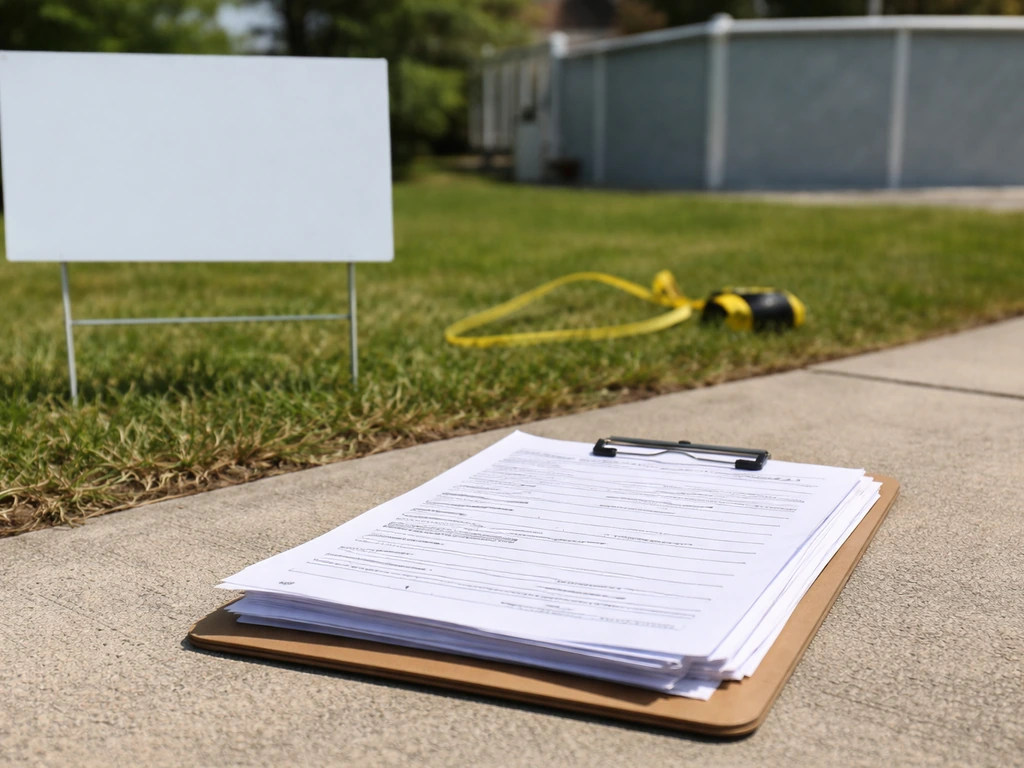
The City of Cincinnati has a formal permit process for both in-ground and above-ground residential pools, including a Private Residential Swimming Pool Agreement. Before a new pool can be licensed for use, it must go through plan review and inspections with both the Cincinnati Health Department and the Ohio Department of Health. Any contractor who suggests skipping or working around this process is not someone you want building your pool. Permit fees are a real cost, but they are also your protection against unsafe work.
Insurance and lien protection
Ask for a certificate of insurance naming you as an additional insured, and verify it covers both general liability and workers' compensation. On the lien side, one of the strongest protections you have is holding back final payment until the contractor provides written proof that all subcontractors and suppliers have been paid. This is a standard contract term, and a reputable contractor won't object to it.
Review red flags to spot before hiring
- A surge of five-star reviews posted within days or weeks of each other, especially if the language is generic or refers to a different service than what the company advertises
- Reviews that mention the wrong product, wrong city, or wrong project type (a common indicator of purchased or templated fake reviews)
- No negative reviews at all on a contractor with a high volume of total reviews (a statistically unlikely outcome for real businesses)
- Reviews from accounts with no other review history and no profile detail
- A business that has flagged or disputed a large number of negative reviews without substantive responses to the underlying complaints
The FTC has made fake reviews an active enforcement priority, including a final rule that explicitly bars the sale or purchase of fake reviews and prohibits suppressing negative reviews based on rating. If you suspect a contractor's review profile is manipulated, you can report it to ReportFraud.ftc.gov. More practically, just move to a better-documented contractor.
How to shortlist contractors from reviews

Once you've identified a pool of candidates, the goal is to get to three to four contractors worth meeting in person. Here's a practical process for doing that efficiently.
- Start with review aggregators and filter specifically for Cincinnati-area contractors who have documented experience with your project type. Volume matters less than specificity.
- Read the five most recent reviews AND the five most critical reviews for each contractor. The critical reviews tell you how the company handles adversity. The recent ones tell you if the company has changed.
- Note any contractor who appears across multiple platforms with consistent themes (good or bad). Consistency across platforms is a much stronger signal than a high score on just one site.
- Verify the license on Ohio eLicense and check BBB for complaints, not just ratings. A BBB complaint that was resolved professionally is actually a positive signal.
- Eliminate any contractor who can't provide a license number, won't confirm they pull permits, or has multiple unresolved complaints about the same issue (repeated timeline failures, warranty evasion, or billing disputes).
- Narrow to three or four contractors and contact them for quotes. Note response time, professionalism of initial communication, and whether they ask clarifying questions about your project.
Questions to ask before signing and how to get comparable bids
Getting three bids is standard advice, but it only works if the bids are actually comparable. Most homeowners get back three numbers that represent three completely different scopes of work and have no idea how to evaluate them. Here's how to fix that.
Build a scope checklist before you get quotes
Before the first contractor arrives, write down exactly what you want: dimensions, materials, features, access requirements, and any existing conditions (slopes, tree roots, existing drainage, utilities). Give every contractor the same written scope. This is the only way to get bids you can actually compare line by line. When you get quotes back, compare them by labor scope, material specifications, site prep and cleanup, timeline with payment milestones, what's explicitly excluded, and warranty terms. The total price is the last thing to compare, not the first.
Questions to ask every contractor
- Are you registered with the City of Cincinnati and licensed for this type of work in Ohio? Can you provide your license number?
- Who handles permits and inspections, and are those costs included in the bid?
- Who are your subcontractors for plumbing and electrical, and can I verify their OCILB licenses?
- What does your warranty cover, and what's the process if I call you in 18 months with a problem?
- What is the payment schedule, and when is the final payment due?
- How do you handle change orders? Do all changes need to be in writing before work proceeds?
- What is your timeline from start to completion, and what factors could extend it?
- Can you provide three references from projects similar to mine, completed within the last 12 months?
Change orders: the contract detail most homeowners overlook
Change orders are one of the most common sources of billing disputes in home improvement. Every change order should be written, signed by both parties, and attached to the original contract before work on the change begins. A good change order specifies the additional work, the materials involved, the price change, and whether the completion date shifts and by how many days. Be cautious of contracts with very narrow work descriptions, because a contractor can use vague language to classify almost anything as an extra charge. If a contractor resists putting change orders in writing, treat that as a serious warning sign.
Turning reviews into a hiring plan and next steps today
Here's what you can realistically accomplish today and over the next week to move from research to a signed contract with a contractor you trust. You can also use jack oliver's pool spa & patio reviews to see how that specific contractor handles communication, problems, and cleanup on real projects.
- Today: Search for Cincinnati pool and patio contractors on two or three review platforms (a specialty outdoor living aggregator, Angi, and BBB). Filter for your specific project type and read at least 10 reviews per contractor, focusing on the most recent and most critical.
- Today: Build your scope checklist. Write down dimensions, materials, features, site conditions, and any non-negotiables. This document is what you hand to every contractor so bids come back comparable.
- This week: Verify licenses for your top candidates on Ohio eLicense. Confirm each one is registered with the City of Cincinnati for work within city limits. Flag anyone who can't produce a license number.
- This week: Contact three to four contractors for quotes. Send the same written scope to all of them. Note how quickly they respond and whether they ask follow-up questions (contractors who ask good questions are usually more thorough on the job).
- Next week: When bids arrive, compare them line by line against your scope checklist. Flag any bid that leaves out site prep, cleanup, permit fees, or warranty terms. Ask for clarification in writing before assuming anything is included.
- Before signing: Ask for written change order language in the contract, confirm the payment schedule withholds final payment until completion and proof of subcontractor payment, and verify the certificate of insurance.
- Ongoing: After hiring, save your contractor's license number, permit numbers, and all written communications. If an issue arises, you'll want documentation to support any warranty or dispute claim.
The homeowners who have the best outcomes with Cincinnati pool and patio projects are not necessarily the ones who found the highest-rated contractor. If you're also comparing out-of-state options, Oklahoma pool and patio reviews can be a useful adjacent benchmark for common communication, timeline, and cleanup expectations. They're the ones who read reviews critically, asked the right questions, got comparable bids, and put everything in writing. Reviews are where the process starts, not where it ends. BMR pool and patio reviews can be a helpful starting point, as long as you still compare details across multiple sources. Use them to build a shortlist, then do the verification work that separates a genuinely trustworthy contractor from one who just has good marketing. If you're looking at a specific local option like BMR Pool and Patio, search for detailed pool and patio reviews rather than relying on star ratings alone bmr pool and patio reviews. If you're comparing contractors with BMR Pool and Patio, include gary's pool and patio reviews in your reading so you can spot how reviews line up on communication, timelines, and cleanup. If you’re comparing contractors in Ohio, it helps to read custom pool and patio reviews for recent work that matches your exact patio materials and pool layout.
FAQ
How can I tell if “verified” reviews are still biased for Cincinnati pool and patio reviews?
Look for reviews that mention specifics you can confirm, like exact pool type, permit handling, equipment models, or distinct site conditions. Generic praise without project details is harder to verify, even if the platform labels it verified.
What review details matter most for in-ground pool contractors versus patio-only companies?
For pools, prioritize notes about plan review, inspections, start-to-finish scheduling, and what happens if equipment fails after installation. For patios, prioritize base prep, drainage handling, joint/edge finishing, and cleanup after paver or concrete work.
Is it a red flag if a contractor has many reviews but recent ones are mostly negative?
Yes, especially if the negative themes are consistent and time-bound, like repeated delays, change order disputes, or poor site cleanup. A single bad review can happen, but a downward pattern often predicts the same problems during your build.
How should I evaluate review responses from contractors in Cincinnati pool and patio reviews?
A strong response usually includes concrete next steps (date of resolution, corrective action, and what was changed). Avoid contractors who only attack the reviewer’s character, blame you without evidence, or refuse to discuss specifics from the complaint.
What should I do if a contractor’s portfolio and reviews don’t match my project type?
Before you meet them, request photos and addresses for projects that match your exact scope (for example, similar pool dimensions, comparable patio materials, or the same waterline and deck style). If they cannot provide close matches, treat it as a qualification gap, not a minor difference.
How do I make sure three bids are truly comparable for a pool or patio?
Require each bid to include the same measurable items, like dimensions, material specs, equipment lists, excavation and backfill approach, disposal method, and completion dates tied to payment milestones. If one bid omits warranty terms, exclusions, or site prep details, it is not comparable yet.
What are common exclusions that cause surprises later, according to pool and patio reviews patterns?
Watch for missing line items related to site grading, removal of old materials, tree root impacts, drainage corrections, electrical wiring scope, and landscaping restoration. If these are not explicitly included, they often show up later as change orders.
When should I request a written payment schedule and lien protections?
Request it before signing. Use contract language that allows withholding final payment until written proof shows all subcontractors and suppliers are paid. If they resist payment retention or cannot explain how they handle lien waivers, that is a warning sign.
How can I confirm a contractor’s insurance is adequate beyond just “they have coverage”?
Ask for the certificate naming you as an additional insured and verify both general liability and workers’ compensation. Also confirm the effective dates cover the expected build window, not only the time of contract signing.
What’s the best way to handle change orders if I’m worried about price creep?
Insist every change order is written, signed, and attached to the original agreement before work starts. Require a clear description, itemized price change, and an explicit statement about whether the completion date shifts and by how many days.
What should I ask in person to verify what Cincinnati pool and patio reviews suggest?
Bring your written scope and ask them to walk through their process for permits, inspections, scheduling, and cleanup for your exact project. Then ask how they document issues and who is the point of contact if problems come up after installation.
If a contractor suggests skipping permits or planning steps, what’s the safest next move?
Do not proceed with that contractor. Ask for a written explanation of how they plan to meet plan review and inspection requirements, and if they cannot align with the required process, treat it as a compliance risk rather than a convenience issue.
How do I use out-of-state adjacent benchmark reviews without getting misled?
Use them only to understand what questions to ask, not to assume the same permitting, labor costs, or warranty norms apply. Always verify current local licensing, registration rules, and permit procedures for Cincinnati before relying on anything from another market.
Next Articles

Jack Oliver’s Pool Spa & Patio Reviews: What to Know
Jack Oliver’s Pool Spa & Patio reviews explained: build quality, timelines, pricing, red flags, green flags, next steps.

Gary’s Pool and Patio Reviews: How to Vet and Hire
Use Gary’s pool and patio reviews to vet contractors: interpret ratings, spot red flags, shortlist with a hire checklist
Premier Patio Covers Reviews: What to Know Before Hiring
Premier Patio Covers reviews explained with pros, cons, checklist, costs, and what to verify on materials, permits, warr