
Reading patio cover reviews in California is genuinely useful, but only if you know what to look for. The best approach is to cross-reference verified platforms like Angi, BBB, and Google, filter for reviews that mention specific details (materials, permit process, timeline, warranty follow-through), and then use those details to build a shortlist of two or three licensed, insured local contractors before you ever request a quote. That combination of review research plus CSLB license verification gives you a real head start on avoiding costly mistakes.
California Patio Covers Reviews: How to Choose Right Builder

Maren Lawson
29 Apr 2026
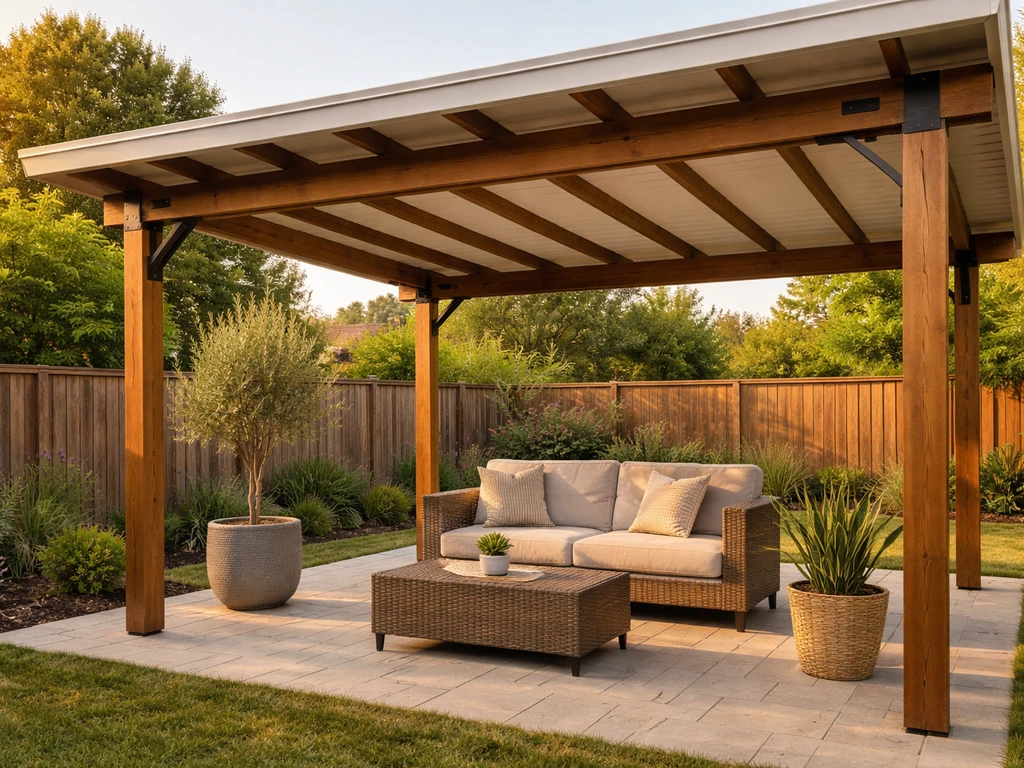
What California patio cover buyers are actually trying to solve
Most people searching for patio cover reviews in California are not just looking for a star rating. They want to know whether a company shows up on time, pulls the right permits, handles the inevitable mid-project surprise without nickel-and-diming them, and installs something that survives the California climate long-term. Those are the real questions underneath the search.
California adds a layer of complexity that homeowners in other states don't deal with. You might be in Redwood City worrying about wildfire ember exposure, in coastal Ventura worried about salt air corrosion, in the Inland Empire where summer temps routinely top 110°F, or in San Diego trying to figure out whether your project even needs a permit. The climate, the building codes, and the contractor market all vary significantly by region, which is exactly why local reviews carry more weight than national brand reputation alone.
The practical outcome most buyers want is simple: an outdoor space they can actually use, installed correctly the first time, with a warranty they can actually enforce. Reviews are the fastest way to find out whether a specific company delivers that, or just promises it.
How to find patio cover reviews you can actually trust
Not all review platforms are created equal, and some are basically useless for this decision. Here is how to separate signal from noise.
Platforms worth using
Angi uses a consumer verification process designed to screen out spam bots, competitors posting fake negatives, and employees posting fake positives. That does not make every Angi review perfect, but it raises the floor. BBB customer reviews come with a similar policy: they explicitly do not accept incentivized reviews, meaning a company cannot pay or reward customers to post positive feedback. Those two platform rules matter when you are trying to trust what you read. Google reviews are high-volume and unfiltered, which makes them useful for spotting patterns across dozens of reviews, even if individual posts are less reliable.
One important nuance with BBB: customer reviews do not affect the BBB letter grade rating. The A+ or B- you see next to a company name is based on complaint history, responsiveness, licensing, and other factors, not on star reviews. So look at both the rating and the reviews separately. A company with an A+ rating but a string of one-star reviews about warranty ghosting tells you something the letter grade alone does not.
Red flags that should make you pause
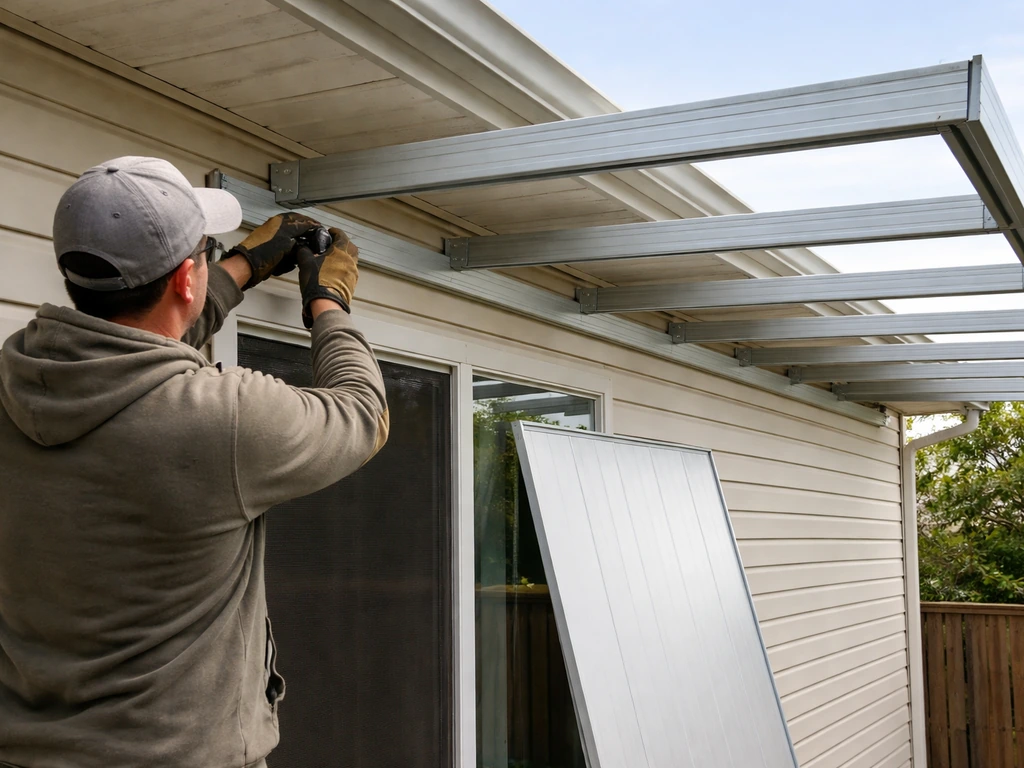
- A company with only five-star reviews and zero negative feedback posted in the last two years — real projects generate at least occasional friction
- Reviews that all sound like marketing copy, use the same phrasing, or were all posted within a short window
- No mention of permits, inspections, or final walkthroughs in any review — legitimate California installs usually involve at least some permitting conversation
- Ads or listings that do not include a California contractor license number — CSLB requires all contractor advertisements to display the license number, so the absence of one is a red flag from the start
- High-pressure quotes that push you to sign the same day and discourage you from getting competitive bids — this is specifically flagged by the California Department of Justice as a warning sign
Cross-checking with CSLB
Before you take any review seriously, look up the company on the CSLB's official license check tool at cslb.ca.gov. You can verify that the license is active, check for any disciplinary actions or consumer complaints on record, and confirm the license classification covers the work you need. If you meet a salesperson in person, the City of Rancho Palos Verdes recommends asking to see a photo ID that matches the license holder's name. That one step filters out a surprising number of unlicensed operators who borrow or fake license numbers.
What a genuinely useful patio cover installation review looks like
Generic five-star reviews tell you almost nothing. What you want are reviews that include specific operational details. When you find one that does, it carries ten times the weight of a short, enthusiastic post.
Look for reviews that mention the material installed (aluminum, wood, vinyl, composite, or louvered), whether the company handled permits or left that to the homeowner, how the company communicated during the project, whether the finished product passed city inspection on the first attempt, and how the contractor responded to any post-installation issues. A review that says 'the aluminum lattice cover looks great and they pulled the permit themselves and it passed inspection first try' is genuinely useful. 'Great job, five stars' is not.
- Material and style mentioned by name (louvered, solid panel, lattice, wood, aluminum, vinyl)
- Timeline accuracy: did they finish when they said they would?
- Permit process: did the contractor handle it, or leave the homeowner to figure it out?
- Communication: were updates proactive, or did the homeowner have to chase for information?
- Inspection outcome: first-pass or multiple attempts?
- Warranty follow-up: any post-install issues, and how were they handled?
- Pricing transparency: did the final invoice match the written quote, or did change orders appear unexpectedly?
Negative reviews are worth reading especially carefully. A pattern of the same complaint across multiple reviewers (late starts, surprise charges, permit delays caused by the contractor) is a genuine signal. One angry review from someone who seems unreasonable is not. Read for patterns, not single data points.
How to compare California patio cover companies side by side

Once you have a shortlist of two or three companies with solid verified reviews and clean CSLB records, you need a consistent way to compare their quotes. The problem most homeowners run into is that every quote uses different line items, different terminology, and different assumptions about scope, which makes apples-to-apples comparison nearly impossible unless you force the issue.
| Comparison Factor | What to Ask or Verify | Why It Matters |
|---|---|---|
| License and Insurance | Verify CSLB license number; confirm Workers' Comp and General Liability are listed in the written contract | CSLB requires both; your liability if a worker is injured on your property is significant without it |
| Permits | Ask who pulls the permit and whether it is included in the price | California jurisdictions vary; San Diego exempts patio covers up to 300 sq. ft. under certain conditions, but larger or more complex installs require a permit |
| Material | Get the exact product name, gauge (for aluminum), and finish warranty in writing | Marketing terms like 'heavy duty' are meaningless without specifications |
| Design and Engineering | Ask if the structure is designed to local wind and seismic load requirements | California building code requires patio covers to resist minimum wind and seismic loads; some jurisdictions have specific load requirements in their standard plans |
| Timeline | Get start date and completion date in writing | Vague timelines are the top source of frustration in negative reviews |
| Change Orders | Confirm all changes must be written and signed by both parties before work proceeds | CSLB explicitly states change orders must be in writing and signed by both parties |
| Warranty | Get both the product warranty and the workmanship warranty in writing, with contact details | A warranty you cannot enforce is not a warranty |
| Payment Schedule | Confirm payments are tied to completed milestones, not upfront lump sums | CSLB warns specifically not to let payments get ahead of the work |
Ask every company the same questions using this framework, and you will immediately see which ones give confident, specific answers and which ones deflect or stay vague. Vague on warranty and permits at the quote stage usually means vague at every stage.
Materials and styles that keep showing up in real California reviews
California homeowners deal with a wide range of climates, and the material you choose has a real impact on how much maintenance you do over the next ten or twenty years. Here is what actual installation reviews and local fire safety guidance reveal about the most common options.
Aluminum
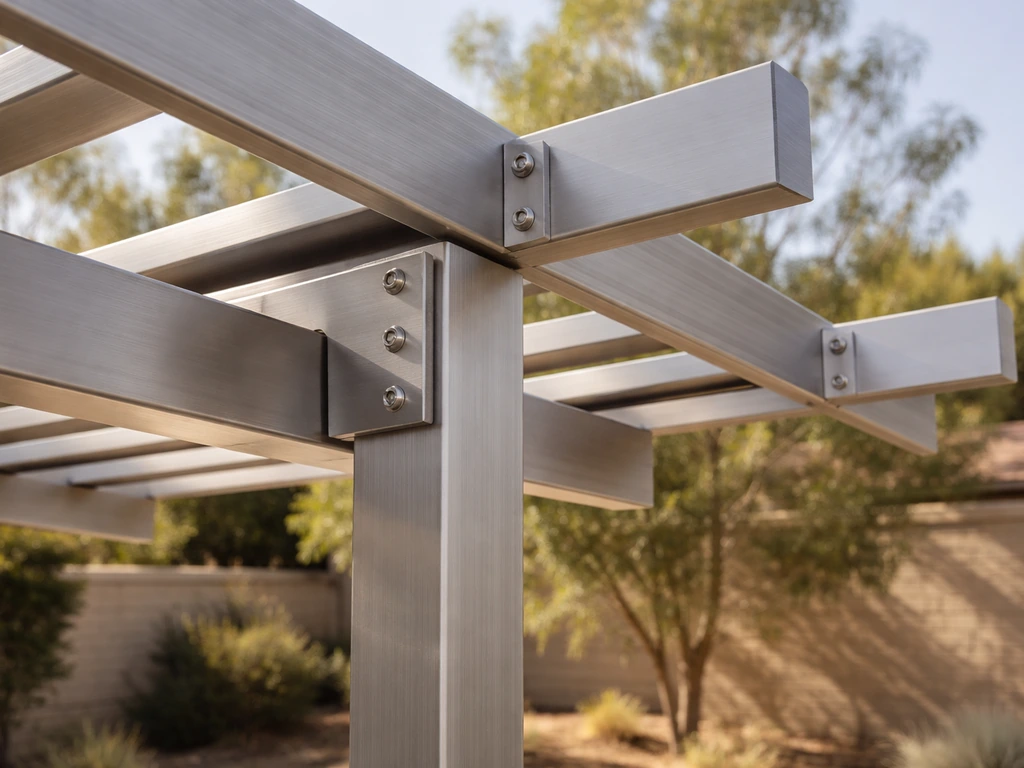
Aluminum is the dominant choice in California reviews for a reason. It is non-combustible, which matters in wildfire-prone areas like the foothills and the urban interface zones. Redwood City's fire safety guidance explicitly contrasts aluminum with vinyl and wood on this point, noting that aluminum does not burn or melt when exposed to embers or heat. It also resists corrosion well with a quality powder coat finish, handles UV without fading badly, and needs almost no ongoing maintenance beyond occasional washing. For most California climates, it is the lowest-hassle option over the long run. Louvered aluminum covers have become especially popular in reviews because they let you adjust shade and airflow without a fixed ceiling.
Wood
Wood looks beautiful in photos and in person, and reviews from satisfied wood-cover customers often mention how well it blends with an existing home's architecture. The honest trade-off is maintenance. Redwood City's fire guidance notes that wood patio covers are combustible and require regular upkeep and treatment to resist weather and pests including termites and insects. In coastal California, salt air speeds up that weathering. If you are willing to seal, stain, and inspect annually, wood can last decades. If you are not, the reviews from dissatisfied wood-cover owners are pretty consistent: warping, splitting, and pest damage within five to ten years.
Vinyl
Vinyl is low-maintenance and affordable, and reviews in milder coastal areas tend to be positive. The concern that shows up in California-specific contexts is fire safety. Vinyl is combustible and can burn or melt when exposed to embers or heat, which is a meaningful consideration if you are in or near a high fire hazard severity zone. Check your property's zone designation before committing to vinyl.
Composite
Composite covers blend wood fiber and plastic to mimic the look of wood with better rot resistance. Reviews tend to be positive for aesthetics, though the fire resistance profile is similar to vinyl depending on the specific product. Ask the contractor for the manufacturer's fire rating documentation.
| Material | Fire Safety (CA Wildfire Context) | Maintenance Level | Corrosion Resistance | Best For |
|---|---|---|---|---|
| Aluminum | Non-combustible | Very low | High (with powder coat) | Most California climates, wildfire zones, coastal areas |
| Wood | Combustible | High (annual treatment) | Low without upkeep | Aesthetic-first projects with committed maintenance owners |
| Vinyl | Combustible, melts under heat | Low | Moderate | Mild coastal climates, low fire-risk zones |
| Composite | Varies by product | Low to moderate | Moderate to good | Wood look without full wood maintenance, check fire rating |
How California's climate actually affects your patio cover long-term
California is not one climate. The performance expectations you should have for a patio cover in Fresno are very different from what makes sense in Santa Monica or Redding. Knowing how climate affects material choice and installation requirements helps you evaluate whether a contractor is giving you honest advice or just selling you what they have in stock.
Heat and UV
Inland areas like the Inland Empire, Central Valley, and desert communities regularly see summer temperatures above 100°F, and UV index values that bleach and degrade low-quality finishes within a few years. Reviews for aluminum covers in these areas almost always mention the powder coat finish quality. A PVDF or Kynar-based finish outperforms cheaper polyester coatings in UV resistance. Ask your contractor specifically which finish they use and get the warranty period for that finish in writing.
Wind
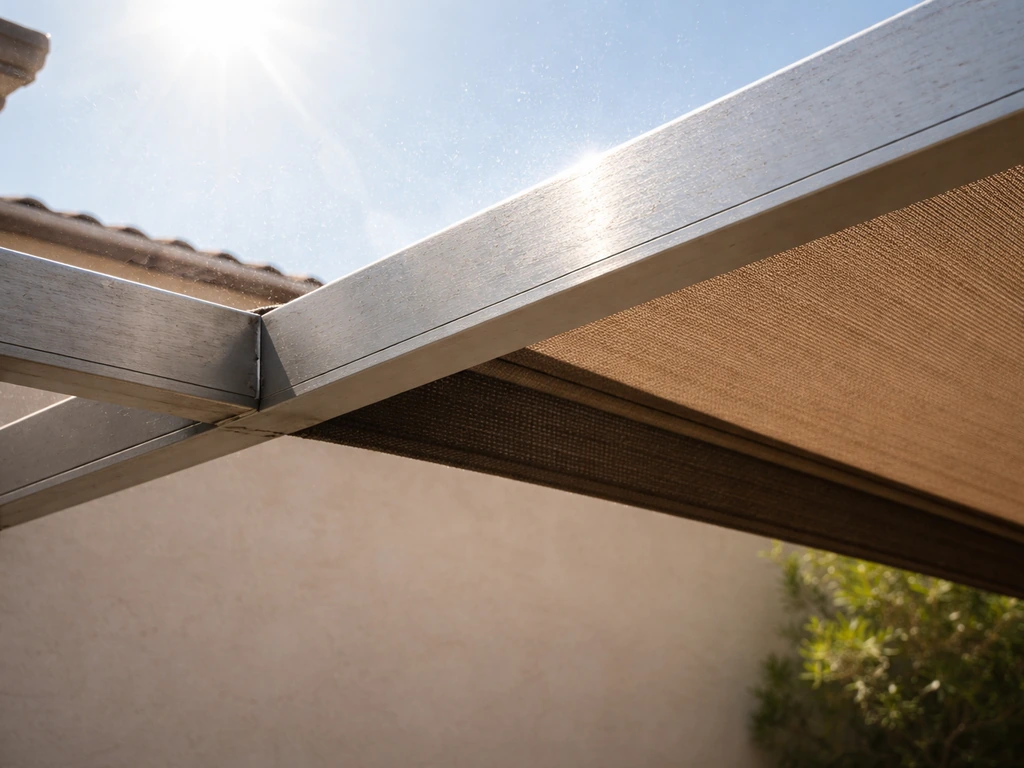
California building code requires patio covers to be designed to resist minimum wind and seismic loads. Some jurisdictions specify this clearly in their standard plans. The City of Ventura's residential patio cover submittal guidelines, for example, include specific load criteria that contractor designs must meet. If a contractor cannot tell you the wind load rating of their structure or says it is not relevant, that is a problem. Poorly engineered covers fail in Santa Ana wind events and expose you to liability and insurance complications.
Coastal corrosion
Within a mile or two of the coast, salt air is genuinely aggressive toward metals, fasteners, and finishes. Reviews for patio cover installs in coastal cities like Santa Barbara, Long Beach, and Marin often call out fastener corrosion and finish degradation on cheaper aluminum products within two or three years. If you are in a coastal zone, ask specifically about marine-grade fasteners and a finish system rated for salt air exposure. Companies that service coastal markets regularly will know the answer immediately. Those that do not are probably copying an inland product spec.
Wildfire ember exposure
If your property is in or adjacent to a California high fire hazard severity zone, your patio cover material choice is not just an aesthetic decision. Local fire departments and state guidance consistently point to aluminum as the safer choice in these zones. This also affects whether your homeowner's insurance carrier has any requirements or restrictions on patio cover materials, so it is worth a quick call to your insurer before you finalize a material choice.
Your next steps: questions to ask, documents to gather, and how to book with confidence
After reading reviews and building your shortlist, here is a practical sequence for moving from research to signed contract without leaving anything important to chance.
Before you contact anyone
- Look up each company on CSLB's license check at cslb.ca.gov — verify the license is active, check the classification, and look at any complaint history
- Check their BBB profile for both the letter rating and the actual customer reviews — remember these measure different things
- Read at least ten reviews on Angi or Google and note any repeated complaints across multiple reviewers
- Check your city or county's permit requirements for your specific project size and type — San Diego, for example, may exempt patio covers under 300 square feet in certain single-family residential situations, while other jurisdictions require permits regardless of size
Questions to ask every contractor on your shortlist
- What is your CSLB license number, and can I see your Workers' Compensation and General Liability insurance certificates?
- Will you pull all required permits, and is that included in this quote?
- What is the specific product, material, and finish you are proposing, and what warranty comes with it?
- What is your workmanship warranty, and who do I contact if there is an issue after installation?
- What is the projected wind load rating for this structure, and is it engineered to California building code minimums?
- What does your payment schedule look like, and will all payments be tied to completed milestones?
- How do you handle change orders — will everything be in writing and signed before work proceeds?
- What is the realistic start date and completion window for a project of this scope?
Document checklist before you sign
- Written contract with full scope of work, materials specified by product name and finish
- Start date and estimated completion date in the contract
- Payment schedule tied to milestones, not upfront lump sums
- Permit responsibility stated explicitly (contractor pulls and pays for permits)
- Warranty terms for both product and workmanship in writing, with a named contact
- Insurance certificates: Workers' Comp and General Liability, both current
- Confirmation that all change orders must be in writing and signed by both parties before work proceeds
- Contractor's CSLB license number visible on the contract
One last thing worth knowing: the California contractor market includes several companies with regional reputations worth researching specifically. If you are comparing multiple companies, look for reviews that cover the full project arc, from first contact through final inspection, not just the install day itself.
Companies like Bravo Patio Covers, Premier Patio Covers, and Ravenna Patio Covers come up in California homeowner searches, and regional specialists in markets like Las Vegas sometimes serve border communities in Southern California as well. If you are specifically looking for Ravenna patio cover reviews, focus on mentions of permits, timelines, and warranty follow-through in those customer accounts.
If you are searching specifically for premier patio covers in Las Vegas, reviews can help you confirm the details that matter most, like permits, timelines, and warranty follow-through. If you are in the Las Vegas area, patio covers Las Vegas reviews can also help you gauge how contractors handle permits, timelines, and warranty follow-through.
If you want to shortcut the research, reading bravo patio covers reviews can help you see whether customers consistently mention things like permits, timelines, and warranty follow-through. If you are specifically hunting for vailge patio covers reviews, you can apply the same checklist to confirm whether customers consistently mention permits, timelines, and warranty follow-through bravo patio covers reviews.
The same review evaluation framework applies regardless of the brand name: verified platform, specific operational details, permit and warranty clarity, and a clean CSLB record.
The homeowners who end up unhappy with their patio cover install almost always skipped one of two steps: they did not verify the license and insurance before signing, or they signed a vague contract that left permits, warranties, and change orders undefined. The California Office of the Attorney General also advises watching for warning signs with unlicensed contractors and avoiding rushing decisions before confirming you are dealing with a properly licensed contractor.
The reviews will point you toward the right company. The checklist above protects you once you find them. If you are specifically looking for patio covers Las Vegas reviews, apply the same checklist: verified review signals, permit and warranty clarity, and confirmation of the contractor’s licensing and track record.
FAQ
If a patio cover quote is based on reviews, what should I confirm about permits and responsibility?
Ask whether permits are handled by the contractor or homeowner, and request the permit number (or confirmation of submittal) before work starts. If a quote does not clearly state who files and who pays, treat it as a risk signal because delays often happen when responsibilities are unclear.
How can I use CSLB and insurance details to avoid the common “license mismatch” mistake?
Request the exact CSLB classification and verify it matches the scope (for example, whether the license covers structural framing work, not just awnings). Also ask for the contractor’s workers’ comp and general liability certificates, and confirm they are current on the contract date, not just at the time of the initial sales meeting.
Can I rely on reviews to judge whether a patio cover will hold up in California wind and seismic conditions?
Yes, but focus on documentation rather than the review’s overall mood. Look for mention of load testing, engineering details, or the wind/seismic design criteria used for your city, then ask the contractor to provide the load assumptions in writing for your address.
What should I ask about timeline and city inspection delays, especially if reviews are mixed?
It depends on your city, but you can force clarity with a “schedule deliverables” question: ask for a start date estimate, an inspection timing expectation, and a written explanation of what happens if city approval takes longer. Reviews that complain about stalled inspections without communication usually correlate with contractors who do not manage the timeline formally.
What warranty details should I demand after reading california patio covers reviews?
Do not accept a material name alone, like “aluminum” or “composite.” Ask for the specific product system, finish type (powder coat and coating chemistry if available), and warranty terms (including transferability and what voids coverage). If reviews mention finish fading or warranty runaround, make those warranty exclusions a contract issue.
If I live near a high fire hazard severity zone, what should my reviews checklist include beyond choosing aluminum?
In wildfire-prone areas, prioritize ember resistance and ask whether the installer follows local fire guidance and any HOA restrictions. Also ask your insurance agent if there are material or documentation requirements, because some carriers want proof of specific assemblies or product ratings.
How do I separate high-signal reviews from generic praise when comparing builders?
Prefer reviews where the customer describes a measurable outcome, like “passed inspection on the first attempt,” “no visible fastener corrosion after X years,” or “louver angles stayed aligned after storms.” Reviews that only say “beautiful” or “great company” are less useful for predicting performance.
How should I respond to negative reviews so I do not overreact to one bad experience?
Read negative reviews for patterns, but also check whether the complaint is about workmanship, communication, permitting, or billing. Then ask the contractor to address each pattern with a corrective plan and whether they’ve handled similar issues with your city’s inspection process.
What is the best way to make quotes apples-to-apples after I shortlist contractors from reviews?
Ask for the quote in the same structure from every builder: scope (square footage, roof style, louver type if any), materials, finish system, fastening system, allowance items, permit handling, and warranty length. If they refuse to align line items or rely on vague “as needed” language, reviews predicting “surprise charges” often become your reality.
If I’m near the coast, how should california patio covers reviews change my material and finish questions?
Yes, and salt air and UV exposure can show up as fastener corrosion or finish degradation sooner than homeowners expect. If you are coastal or within a few miles of the ocean, ask whether they use marine-grade fasteners and a finish system rated for salt-air exposure, and request the maintenance expectations in writing.
Next Articles
Patio Covers Las Vegas Reviews: How to Choose a Contractor
Use real patio covers Las Vegas reviews to shortlist contractors, spot red flags, and verify permits, workmanship, and h
Ravenna Patio Covers Reviews: How to Choose the Right Contractor
Ravenna patio covers reviews guide to compare contractors, pricing, materials, and red flags before hiring.
Ohio Custom Pool and Patio Reviews: How to Compare Contractors
Learn how to trust Ohio custom pool and patio reviews, spot red flags, shortlist pros, and request accurate bids.