
Pool and patio works reviews are most useful when you know exactly what to look for and where to find them. The goal is not to find a company with a perfect rating (almost no contractor has one), but to find a company whose negative reviews reveal manageable problems and whose positive reviews describe specific results, clear communication, and jobs that finished close to on time and on budget. That pattern, repeated across a dozen or more reviews, tells you far more than a single 5-star score.
Pool and Patio Works Reviews: How to Choose a Contractor

Maren Lawson
7 Jul 2026

Where to find reliable pool and patio contractor reviews
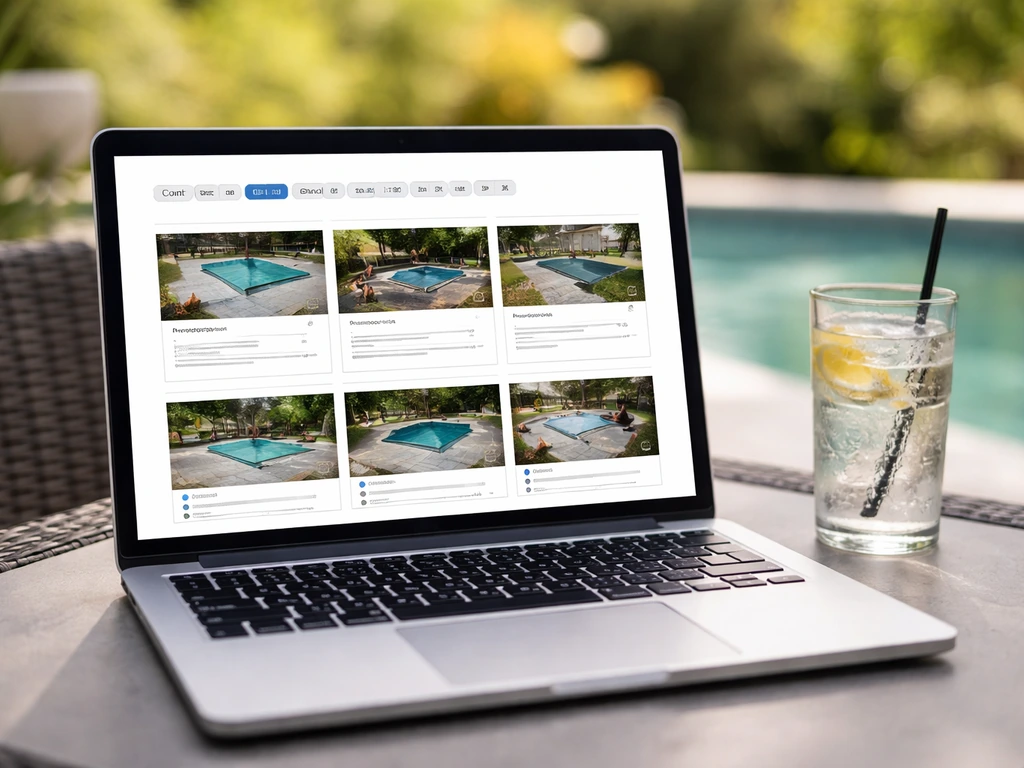
Start with platforms that have a verification layer built into their system. On a dedicated outdoor contractor review site like this one, reviews are tied to specific project types and regional contractors, which already filters out a lot of noise. Beyond that, Google Business Profile is the highest-volume source for most local contractors and pulls real-name accounts, making it harder (though not impossible) to fake. Angi uses an internal consumer verification process designed to screen out reviews from employees, family members, and competitors, and flagged reviewers can be contacted to confirm they're real customers. Houzz ties reviews to contractor profiles and requires that reviews relate to actual projects completed through the platform.
Yelp works differently. A significant share of Yelp reviews get filtered into a 'Not Recommended' section by its automated system, and those reviews don't count toward the main star rating even though you can still read them. This means a contractor's Yelp rating can be misleading in either direction, so always click through to the not-recommended section before drawing conclusions. BBB is worth checking not for the letter grade but for the complaint resolution records: look for whether complaints are marked 'Resolved' (the consumer confirmed it was fixed) versus 'Unresolved' (the company responded but didn't actually fix the problem). Those unresolved complaints are a direct signal.
One thing to keep in mind: blank" rel="noopener noreferrer">a 'verified' badge on a Google Business Profile means the business confirmed their contact information with Google. It says nothing about whether their reviews are genuine. The FTC finalized rules in October 2024 banning fake reviews and paid testimonials, but enforcement is ongoing, so your own critical reading still matters. The FTC’s Q&A explains that the Consumer Reviews and Testimonials Rule covers deceptive or unfair conduct involving consumer reviews and testimonials, with an effective date of October 21, 2024 FTC’s Q&A states that the Rule addresses deceptive or unfair conduct involving consumer reviews and testimonials and notes an effective date of October 21, 2024.. Cross-reference at least three platforms before forming an opinion about any contractor.
How to read ratings: what the numbers actually tell you
A 4.6-star average across 80 reviews means something very different from a 4.6-star average across 11 reviews. Volume matters. For pool and patio work specifically, you want to see at least 20 to 30 reviews before trusting an average rating, because these are large projects (often $15,000 to $80,000 or more) and dissatisfied customers are more motivated to write reviews than satisfied ones. For more practical guidance on how different contractors stack up, you can also use my pool and patio reviews as a comparison point. So even a modest review count can skew negative.
Look at the rating distribution, not just the average. A contractor with 60% five-star reviews and 20% one-star reviews (with almost nothing in between) is often polarizing for a reason. It could mean great results when things go smoothly but poor recovery when problems arise. A contractor with a concentration of four-star reviews is often more consistent in practice. Read the three-star reviews especially carefully: they tend to be the most balanced and specific, written by customers who got a decent but imperfect experience and want to be fair.
Pay attention to review recency. If a contractor has 40 glowing reviews from two to three years ago and a string of mixed reviews in the last six months, something changed, possibly ownership, crew turnover, or a period of overbooking. Filter by 'most recent' on every platform and read the last 15 reviews as if they're the only ones that exist.
What review details to look for by project type

In-ground and above-ground pool installs
For pool installations, the three things customers consistently mention in reviews are: how close the final price came to the original bid, how the company handled unexpected site conditions (rock, utilities, drainage), and how the pool looked and functioned six to twelve months after completion. Reviews that describe a specific pool type (fiberglass, vinyl liner, concrete/gunite) and mention the timeline in weeks rather than vague terms are the most useful. Be skeptical of reviews that read like marketing copy with no specific details.
Patio installation and concrete work
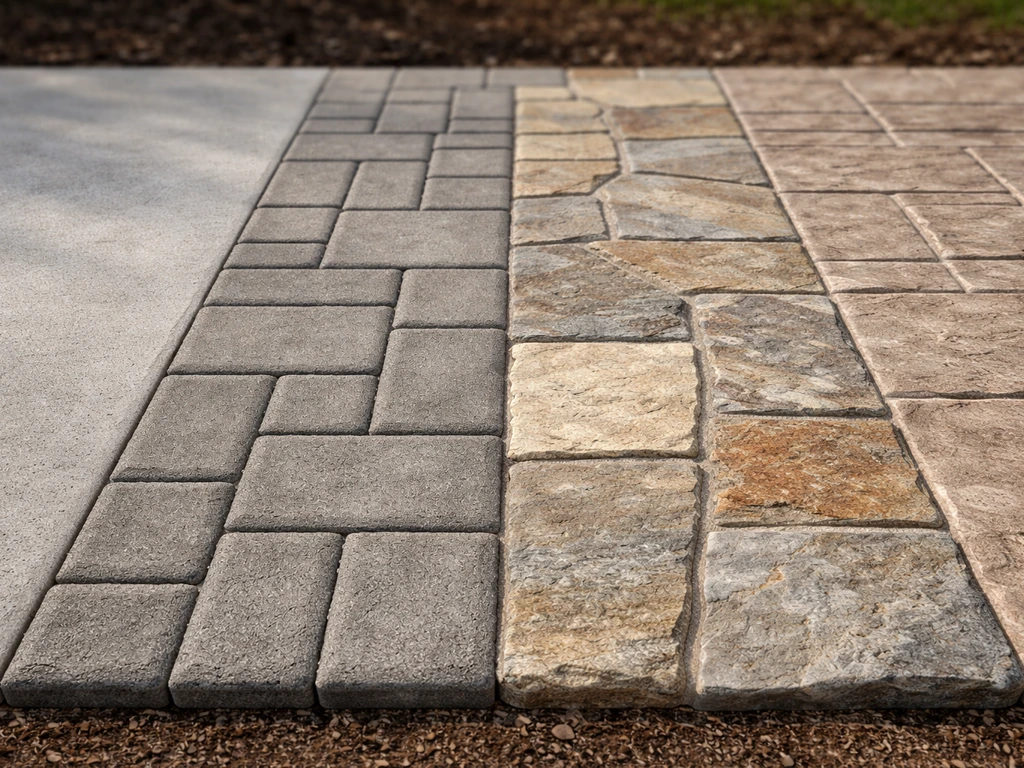
Patio reviews should mention the surface material (poured concrete, pavers, natural stone, stamped concrete), approximate square footage, and whether the work held up after a winter or rainy season. After you narrow down patio options, you can also look for discount pool and patio reviews to gauge whether promotional pricing comes with trade-offs. Cracking, settling, and drainage problems are the most common complaints in patio work, and they often don't show up until months later. Look for reviews written 12 or more months after the project date. If a company has mostly fresh reviews and very few from customers describing long-term results, you're missing critical information.
Hardscaping, retaining walls, and outdoor living builds
Hardscaping reviews should call out whether the retaining wall or outdoor feature was engineered properly (especially for anything over 3 feet that holds back soil). Outdoor living builds like pergolas, enclosures, and sunrooms have their own set of review signals: look for mentions of permit pulling, inspector sign-off, and how the structure performed during weather events. Companies doing patio enclosures or pool-adjacent structures are similar in scope to what you'd find when reading reviews for specialists in those categories, and comparing notes across similar service types helps you calibrate what 'good' looks like in your region. Companies doing patio enclosures or pool-adjacent structures are similar in scope to what you'd find when reading reviews for specialists in those categories, and comparing notes across similar service types helps you calibrate what 'good' looks like in your region pqs pool and patio renovations reviews.
Red flags and green flags across multiple reviews
After reading enough pool and patio reviews, patterns start to surface fast. Here's what to watch for.
| Signal Type | What It Looks Like | What It Means |
|---|---|---|
| Red Flag | Multiple reviews mention unexpected change orders mid-project | Pricing transparency is likely poor; scope creep may be intentional |
| Red Flag | Reviewers describe the contractor going silent after deposit | Communication breakdown is a pattern, not a one-off |
| Red Flag | Reviews mention work failing within one season (cracking, leaks) | Workmanship or materials quality is below standard |
| Red Flag | Several reviews note the job ran weeks or months over schedule with no explanation | Project management is weak; may be overbooking |
| Red Flag | Owner responses to negative reviews are defensive or dismissive | Expect the same attitude if your project has a problem |
| Green Flag | Reviews describe the crew cleaning up daily and respecting the property | Professionalism carries through the whole job |
| Green Flag | Customers mention the company proactively flagged a site issue and adjusted | Honest communication under pressure is a strong sign |
| Green Flag | Reviewers describe specific warranty claims that were honored quickly | Post-job service follows through |
| Green Flag | Owner responses to negative reviews are specific, apologetic, and offer resolution | This company takes feedback seriously |
| Green Flag | Multiple reviews mention the same crew members or project managers by name positively | Consistent team, low turnover, invested workforce |
One more thing: watch for a cluster of reviews posted within a few days of each other with similar phrasing and no photo evidence. That pattern, combined with reviewer accounts that have only one or two total reviews, is a common signature of solicited or fake reviews. Trustpilot says it assesses reviews using automated detection systems against many data points for fake reviews and also checks them for compliance with its policies and guidelines assess reviews using automated detection systems. The FTC's 2024 rule specifically targets this kind of conduct, but it still happens. When you see it, discount that cluster entirely and focus on the reviews that have details only a real customer would know.
Questions to ask and documents to verify before hiring

Reviews get you to a short list. From there, you need to verify things directly. Before you sign anything, work through this checklist.
- Ask for proof of a current contractor's license. In states like Illinois, you can cross-check this independently using the IDFPR license lookup tool. Note that general contractor licensing requirements vary by state and sometimes by county or municipality, so confirm what's required in your area, not just whether they have a license.
- Request a Certificate of Insurance (COI) showing commercial general liability coverage and workers' compensation. Ask to be listed as an additional insured on their policy. If they can't produce a current COI within 24 hours, move on.
- Ask specifically: 'Who pulls the permits for this project?' The contractor should pull permits, not you. If a contractor asks you to pull your own permits, that is a red flag. A licensed contractor should handle this as a standard part of the job.
- Ask for three references from projects completed in the last 12 months that are similar in scope and material to yours. Then actually call them.
- Request photos or a site visit to a completed project similar to what you're planning. Recent portfolio work tells you more than a website gallery.
- Ask how they handle change orders: are they written, signed, and priced before any additional work begins? Get this in writing in the contract.
- Ask what the warranty covers and for how long, and get the warranty terms in the written contract, not just verbally.
- Ask for a payment schedule tied to project milestones, not calendar dates. Avoid any contractor who requires more than 30% upfront before work begins.
How reviews help you compare bids and make a short list today
Once you have two or three bids, use review evidence to pressure-test what each contractor is telling you. If one company bids significantly lower than the others, go back to their reviews and look specifically for comments about scope reduction after signing, material substitutions, or projects that came in over budget after a low initial bid. That pattern in reviews is your explanation for the low number.
Compare what each bid actually includes by looking at what past customers said was in the contract versus what they actually received. Reviews often mention things like 'they didn't include the coping in the original quote' or 'the cleanup and haul-away was extra.' These details help you ask the right clarifying questions when you go back to each contractor.
Here's a practical short-list process you can run today:
- Search for local pool and patio contractors on this platform filtered by your region and project type. Read the top five listings by review count, not just star rating.
- Cross-check each one on Google and at least one other platform (Angi, Houzz, or BBB). Look for review consistency across platforms.
- Eliminate any company with unresolved BBB complaints in the last 24 months or a pattern of red-flag reviews as described above.
- Contact your top three to request bids and begin the document verification process.
- After receiving bids, map the line items back to what past customers described in reviews to identify gaps or inconsistencies.
- Choose the company whose review pattern shows honest communication and strong post-job follow-through, even if they are not the lowest bid.
One honest caveat: reviews can tell you a lot, but they cannot tell you how a contractor will behave specifically on your job, at your site, in your timeline. They show you probability, not certainty. A contractor with great reviews can still have a bad season. What reviews do is dramatically shrink your risk by surfacing patterns that were invisible before you started reading. Pair them with verified credentials, a written contract with milestone-based payments, and at least one reference call, and you're making about as informed a decision as you can before breaking ground.
If you're also researching specific companies in this space, detailed review profiles for contractors like those found under related searches (including regional specialists in pool renovations, discount pool and patio services, and full-service aqua pool and patio builds) can add useful comparison context before you finalize your short list.
FAQ
Are pool and patio works reviews interchangeable across different project types?
No. A contractor can have a strong track record on one project type, like patio pavers, but perform differently on another, like pool shell work. When reading pool and patio works reviews, confirm the reviewer mentions the same type you are buying (fiberglass vs vinyl vs gunite, or pavers vs stamped concrete) and that they discuss the same work scope (plumbing and equipment for pools, drainage base and edging for patios).
How do I tell if “on budget” reviews are trustworthy for a large pool or patio project?
Look for consistency between the review story and the pricing details. If multiple reviews mention the original bid stayed close, but those same reviews also say change orders were frequent, treat it as a red flag about what “close to bid” really means. A good sign is when reviews give both the initial range and what, if anything, changed due to clearly described site conditions (rock, utilities, drainage).
What’s the best way to balance review recency with long-term performance in pool reviews?
Use the date signals together. Recency matters most, but also check that the later reviews still mention long-term performance. For example, a pool built 2024 might have “looks great” reviews immediately, but you should prioritize the subset that describes 6 to 12 months of operation (especially equipment reliability, leaks, and chemical stability) even if those reviews are fewer.
Should I trust reviews that include photos but few technical details?
Don’t rely on photos alone. A realistic approach is to read whether the reviewer mentions measurable specifics that photos cannot prove, like equipment model numbers, actual square footage, drainage behavior after rain, or the date they noticed issues. If the review includes only pictures with generic compliments, it is harder to use for decision-making.
Do contractor responses to pool and patio works reviews matter, and what should I look for?
Yes, but in a targeted way. If a contractor replies to reviews, prioritize whether they address the concrete problem described and whether they reference what was fixed, not just the general claim that they “stand behind their work.” Avoid contractors whose replies repeat the same template across unrelated complaints, or those that argue with factual details instead of proposing remediation steps.
How should I score reviews that are too vague to use?
If the reviewer is vague, assume there is less information. A practical rule is to grade reviews higher only when they include at least two of the following: timeline in weeks, material type, site condition issues, and what changed in the scope. Reviews that mention none of these usually cannot help you pressure-test bids.
What are common review clues that a low bid will lead to scope creep?
Watch for “scope creep” language that appears in multiple reviews: added items after signing, frequent change orders, or missing allowances like coping, decking transition pieces, plumbing components, or permit-related work. If you see this pattern, ask each contractor to list exclusions and allowances in writing (what is included, what is not, and how pricing changes if hidden conditions appear).
How do I find durability-focused evidence in patio reviews?
Yes. For patios, many problems relate to water movement and freeze thaw cycles. Prefer reviews written after at least one winter or a rainy season, and look for complaints that reference settling, pooling water, frost heave, or cracking near edges and joints. If almost all reviews are written within the first month, the durability signal is missing.
How should I interpret BBB complaint statuses when choosing a pool and patio contractor?
They are useful as a starting point, but they can still mislead. If BBB “Resolved” is listed without detail, try to confirm by reading the complaint narrative and looking for evidence of an actual fix. Unresolved complaints are more actionable, but you still want to see whether multiple complaints cluster around the same issue (for example, drainage failures or delayed completion).
What review details should make me ask more questions about permitting and inspections?
Yes, and it’s a common mistake. Many contractors can get permits, but the review signal you want is whether the permit process was smooth, inspections passed, and the final work matched approved drawings. If reviews mention “inspector corrections” or “we had to redo sections,” ask for the permitting plan and who is responsible for revisions if the first submission is rejected.
What questions should I ask about milestone payments based on what reviews usually reveal?
Use a milestone-based lens, not just “weekly updates.” Ask what milestones trigger payments (demo complete, shell done, plumbing pass, deck cured, final inspection) and how they handle delays caused by material lead times. Then compare that to reviews that mention timelines in weeks. If timelines in reviews don’t include milestone milestones, you may be missing risk controls.
If I’m building a pool and a patio enclosure together, how do I use reviews effectively without mixing scopes?
Yes. It’s possible for a contractor to be great on pools but weak on the related patio surfaces, transitions, or enclosures. If you are doing a pool-adjacent enclosure or patio, look for reviews where the contractor built the same adjacent structures and mention weather performance (wind, rain, and roof drainage). Then compare patterns across similar service types to calibrate expectations.
Next Articles
Discount Pool and Patio Reviews: How to Compare Contractors
Compare discount pool and patio contractor reviews, spot red flags, and match offers to clear scope, warranty, and costs
Aqua Pool and Patio Reviews: How to Vet Contractors
Learn how to vet Aqua pool and patio reviews, verify the right contractor, compare bids, and spot red flags fast.
My Pool and Patio Reviews: How to Vet Contractors
Learn how to vet pool and patio contractors using real customer reviews, spot fake ratings, and compare bids consistentl