
When homeowners search for "patio heat and shade reviews," they're usually trying to solve two overlapping problems at once: how to stay cool during peak afternoon sun and how to keep the space usable on cool evenings or in shoulder seasons. The good news is these two goals can work together beautifully on one patio. The tricky part is picking the right products, placing them correctly, and finding a contractor who actually knows what they're doing. This guide walks you through exactly that.
Patio Heat and Shade Reviews: Choose and Plan Fast

Maren Lawson
7 May 2026
What 'patio heat and shade' actually covers
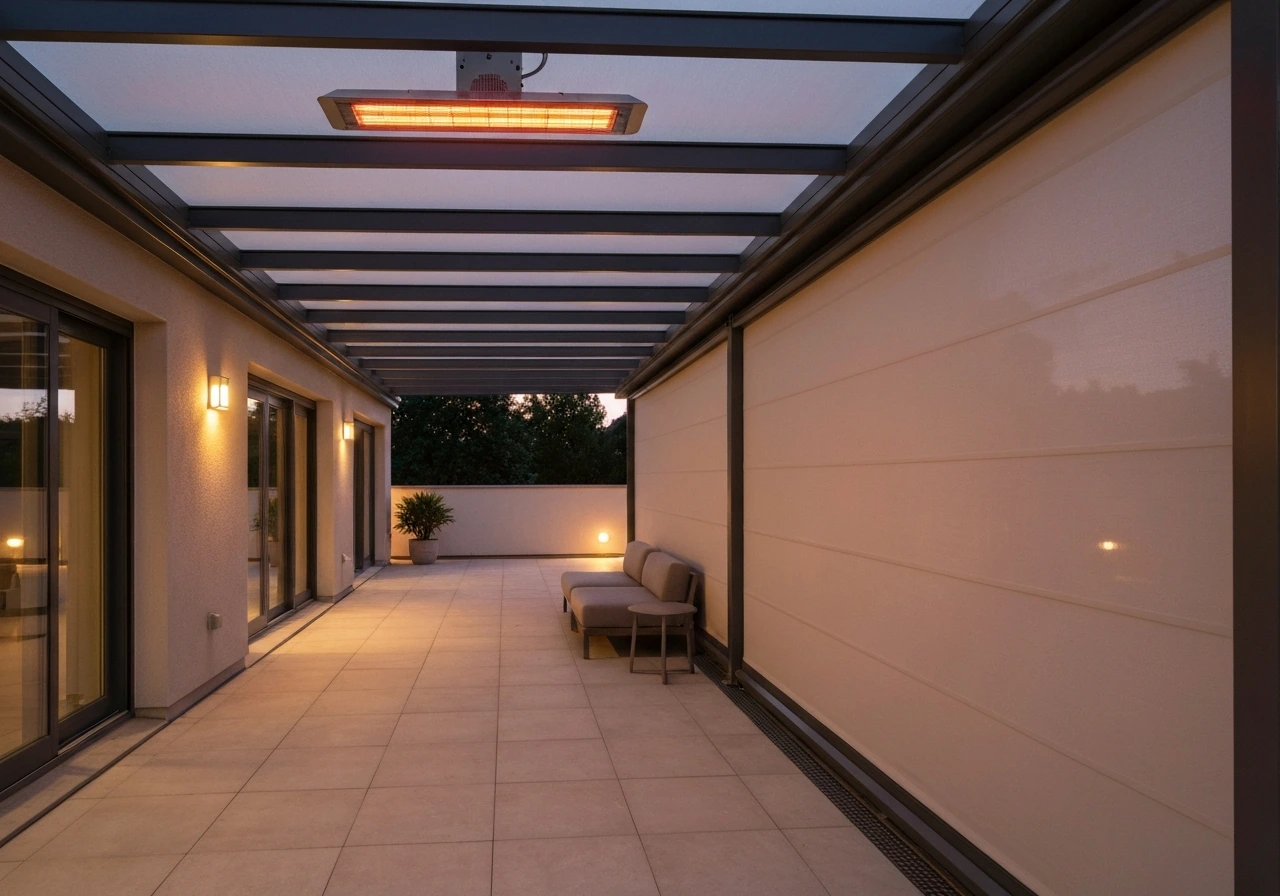
The phrase means different things depending on where you live and how you use your outdoor space. On the shade side, it typically refers to any structure or fabric system that blocks direct sun: retractable awnings, motorized pergola covers, shade sails, large cantilever umbrellas, or solid pergola roofs with louvered panels. On the heat side, it usually means wall- or ceiling-mounted infrared heaters fitted under a covered structure, freestanding propane or electric floor heaters, or fire pit/fire table setups.
Increasingly, homeowners are asking patio contractors to design and install both at the same time, especially for screened rooms, louvered pergolas, and full outdoor kitchens where the space needs to work twelve months a year. Specialty outdoor living contractors, patio enclosure companies, and even pool/sunroom builders often handle both elements under one project.
Choosing the right heat option for your patio
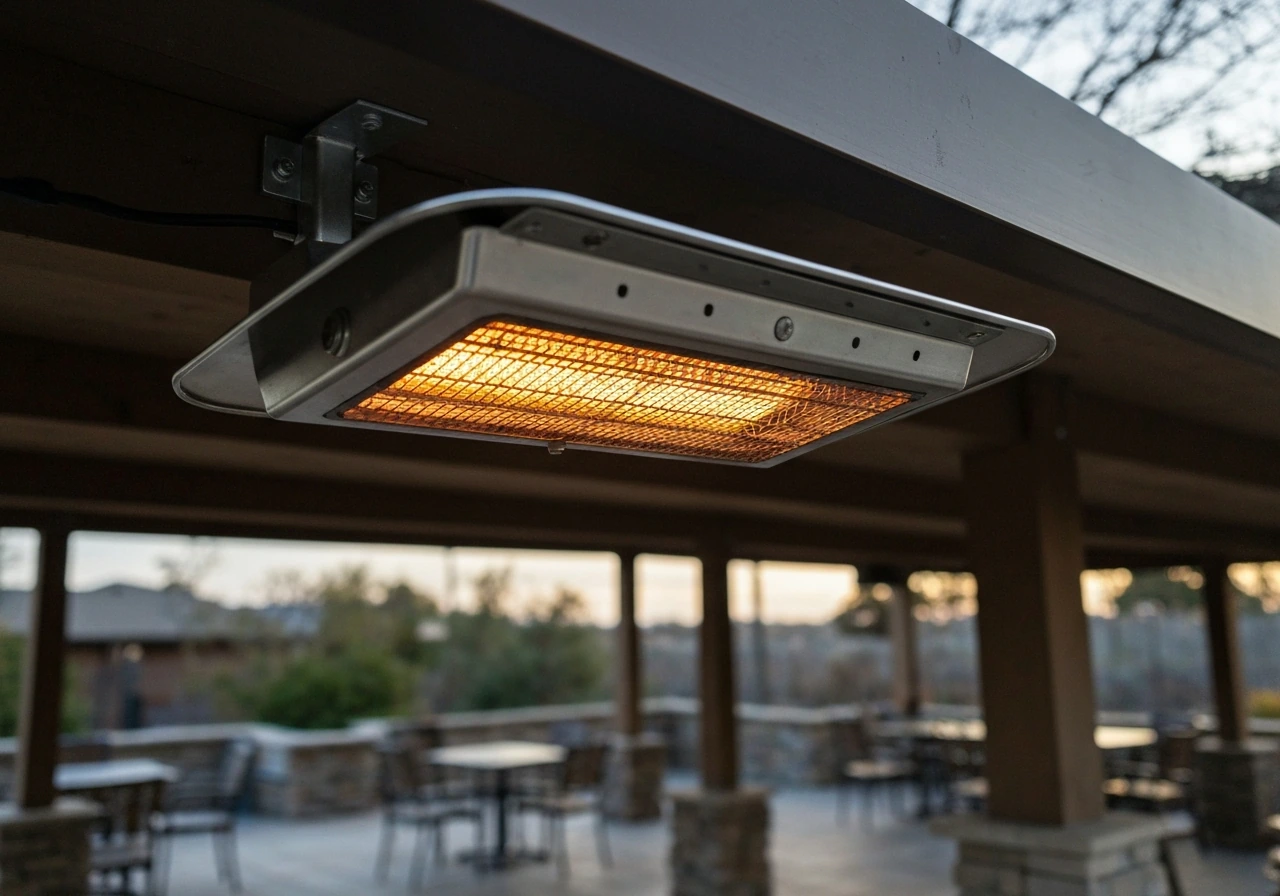
The most important distinction to understand is infrared versus convective heating. A convective heater (like a propane column heater) warms the air around it, which gets blown away by even a light breeze. An infrared heater warms people and objects directly, the way sunlight does, which makes it far more effective on a covered but open patio. That's why infrared heaters are so commonly reviewed alongside pergolas and awning installations: they're the logical pair for a covered space.
Heater types at a glance
| Type | Best for | Fuel | Key limitation |
|---|---|---|---|
| Electric infrared (mounted) | Covered patios, pergolas, awnings | Hardwired 240V electric | Requires electrician; 18 in side clearance, 36 in front clearance minimum |
| Freestanding propane | Open patios, temporary setups | Propane tank | Must stay 5–6 ft from structures/cylinders; tip-over risk in foot traffic |
| Natural gas (post or wall) | Permanent installs, outdoor kitchens | Natural gas line | Needs licensed gas plumber; not portable |
| Electric floor standing | Small decks, rental situations | Standard outlet | Susceptible to rain damage on wiring and ceramic emitters |
For most covered patios, a hardwired electric infrared heater mounted overhead is the cleanest, safest, and most effective long-term solution. Brands like Infratech specify exactly 18 inches of clearance on all four sides and 36 inches directly in front of the unit. Those aren't suggestions, they're safety requirements, and a contractor who ignores them is a red flag (more on that below). If you go propane, the National Fire Protection Association's guidance (blank" rel="noopener noreferrer">NFPA 58, referenced in NPS fire safety standards) requires portable outdoor heaters to be at least 6 feet from any propane cylinder and at least 5 feet from combustible structures. Any quote that doesn't mention clearance requirements at all should make you ask questions.
Sizing heat coverage to your space
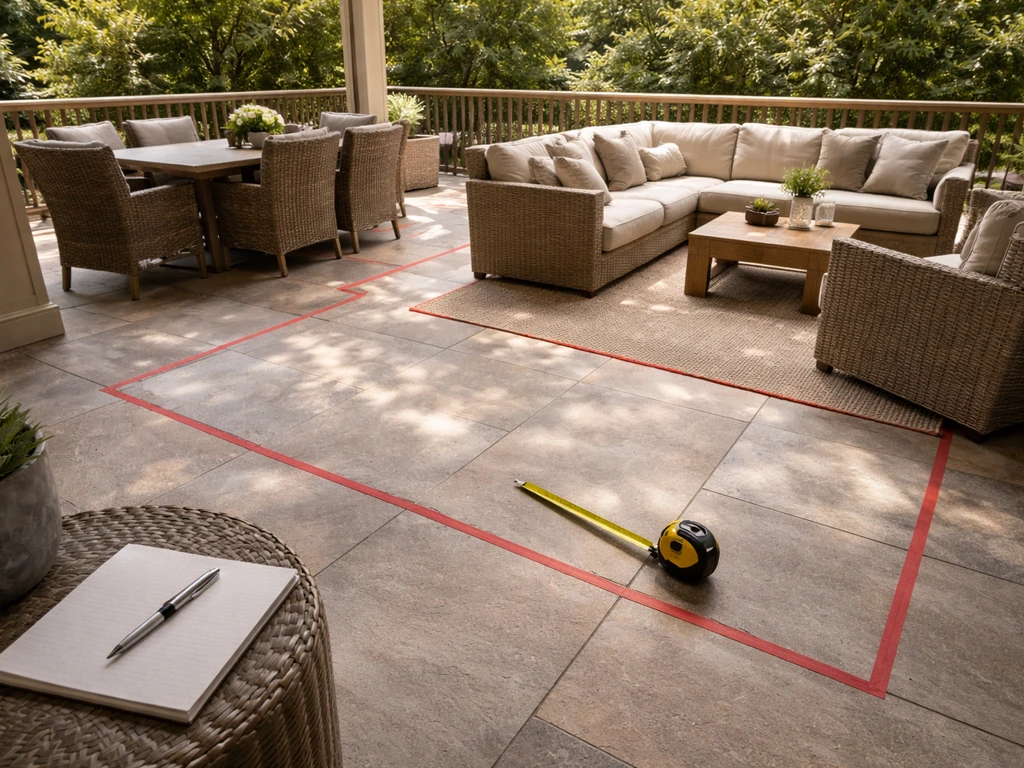
A good rule of thumb: figure out where people actually sit, not where the patio ends. A 12x16 covered patio with a dining table and a lounge area might need two independently switched infrared zones so you're not heating the whole space to warm one corner. Ask any contractor to show you the heat map or placement diagram before installation. If they can't produce one, they're guessing.
Choosing the right shade solution
Shade options range from simple DIY installs to multi-week contractor projects, and the right choice depends heavily on your sun angle, wind exposure, and how much of the patio you want covered. Here's how the main options stack up in practice.
Retractable awnings
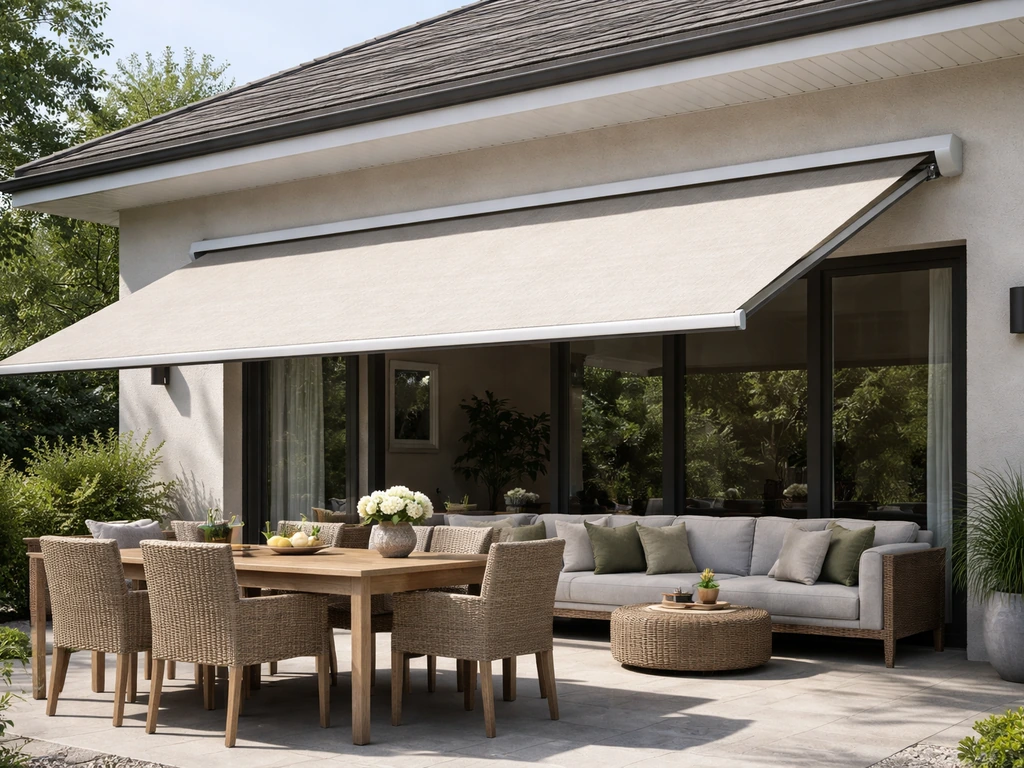
Retractable awnings are one of the most popular reviewed shade solutions for attached patios. A motorized awning with a wind sensor and pitch adjustment (some models adjust from 0 to 45 degrees) gives you real control over sun angle and rain runoff. Look for premium fabric, a protective housing cassette that shields the rolled fabric from UV and debris when retracted, and a wind sensor that retracts automatically when sustained wind exceeds roughly 20 to 25 mph. Budget retractable awnings without sensors or cassette housings wear out fast, which is a common complaint in negative reviews.
Pergolas and permanent shade structures
A louvered pergola or pergola with a solid or polycarbonate roof is the premium option and the one most likely to involve a licensed contractor. These structures offer better wind resistance, year-round usability, and are designed to accept mounted heaters, ceiling fans, and lighting. The tradeoff is cost and lead time. Contractors in high-demand markets can be booked 8 to 16 weeks out, so factor that into your planning if you want the patio ready for summer.
Shade sails
Shade sails are a reviewed budget option for open patios and decks where you can't attach a permanent structure. The most important thing reviewers consistently get wrong: installation angle. The sail needs to be mounted at a 20 to 30 degree angle minimum to allow water to run off cleanly. A flat sail pools water, sags, and degrades the hardware in one rainy season.
Use turnbuckles at each anchor point and tighten them gradually and evenly to get a taut, uniform surface. Also note: shade sails are not compatible with heaters. [Never place a propane heater, electric heater, or open fire directly under or near a shade sail. ](https://www.
austintexas. gov/sites/default/files/files/Fire/Prevention/PropaneHeaterPublic_Assemblies. pdf) The fabric is not rated for heat exposure, and it's a fire hazard.
Cantilever umbrellas
Large offset umbrellas (10 to 13 feet) are a solid middle ground: no installation required, repositionable, and effective for a dining table or lounge area. They're not reviewed as a contractor service but often appear alongside contractor projects as a supplemental shade element. If you're hiring a patio company for a pergola or awning, ask whether the layout accommodates an umbrella for the zones the fixed structure doesn't cover.
Combining heat and shade: making them work together
This is where most DIY plans fall apart, and where a good contractor earns their price. Heat and shade systems have specific clearance and placement rules that can conflict with each other if you don't plan the layout first.
- Mount infrared heaters inside a covered structure (pergola, awning, patio roof), never below a shade sail or near a fabric awning that lacks clearance.
- Heaters need 18 inches on all sides and 36 inches of unobstructed space in front. A pergola beam or awning housing that cuts into that space creates a code compliance issue.
- Plan your seating zones first. Shade should block the primary afternoon sun angle over the seating area, and the heater should point at the same seating zone, not at walls or empty space.
- For patios that need both, a louvered pergola with overhead infrared heaters is the most reviewed and most compatible combination. The louvered roof closes for rain and sun, opens for breeze, and gives the heater a stable, compliant mounting surface.
- If you use a freestanding propane heater, keep it at least 5 feet from any fabric, wood, or combustible structure. Never place it under a retractable awning while the awning is extended.
- Plan seasonally: in summer, shade is the priority and you may not need heat at all. In fall and spring, you'll want heat more than shade. A motorized louvered system lets you manage both without removing anything.
Think of the layout as two overlapping comfort zones: a shaded daytime zone and a warmed evening zone. They should overlap where people spend the most time. Sketch both zones on a rough floor plan before meeting any contractor, even if it's just a rectangle with two circles on it. It gives you something concrete to show and react to during quotes.
How to read patio heat and shade reviews the right way
Not all reviews are equally trustworthy or useful. Platforms handle verification differently. Angi uses an automated verification process tied to project invoices. Yelp does not recommend every review it receives, meaning some reviews are filtered and may not appear in a contractor's visible rating. Yelp's Verified Licenses program (indicated by a blue shield badge) gives you a starting point on qualifications, but it's not a guarantee of workmanship. Use multiple sources and look for patterns, not individual data points.
Signals that a contractor is worth calling
- Multiple reviews that specifically mention installation quality, not just appearance (e.g., mentions of level mounting, clean wiring, permit pulled, inspector passed)
- Reviews that mention the contractor's communication during delays or material backorders, not just smooth projects
- Reviewers who mention follow-up service calls being handled quickly
- Photos attached to reviews showing finished work with visible mounting hardware, not just staged lifestyle shots
- Consistent ratings across multiple platforms (Angi, Google, Yelp, BBB) rather than a 5-star average on one platform and nothing else
Signals that should slow you down
- Reviews that are all 5 stars with no detail, all posted within a short window (a common pattern with review manipulation)
- No mention of permits or code compliance in contractor communications or reviews, especially for electrical or gas work
- Negative reviews that mention unclear or verbal-only warranties with nothing written down
- Reviews citing final costs significantly higher than the original quote with no clear change order explanation
- Patterns of slow or no response to warranty claims after installation
Regional context matters a lot when reading reviews. A contractor in Phoenix with strong reviews about shade sail tension and UV-resistant fabric is solving a different problem than a contractor in Minneapolis who needs to handle snow load on a pergola roof. Read reviews from your climate zone specifically. A site that aggregates local patio contractor reviews with regional coverage lets you filter for contractors who've actually worked in your conditions. Specialty outdoor living contractors who also handle enclosures, sunrooms, or pool surrounds sometimes show up on the same platforms since the trade skills overlap significantly.
Warranty: what to expect in writing
For heat components, a manufacturer warranty of around three years covering defects in materials and workmanship under normal use is the standard. Infratech, for example, offers exactly this and provides a downloadable written warranty document. Any contractor who can't tell you the manufacturer's warranty terms or won't provide them in writing at quote time is someone to push back on. Separately, ask about the contractor's own labor warranty on installation, which is different from the product warranty. Two years on labor is a reasonable expectation for a professional installation.
Questions to ask contractors before you sign anything
Most homeowners show up to a quote meeting without prepared questions and end up agreeing to something they didn't fully understand. Here's a short list that cuts through the sales pitch and gets to what actually matters.
- Will you pull permits for the electrical, gas, or structural work, and are those costs included in this quote?
- What are the clearance requirements for the heater you're recommending, and how does the shade structure accommodate them?
- What happens if I need a service call six months after installation? Is that covered under a labor warranty, and what does it cost if it isn't?
- Can you show me the manufacturer's written warranty for every major component in this quote?
- What's your lead time from signed contract to installation start, and what's typically caused delays on similar projects?
- Do you have photos from a comparable project, ideally one with both heating and shade in the same space?
- Who performs the installation: your own crew or a subcontractor? If a sub, are they licensed for electrical or gas work?
- How do I adjust or retract the shade system in high wind, and what's the recommended wind threshold for retraction?
Your pre-hire shortlist checklist
- At least three verified reviews mentioning installation workmanship (not just aesthetics)
- Contractor holds a valid license for electrical or gas work in your state, or uses a licensed sub with documented credentials
- Written quote itemizes labor, materials, permits, and warranty terms separately
- Manufacturer warranty documentation provided for heater and shade system components
- Project timeline confirmed in writing with a defined milestone for permit pull
- References available from at least one completed heat-and-shade combined project
- Contract includes a change-order clause so scope creep is documented and priced before work proceeds
Mistakes to avoid and red flags that actually matter
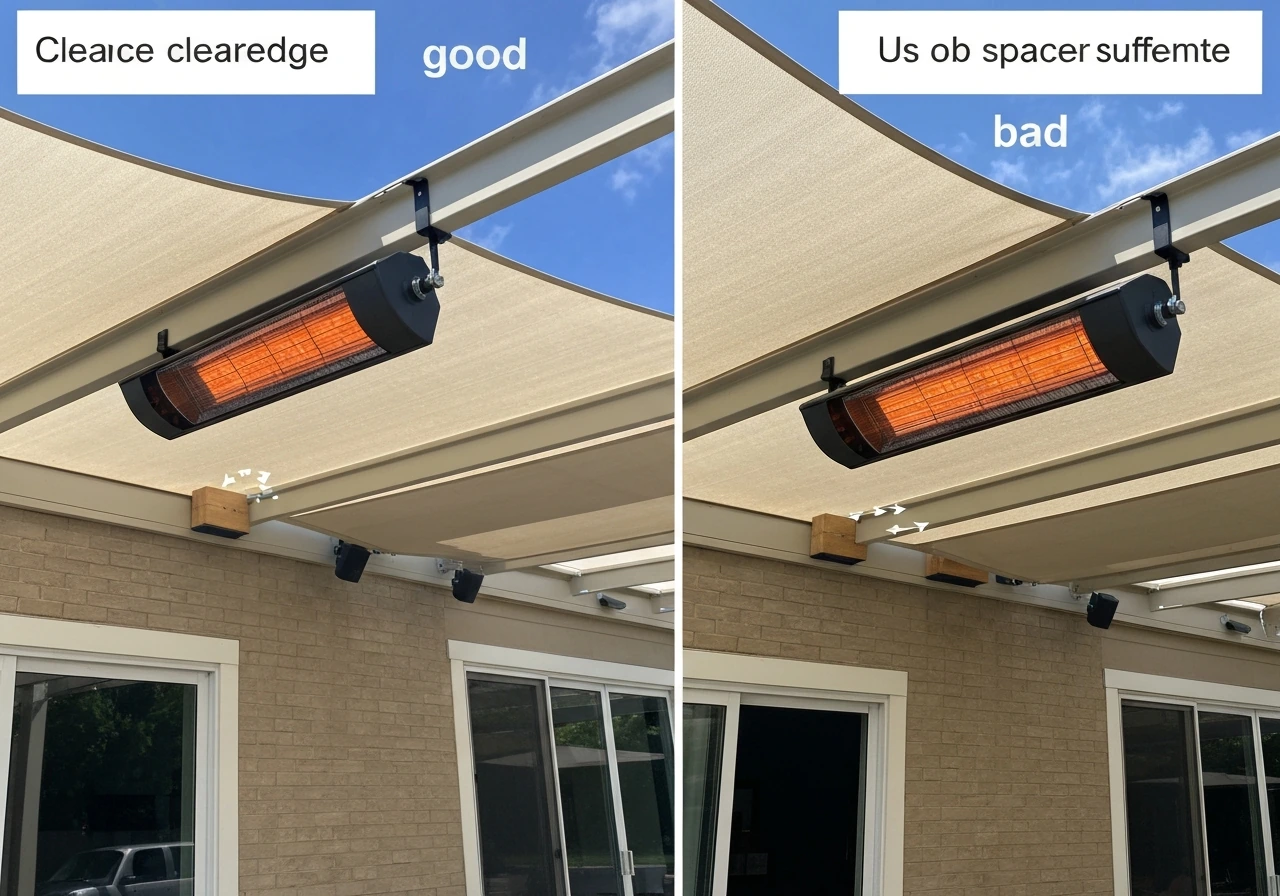
A few problems come up repeatedly in patio heat and shade reviews, and most of them are avoidable if you know what to watch for before you hire.
- Heater placed too close to the shade structure: The most common installation mistake. An infrared heater mounted with less than 18 inches of side clearance or 36 inches of frontal clearance violates the manufacturer's safety specs and can be a fire hazard. Always verify this in person after installation before final payment.
- Shade sail installed flat: A shade sail hung without a 20 to 30 degree pitch angle will pool water, sag, and shred the fabric at the grommets within a season. This is fixable at install time and almost impossible to fix cheaply after the fact.
- No wind sensor on a motorized awning: A retractable awning without an automatic wind sensor will eventually be destroyed in a windstorm while extended. This is one of the most common complaints in budget awning reviews.
- Verbal warranty promises: If it isn't in the written contract, it doesn't exist. Contractors who say 'don't worry, we take care of our customers' and then disappear after the check clears are one of the most consistent negative review themes across outdoor living platforms.
- Moving a propane heater while it's running: It sounds obvious, but it's a real safety risk, especially on busy patios. Any setup where a freestanding heater is in a high-traffic path without a stable base or tether point is an accident waiting to happen.
- Sizing the heater to the patio footprint instead of the seating zone: A heater that points at a wide open area instead of directly at where people sit is wasted capacity. Ask the contractor to sketch the heat coverage radius at the proposed mounting height.
- Ignoring permit requirements: Hardwired electrical heaters and natural gas connections require permits in virtually every jurisdiction. A contractor who says 'we don't need a permit for this' is either wrong or hoping you don't find out. Either way, skip them.
- Choosing a contractor based on the lowest quote without checking reviews: Low bids often mean unlicensed labor, cut-rate materials, or no warranty follow-through. Read the reviews on any platform that covers outdoor living contractors in your area, and check BBB complaint history before signing.
If you're comparing specific patio companies that offer heat and shade packages, you'll also find it useful to look at reviews for related outdoor structure specialists in your region. If you're comparing Sunvue patio reviews, you'll also find it useful to look at reviews for related outdoor structure specialists in your region.
If you're comparing specific patio companies that offer heat and shade packages, you'll also find it useful to look at sunniland patio reviews for a quick sense of real customer experiences. If you want a quick cross-check, you can also read premium solar patios reviews to compare how the products perform in real homes.
Companies that focus on screen rooms and patio enclosures, solar-rated patio covers, or full-service outdoor living installations often handle heat and shade as part of a broader project. Reading reviews across these related contractor types helps you understand what quality installation actually looks like and sets realistic expectations for pricing, timelines, and warranty terms before your first contractor call.
FAQ
Can I install infrared heaters on a patio that also has retractable awning or other fabric shade?
Yes, but only with the right setup. Infrared heaters are typically fine on enclosed or covered patios as long as they are mounted with the manufacturer clearances and the installer keeps the heater aimed so it does not create hot spots on nearby fabrics or surfaces. If you have a nearby operable shade (like a retractable awning), confirm the heater placement won’t interfere when the awning is extended, and ensure the heater is not directed toward any vinyl, mesh, or shade sail fabric.
How do I avoid heating the whole patio instead of the seats in patio heat and shade reviews?
Zone control usually prevents overheating and cold pockets. Plan separate switches or smart controls for the seating group and the path lanes, then ask for a written heater layout showing where each device is intended to cover. If your contractor can only offer one total-zone design, you may end up heating areas people do not use, which is a common complaint in negative reviews.
Do shade systems automatically make patios feel cooler, or do I still need heat planning?
It depends on whether you mean “direct sun blocking” or “cooling performance.” Shade reduces heat gain, but you still need airflow and material selection. For hot climates, reviewers often care about shade fabric reflectivity and roof louver orientation, while cooler climates prioritize wind resistance and snow considerations. Ask your contractor to explain how your shade choice changes temperature and glare during peak hours, not just how much it blocks sunlight.
What should I look for in reviews when the goal is safe, correct heater and clearance installation?
Don’t base your decision only on star ratings. Ask for three examples of similar projects in your climate, and verify the contractor’s installation details like clearance compliance, wire management for hardwired units, and how they handle maintenance access (filters, controls, and fan integration if included). Reviews that mention “easy install” but not placement, safety clearances, or warranty paperwork are often less useful.
What questions should I ask a contractor before choosing propane patio heat, especially about safety and spacing?
For propane setups, the big red flags are missing clearance discussion, no plan for cylinder placement, and no mention of leak safety procedures. You should also ask whether the system is intended for “temporary” or “permanent” use and how the contractor routes gas lines and protects them from traffic, heat buildup, and outdoor corrosion.
Can I combine patio heat with outdoor lighting or ceiling fans without creating electrical or clearance issues?
Yes, if the lighting and power plan is integrated with the shade structure. Infrared heaters are often paired with overhead lighting, ceiling fans, and sometimes controls, but retractable awnings and pergola systems can change wiring paths and clearance rules. Request a single coordinated electrical plan that shows where power, switches, and any smart controls will go before any structure is finalized.
Are shade sails ever safe to use near patio heaters, or is “never place” the real rule?
Shade sails are incompatible with direct heat placement, but even with infrared heaters there’s a practical risk to nearby fabrics from radiant heat. Keep a buffer by placing heaters so the radiant path does not point toward shade sail fabric, and confirm with the manufacturer whether their materials tolerate radiant exposure. If the contractor proposes “under the sail” heater placement, treat it as a major mismatch.
If I’m considering a fire pit or fire table, how should I evaluate it differently from infrared patio heat in reviews?
Yard fixtures like fire pits and fire tables are not interchangeable with infrared heating, and they also change the shade and placement conversation. If you want evening warmth plus cooking, ask how they will manage venting, clearance to structures, and how the shade system will coexist with open-flame or high-heat surfaces. Reviews often mention soot, odor, and spacing problems when fire elements are treated like standard heaters.
How do I translate the “two comfort zones” idea into a clear quote and avoid uneven coverage?
A good contractor should provide both a layout sketch and a practical use plan. Ask them to show where the shaded daytime zone ends, where the warmed evening zone begins, and how many independently controlled heater positions you need for your specific seating footprint. If they cannot explain the overlap area, you may get a system that looks correct in a brochure but feels uneven in real use.
Next Articles
Ohio Custom Pool and Patio Reviews: How to Compare Contractors
Learn how to trust Ohio custom pool and patio reviews, spot red flags, shortlist pros, and request accurate bids.
Oklahoma Pool and Patio Reviews: How to Choose a Contractor
Use verified Oklahoma pool and patio reviews to vet contractors, spot red flags, and choose by workmanship, communicatio
BMR Pool and Patio Reviews: How to Choose the Right Contractor
BMR pool and patio reviews guide: compare ratings, spot red flags, verify licensing, and shortlist the right contractor.