
Reading outdoor living pool and patio reviews the right way gets you to a solid shortlist in an afternoon, not a week. The trick is to stop using star ratings as a scoreboard and start using the written feedback, project photos, and response patterns to answer one specific question: does this contractor reliably deliver the type of project I need, in my region, at a scope that matches my budget? Once you reframe the search that way, reviews stop being noise and start being a hiring tool.
Outdoor Living Pool and Patio Reviews: How to Choose a Contractor

Maren Lawson
4 May 2026
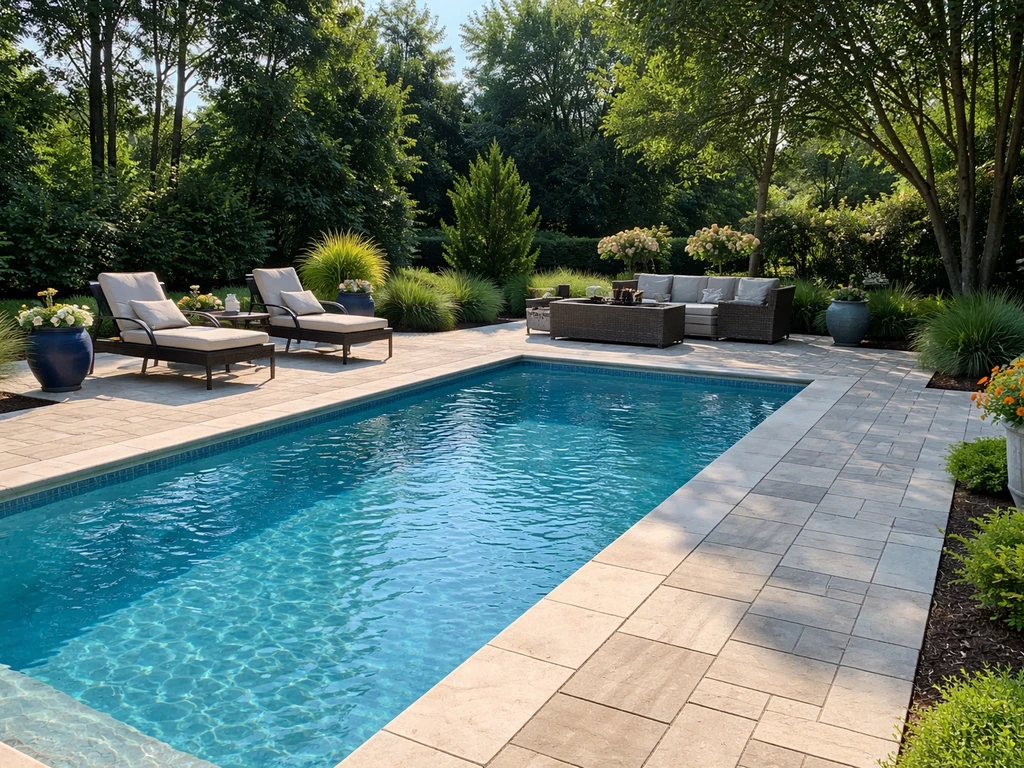
How to use outdoor living pool and patio reviews to shortlist contractors

Start by filtering reviews to your specific project type before you read a single word of feedback. A contractor with 200 glowing patio enclosure reviews is not automatically a good pick for a gunite pool build. On this site, you can narrow by contractor category (pool builder, patio company, deck installer, sunroom specialist, or full outdoor living contractor) and by region. North American markets vary enormously, so a company that dominates reviews in Phoenix may have zero presence or track record in Ontario.
Once you have a category-filtered list, look for volume and recency together. A contractor with 40 reviews spread across the last 18 months tells you more than one with 90 reviews where the most recent is from three years ago. Staffing changes, ownership transitions, and supply-chain shifts all affect quality, and reviews older than two years may describe a company that no longer operates the same way.
Build your shortlist by identifying three to five contractors who consistently get praised for the specific thing your project requires. If you are adding a pool and a surrounding patio together, look for reviews that mention integrated builds, not just standalone pools or standalone patios. Reviewers who describe multi-phase projects give you the most useful signal about how a company handles complexity.
- Filter by contractor type and region before reading any individual reviews.
- Sort by recency and look for consistent volume over the past 12 to 24 months.
- Flag contractors who get repeat praise for your specific project scope (pool only, patio only, or integrated outdoor living).
- Note whether the company has responded to negative reviews, and how they responded.
- Cross-reference your shortlist against BBB, Google, and any verified-license indicators on the platform.
What reviewers actually talk about (and why it matters)
Experienced homeowners who leave detailed reviews tend to evaluate contractors on a fairly consistent set of criteria. Knowing what those are helps you read quickly and spot patterns instead of getting lost in individual stories.
Build quality and materials

Reviewers who mention specific materials (pavers vs. poured concrete, gunite vs. fiberglass, composite vs. pressure-treated lumber, aluminum vs. vinyl enclosure framing) are giving you genuinely useful data. These details let you verify whether the materials described in reviews match what a contractor is proposing for your project. When reviewers praise durability two or three seasons after installation, that is a stronger signal than praise written the week the job was finished.
Timeline and schedule adherence
Missed deadlines show up in reviews more consistently than almost any other complaint. Pay close attention to how reviewers describe the gap between quoted timeline and actual completion. A pattern of "took two weeks longer than promised" is manageable. A pattern of "three months behind with no updates" is a structural problem with how the company manages projects. Permit delays are sometimes legitimately outside a contractor's control, but good contractors communicate those delays proactively, and reviewers notice the difference.
Communication

Communication complaints are the most reliable predictor of a difficult project experience. When multiple reviewers independently describe the same pattern (calls not returned, project managers hard to reach after deposit, no updates unless the homeowner pushed) take that seriously. Conversely, contractors who get consistent praise for proactive updates and responsive project managers tend to handle the inevitable surprises of outdoor construction far better.
Change orders and final cost
Change-order complaints are a major theme in outdoor living reviews. Reviewers who felt blindsided by cost increases usually describe one of two patterns: vague original scope that left room for add-ons, or mid-project pressure to approve changes without clear pricing breakdowns. Reviews that praise a contractor for transparent change-order handling (clear unit pricing, written approval before work continued) are flagging a company that has built a clean process around an inherently messy part of construction.
Warranty and post-completion service
Warranty reviews are the most underrated category. A reviewer who comes back six months after project completion to report that a paver settled, they called the contractor, and it was fixed in a week is telling you something critical about how the company operates long-term. Negative warranty reviews (ignored calls, disputes over what is covered, refused callbacks) are a major red flag regardless of how strong the initial installation reviews look.
Jobsite cleanliness and crew conduct
This sounds minor but it is not. Reviewers who describe messy jobsites, equipment left in driveways for weeks, or damaged landscaping not repaired after the project are signaling a company that does not sweat the details. Outdoor living projects touch your yard, your driveway, sometimes your home's exterior. A crew that leaves a clean site at the end of each day is also usually a crew that handles finish work carefully.
Pool builders vs. patio contractors vs. full outdoor living specialists
This is where a lot of homeowners waste time reading reviews for the wrong type of company. If you are comparing specific brands or contractors, reading probuilt pool and patio reviews can help you judge consistency in build quality, communication, and after-install support. Understanding the difference upfront saves you from shortlisting a company that simply cannot do what you need.
| Contractor Type | Best For | Typical Limitations | Review Focus Areas |
|---|---|---|---|
| Pool-only builder | Gunite, fiberglass, or vinyl liner pools; pool equipment systems | May subcontract or decline surrounding patio, landscaping, or enclosures | Excavation quality, equipment brands, finish work, code compliance |
| Patio/deck contractor | Paver patios, composite or wood decks, pergolas, outdoor kitchens | Usually not licensed for pool construction; limited on plumbing/electrical | Material quality, layout design, drainage, durability after winter cycles |
| Sunroom/enclosure specialist | Four-season rooms, screen enclosures, patio covers, retractable systems | Narrow scope; rarely handles pools or full hardscape builds | Frame quality, seal/weatherproofing, HVAC integration, energy performance |
| Full outdoor living contractor | Integrated pool, patio, landscaping, and structure builds in one contract | Higher coordination cost; quality varies more across trades they manage | Project management, subcontractor quality, timeline across phases, single-point warranty |
If your project is a pool only, read pool builder reviews and ignore the rest. If you want a pool surrounded by a paver patio with a pergola and an outdoor kitchen, a full outdoor living specialist who holds licenses across all those scopes (or manages licensed subs under one contract) is almost always the right call. The reviews for companies like these should reflect completed integrated projects, not just one component. Other contractor categories covered on this site, including prestige pool and patio specialists, probuilt-style full-service companies, and premier-tier design-build firms, often fall into the integrated specialist category and are worth comparing directly if your project spans multiple elements.
Questions to ask before you hire, based on what reviewers keep raising
These questions come directly from the patterns that show up repeatedly in detailed outdoor living reviews. Bring this list to every contractor conversation.
- What is the exact scope included in this quote, and what is explicitly excluded?
- Which permits are required for this project, who pulls them, and are they included in your price?
- What is your process when a change order is needed? Do you provide written pricing before work continues?
- Who is my day-to-day project contact, and what is your typical response time for questions or concerns?
- What is your realistic timeline for this project, and what are the most common causes of delays you have seen on similar jobs?
- What warranties do you provide on materials and workmanship, and how do I make a warranty claim?
- Can you provide references from projects similar in scope to mine, completed in the last 12 months?
- Are all subcontractors you use licensed and insured, and can I see proof?
- How do you handle jobsite cleanup during and after the project?
- What does your payment schedule look like, and do you require a large deposit upfront?
Red flags in reviews and how to verify the claims

Not every negative review is fair, and not every five-star review is real. Here is how to separate signal from noise and then verify what you find.
Review red flags worth taking seriously
- Multiple independent reviewers describing the same specific problem (not just vague dissatisfaction) across different project years.
- Complaints about change orders that arrived without written notice or pricing breakdowns before work was done.
- Patterns of communication breakdown after the deposit was paid but before the project started.
- Warranty complaints where the company stopped responding after the job was marked complete.
- Reviews that mention permit issues, failed inspections, or pressure from the contractor to skip inspections.
- A cluster of five-star reviews posted within a short window with minimal detail (possible solicited or fake reviews).
- Project photos that look professionally staged or inconsistent with the written review description.
- Unusually low bids described in reviews that ballooned significantly once the project started.
How to verify what reviews are telling you
Once a red flag surfaces, do not just take the review at face value. Search the contractor's name on BBB. BBB also lets consumers search its directory to view a business's accreditation status and BBB rating information [Search the contractor's name on BBB](https://www. bbb.
org/search). org to check their accreditation status and complaint history. The BBB tracks how businesses respond to complaints, and a company with multiple unresolved complaints is showing you something their star rating might not. If the contractor appears on Angi with an "Angi Approved" badge, that signals they passed a background check and maintain a rating of at least 3 stars, but it does not mean they are right for your specific project type.
Similarly, a Houzz "Verified License" badge confirms the license is on file, but you should still verify directly with your state or provincial licensing board that the license covers the scope of your project (pool construction and patio work often require different licenses). Houzz says it relies on and obligates professionals to display any required license information on their Houzz profiles where required by law.
For insurance, always request a certificate of insurance naming you as additionally insured, not just a verbal confirmation.
One pattern worth flagging specifically: a contractor who shows pressure tactics in response to negative reviews (threatening language, accusations, dismissive replies) is showing you exactly how they handle conflict during a live project. A contractor who responds to a critical review by acknowledging the concern, explaining what happened, and describing how it was resolved is a much safer hire.
How to read ratings, photos, and project details to estimate value
A 4.6 average means almost nothing on its own. The useful number is the ratio of detailed, specific reviews to short generic ones. Ten reviews that each describe a specific project, timeline, and outcome are worth more than fifty that say "great job, highly recommend." When you are comparing two contractors with similar averages, go to the written content.
Project photos are valuable but require some skepticism. Yelp's content policies allow photo removal based on guidelines, which means the photos you see on any platform are a curated set, not a complete portfolio. When photos are posted by the reviewer alongside a detailed written review, they carry significantly more weight than photos added by the business to its own gallery. Look for photos that show work-in-progress stages, not just finished beauty shots. Footings, framing, pool shell before plaster, drainage details: these in-progress photos tell you something about process and care.
Project descriptions in reviews also help you calibrate scope and value. When a reviewer mentions a specific dollar range alongside what was delivered (square footage of pavers, pool dimensions, structure type), you can start building a rough benchmark for what similar work should cost in your region. This is not a substitute for getting quotes, but it helps you spot when a bid is wildly below or above what others have paid for comparable work.
Next steps: site visits, quotes, and building a real apples-to-apples comparison

Once you have a shortlist of three to five contractors based on reviews, the next move is to get quotes structured the same way so you can actually compare them. This is where most homeowners make a costly mistake: they compare total prices from quotes that include completely different things.
Preparing for site visits
Before the site visit, pull up the reviews you found most useful for that contractor and note what past clients described about the consultation experience. Did the salesperson or project manager listen, measure carefully, and ask questions? Or did they arrive with a standard package and push toward it? During the visit, pay attention to whether the contractor is assessing your specific yard conditions (drainage, grade, soil type, access for equipment) or giving you a one-size pitch. The best outdoor living contractors tailor scope to site conditions, and that shows up in how they ask questions during the first visit.
Structuring quotes for a fair comparison
Ask every contractor to quote on an identical written scope document that you provide, or at minimum confirm that each quote includes the same line items. A legitimate apples-to-apples comparison requires that every quote addresses scope, materials (with specific grades or brands, not just categories), exclusions, allowances, timeline, permit responsibilities, insurance, warranty terms, payment schedule, and the change-order process. If one quote is 20 percent lower than the others, go line by line to find what it excludes before assuming it is a better deal. Unusually low bids with vague scope are one of the clearest patterns in outdoor living review complaints because the undefined scope becomes change orders that close the gap (or exceed it) before the project is done.
Creating your comparison document
Build a simple side-by-side comparison that forces parity. List every element of your project down the left column, then add a column for each contractor. Fill in what each quote includes, excludes, or is silent on. Silent items are exclusions until stated otherwise. This process usually reveals one or two contractors whose quotes are genuinely comprehensive and one or two who are quoting a stripped version of your project.
| Comparison Element | Contractor A | Contractor B | Contractor C |
|---|---|---|---|
| Scope clearly defined in writing | Check each quote | Check each quote | Check each quote |
| Specific materials/grades listed | Check each quote | Check each quote | Check each quote |
| Permits included (who pulls, cost) | Check each quote | Check each quote | Check each quote |
| Timeline with milestones | Check each quote | Check each quote | Check each quote |
| Change-order process in writing | Check each quote | Check each quote | Check each quote |
| Warranty terms (labor and materials) | Check each quote | Check each quote | Check each quote |
| Payment schedule | Check each quote | Check each quote | Check each quote |
| Certificate of insurance provided | Check each quote | Check each quote | Check each quote |
| License verified for project scope | Check each quote | Check each quote | Check each quote |
After you have filled in that comparison, go back to the reviews one more time with fresh eyes. The contractor whose quote is most complete and transparent is almost always the one whose reviews describe the smoothest project experience. That alignment between how a contractor quotes and how their past customers describe the experience is the clearest signal you have before signing anything.
If you are comparing full-service outdoor living companies that handle pools, patios, and structures under one contract, look at reviews for companies in adjacent categories on this site as well. If you are specifically researching premier 1 pool and patio reviews, compare how their listed projects match the kind of integrated pool-and-patio build you want.
If you want, you can also use a checklist for pool and patio design reviews to confirm the contractor is matching your style, layout, and site constraints. Contractors that position around design-focused or premium builds often attract more detailed reviewer feedback, which gives you richer data to work with. The more specific the review, the more useful it is for making your final call.
FAQ
How many outdoor living pool and patio reviews should I read before making a shortlist?
Aim for 15 to 30 reviews per contractor category you are considering, then stop once you see consistent patterns across at least two project cycles (for example, multiple installs reported within the last 18 months). If most of the “useful” reviews show up only after recent ownership or staffing changes, broaden to the prior period to see whether the quality change is stable.
What’s the best way to tell if a review is describing an integrated pool-and-patio build or a separate standalone job?
Prioritize reviews that mention the sequence of work (pool excavation, drainage, plumbing, shell, deck or patio base, then hardscape finishing) and whether trades were coordinated under one plan. If the reviewer only talks about one phase (only plaster, only pavers) without describing how the patio tied into the pool interface, treat it as partial evidence.
Do I really need to check both licensing and insurance, even if a contractor has badges on review platforms?
Yes. Platform badges usually verify something was filed, but they do not guarantee the license covers your specific scope (pool construction vs. patio hardscape vs. enclosure framing) or that coverage limits meet project risk. Always request proof that you are named additionally insured on the certificate and confirm the policy is active for the construction dates.
How can I evaluate a contractor’s warranty based on what reviewers say?
Look for warranty-specific timelines (how quickly the contractor responded and repaired) and whether the reviewer reports a written resolution (visit scheduled, repair plan, cost allocation). Be cautious with reviews that only say “they stand behind their work” without describing what failed, when it was reported, and what the outcome was.
What’s a fair way to interpret “permit delays” mentioned in outdoor living reviews?
Treat it as normal only if the reviewer also says the contractor warned them early, provided documentation or update cadence, and adjusted the schedule transparently. If the reviewer describes missed inspections, repeated resubmits, or surprise permit issues with no communication, that suggests a process problem rather than an unavoidable delay.
Should I trust project photos posted in reviews, or could they be misleading?
Use photos as supporting evidence, not proof. Give extra weight to photos that show work-in-progress details, like drainage layout, footings, pool shell stages before plaster, or framing before enclosure panels. If the photo content is only finished beauty shots with no matching timeline in the text, reduce confidence.
How do I spot when quotes are not actually comparable, even if the totals look close?
Check for missing line items and undefined selections. If one bid names specific materials and grades (not just categories), includes site prep scope (grading, soil corrections, removal), and clearly states exclusions (haul-away, landscape restoration, electrical service), it is easier to compare. Quotes that are silent on drainage, permit responsibilities, cleanup, or start-to-finish timeline often lead to change orders.
What should I ask during a first consultation to verify the contractor will tailor the scope to my yard?
Ask how they will handle your drainage and grade, what soil or base they plan for the patio under your expected load, and how equipment access affects excavation and hardscape staging. Their answers should reference your yard conditions specifically, not just describe a generic “standard build” process.
How can I reduce the risk of change orders after signing?
Require a written change-order process before work begins, including unit pricing, what approvals are required, and how costs are documented. Also request a detailed scope and allowance list (what is included, what is estimated, and what triggers an adjustment). If you see vague scope language in reviews like “we added things as we went,” prioritize contractors whose reviews describe transparent approvals.
If a contractor has mostly positive reviews but a few complaints, what red flags matter most?
Most concerning are repeated claims about communication breakdowns (no updates unless chased, deposits followed by silence), warranty non-responsiveness, or jobsite cleanup and repair issues. Less critical are one-off disagreements about aesthetics if the reviewer documents a resolved process. Patterns across multiple reviews, especially with similar wording, carry more weight than isolated negativity.
What’s the simplest way to use review ratios instead of just star ratings?
Compute a quick “specificity ratio”: count how many reviews include concrete details like materials, timeline deltas, dimensions, or documented issues, then divide by the total number of reviews you read. When two contractors have similar averages, the one with the higher specificity ratio is usually the more reliable installer.
Next Articles

Ohio Custom Pool and Patio Reviews: How to Compare Contractors
Learn how to trust Ohio custom pool and patio reviews, spot red flags, shortlist pros, and request accurate bids.
Oklahoma Pool and Patio Reviews: How to Choose a Contractor
Use verified Oklahoma pool and patio reviews to vet contractors, spot red flags, and choose by workmanship, communicatio
BMR Pool and Patio Reviews: How to Choose the Right Contractor
BMR pool and patio reviews guide: compare ratings, spot red flags, verify licensing, and shortlist the right contractor.