
Liferoom patio reviews are scattered across Google, ConsumerAffairs, BBB profiles, and dealer-specific pages, which makes it genuinely hard to get a clear picture before you sign a contract. For dealer-specific feedback, see life room patio reviews summarizing dealer ratings, common complaints, and verified project examples. The short version: LifeRoom is a branded patio and sunroom product line sold through Four Seasons Sunrooms' network of roughly 3,000 independently owned dealers across North America, and your experience will depend heavily on which local dealer you end up with. Aggregate scores range from around 2.1/5 on ConsumerAffairs (pulling from a broad pool of Four Seasons complaints) to a more moderate 3.9/5 on platforms like Birdeye for individual dealer locations. That spread tells you a lot: the product hardware itself draws consistent praise, but service, installation quality, and warranty follow-through vary sharply from one market to the next.
Liferoom Patio Reviews: Ratings, Pros, Cons & Comparisons

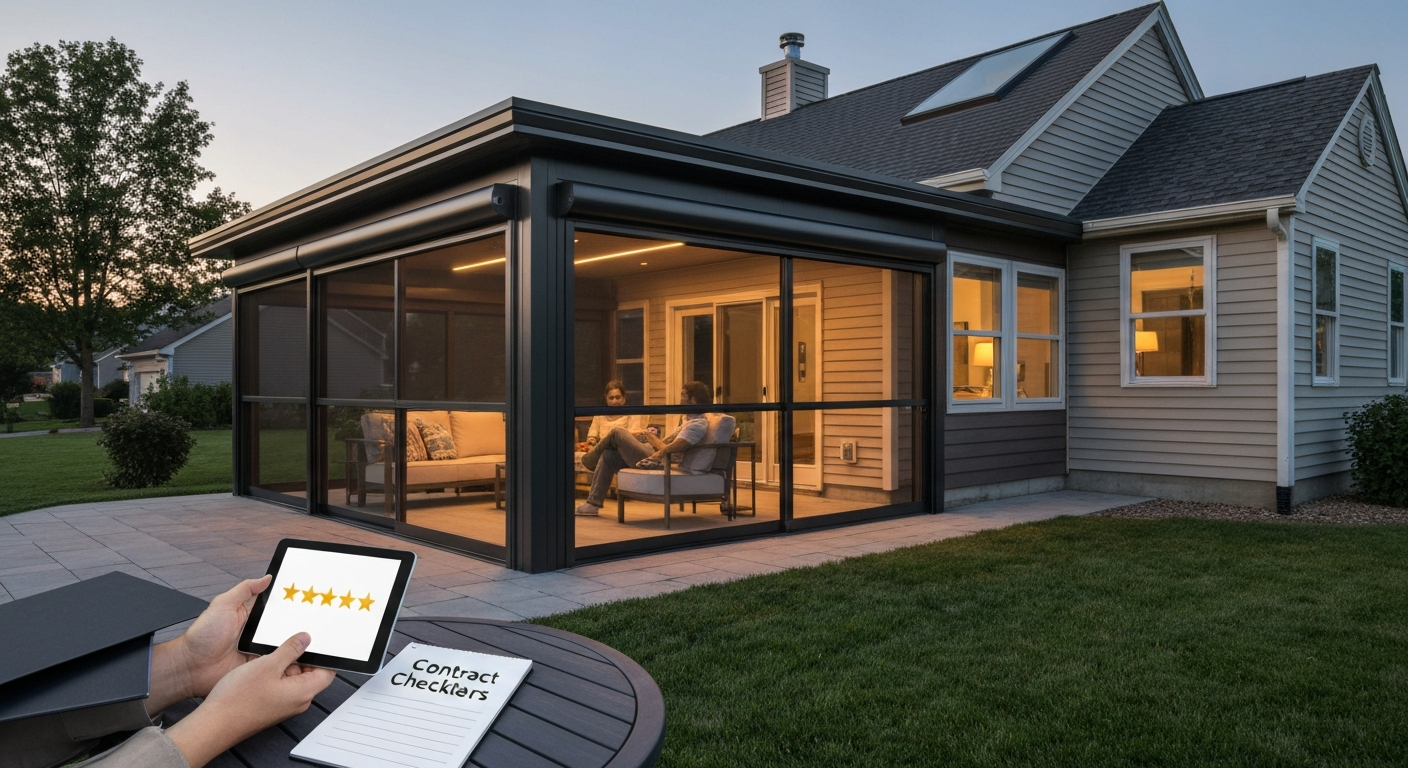
What this guide covers and who should read it
This article is for homeowners who are seriously considering a LifeRoom installation and want an honest, aggregated look at real customer experiences before committing. It covers the full picture: how reviews were gathered and filtered, what happy customers say, where recurring problems show up, a product-level breakdown of enclosures and sunrooms, a side-by-side comparison with regional competitors, red flags to watch for during the sales process, and a practical checklist for your contract. Whether you found a local Four Seasons dealer through a neighbor's referral or a Google search, this guide will help you ask the right questions and avoid the pitfalls that show up repeatedly in verified feedback.
How these reviews were collected and verified
Because LifeRoom is sold through independently owned dealers, reviews are spread across dozens of platforms and local business listings rather than one central page. To build a usable picture, I pulled from ConsumerAffairs (which aggregates complaints for Four Seasons Sunrooms and Windows), BBB profiles at the individual dealership level (including regional profiles such as the Harrisburg-area Four Seasons franchise), Birdeye listings tied to specific dealer addresses (the Holbrook location, for example, shows 36 Google reviews), and dealer-specific pages on HomeAdvisor, Houzz, and GuildQuality. Reddit threads and forum posts added qualitative context around recurring themes.
Not all of those reviews carry equal weight, so I applied a three-tier filter. Fully verified reviews have a confirmed project address, a dated contract or permit reference, or are posted under the reviewer's real name with a verifiable profile history. Partially verified reviews come from named accounts with corroborating detail (photos, contractor names, permit numbers mentioned) but lack a hard paper trail. Unverified reviews, including anonymous one-liners without project context, were noted for pattern recognition only and not used to anchor specific claims. You can reproduce this process yourself: search your local dealer's name on Google Maps, BBB.org, and ConsumerAffairs, then cross-reference the reviewer profile age, detail level, and whether photos or permit references appear.
Quick snapshot: what the aggregate ratings actually mean
A 2.1/5 on ConsumerAffairs sounds alarming, but that number needs context. ConsumerAffairs skews toward complainants; satisfied customers rarely seek out a complaint aggregator to leave a glowing review. The 3.9/5 visible on Birdeye for a specific dealer location is a more balanced signal because it pulls from Google reviews, which attract a wider cross-section of customers. Individual dealer BBB profiles range from A-rated with zero complaints to profiles showing multiple unresolved disputes, which underscores that the corporate brand and the local operator are two different things. The practical takeaway: a LifeRoom brand score means almost nothing without a score for your specific dealer, so look up the local operator's ratings separately before you evaluate the product.
What satisfied customers consistently say
Across the reviews I reviewed from multiple dealer locations, four themes come up repeatedly among customers who are happy with their LifeRoom installation.
- Product aesthetics and hardware quality: Customers frequently mention the motorized Smooth-Glide retractable screens, integrated LED mood lighting, and the Cool Mist and Soft Breeze climate features as genuinely impressive additions that transform how they use their outdoor space. The hardware feels premium, and most owners describe it holding up well after the first year.
- Dramatic improvement in livable space: A common thread is that homeowners who added a LifeRoom enclosure report using their patio year-round in ways they didn't before, particularly in moderate climates. This comes up in reviews from dealers in the Mid-Atlantic, Southwest, and Pacific Coast regions.
- Sales presentation and design process: When the local dealer is well-run, reviewers describe a thorough in-home consultation, clear 3D renderings of the finished project, and a sales rep who followed up without being pushy. Several customers specifically mention the design process as a highlight.
- Warranty transferability: Homeowners who have sold their homes note that the Four Seasons Limited Lifetime material warranty transfers to the new owner, which reviewers say added perceived value during the home sale.
Where things go wrong: recurring complaints and red flags
This is the section that matters most if you're still deciding. The complaints that appear most often across ConsumerAffairs reviews, BBB dispute filings, and forum threads fall into three broad categories.
Installation delays and scheduling problems
Long lead times between contract signing and installation start are the single most common complaint. Reviewers describe waiting four to eight months, and in some cases longer, after a deposit was paid. The issue often comes down to subcontractor scheduling at the dealer level, not a manufacturing backlog, which makes it hard to pin on the corporate brand but very much your local dealer's problem to solve. When you get a quote, ask explicitly for a written installation start date and a penalty clause if that date slips beyond 30 days.
Installation quality and post-install defects
Leaking seams, malfunctioning screen remotes, improperly anchored frames, and screens that bind or fail to retract smoothly all appear in multiple reviews. Some of these are manufacturing defects and fall under the Four Seasons Limited Lifetime warranty; others are installation workmanship issues that depend on the dealer's crew. The frustrating dynamic: warranty claims for manufacturing defects route through the dealer, and if the dealer is unresponsive, homeowners report being bounced between the local office and the corporate warranty line with little resolution. Several ConsumerAffairs reviewers describe going months without a repair visit after reporting a defect. ConsumerAffairs threads titled "Customer complaints mentioning LifeRoom / Four Seasons, ConsumerAffairs (sample complaint threads)" include multiple reports of months‑long delays for repairs and difficulty contacting dealers blank" rel="noopener noreferrer">Customer complaints mentioning LifeRoom / Four Seasons — ConsumerAffairs (sample complaint threads).
Warranty and service disputes
The Four Seasons Limited Lifetime material warranty covers refinishing, repair, or replacement in Years 1 through 3 at no cost, then shifts to excluding labor and shipping in Years 4 through 15, and drops to 50% of current wholesale cost plus labor and shipping from Year 16 onward. Warranty registration is required and must be activated by the dealer providing a warranty number. The complaints arise when dealers fail to register the warranty properly, when homeowners can't reach their dealer after a business closure or ownership change, or when the warranty remedy offered (material only, no labor) is far less useful than the customer expected. Before you sign, ask your dealer to show you the registered warranty number and confirm the corporate warranty phone line independently.
Product evaluation: patio enclosures
LifeRoom patio enclosures are the product line's flagship offering. The system uses motorized retractable screens on an aluminum frame, giving homeowners the ability to convert an open patio to a screened or partially enclosed space without a fully conditioned room addition. The Smooth-Glide screen mechanism is the most reviewed individual component, and the majority of early-period feedback is positive: screens operate quietly, the LED lighting integration is clean, and the motorized operation holds up through normal use.
Common issues specific to enclosures include screen track alignment problems after the first winter freeze-thaw cycle, remote control failures (typically a pairing or battery issue, but occasionally a motor fault), and frame-to-structure connections that work loose if the original installation was rushed. If you're in a high-wind region, Florida, coastal Texas, or similar, ask your dealer specifically about Miami-Dade NOA (Notice of Acceptance) compliance or Florida Product Approval status for the enclosure components. Many jurisdictions require these product approvals before issuing a permit, and the permit itself protects you if there's a structural failure claim.
- Buyer tip: Request the product approval or NOA number for the enclosure system and verify it independently on the Florida Building Code website or your local permit office's product approval database.
- Buyer tip: Ask to see a completed installation from the same crew that will work on your project, specifically looking at how the frame meets the existing structure at the header and at the floor transition.
- Buyer tip: Get the warranty number activated in writing before the installation crew leaves your property on the final day.
Product evaluation: sunrooms
Four Seasons LifeRoom sunrooms are a step up in complexity from a screened enclosure: they typically involve a thermally broken aluminum frame, glazed panels or skylights, and often electrical and HVAC tie-ins that trigger additional permits. Reviewer feedback on the sunroom product itself is generally positive for the glass quality and the reduction in UV exposure and outdoor noise. The integrated skylight option gets strong marks aesthetically, and several reviewers mention the room reads as a natural extension of the house rather than an add-on.
The issues with sunrooms tend to be more serious when they occur. Leaking around glass panel seams and at the roof-to-wall junction appear in multiple complaints, and these repairs are more disruptive and expensive than a screen adjustment. Condensation problems inside insulated glazing units, sometimes called fogging between the panes, show up in reviews for installations that are three to seven years old. This is a manufacturing defect covered under the warranty material terms, but the labor-and-shipping exclusion after Year 3 means a replacement panel can still cost the homeowner several hundred dollars in service fees. On the permitting side, sunrooms that add conditioned living space require a building permit and often separate electrical and mechanical permits in most jurisdictions, including Atlanta and most Florida counties. If your dealer is offering to skip the permit to save time, that's a hard no: an unpermitted addition creates significant liability when you sell the home.
- Buyer tip: Confirm which trades (electrical, HVAC, roofing) are being subcontracted and ask to see each subcontractor's license and insurance certificate before work begins.
- Buyer tip: In hurricane-prone markets, require sealed engineering plans and confirm that the sunroom's structural attachment method meets local wind-load requirements.
- Buyer tip: Ask specifically whether the glazing units carry their own manufacturer warranty separate from the Four Seasons frame warranty, and get that in writing.
- Buyer tip: Request a final inspection sign-off from the local building department as a condition of your final payment.
How LifeRoom compares to regional competitors
LifeRoom doesn't operate in a vacuum. Depending on your region, you're likely getting quotes from regional patio room builders alongside or instead of a Four Seasons dealer. Companies like American Patio Rooms and Champion Patio Rooms operate with a similar dealer-network model, while operators like David Wesley's Patio Rooms work in tighter geographic footprints with more direct owner involvement. Comparing them on the same criteria, rating, service responsiveness, warranty terms, lead time, and most common complaint, puts the LifeRoom proposition in better perspective.
| Brand / Operator | Typical Aggregate Rating | Warranty Model | Typical Lead Time (reported) | Most Common Complaint |
|---|---|---|---|---|
| LifeRoom (Four Seasons dealer network) | 2.1–3.9/5 (varies by dealer) | Four Seasons Limited Lifetime (material); labor excluded after Year 3 | 4–8 months (dealer-dependent) | Service delays, warranty dispute routing, installation defects |
| American Patio Rooms | Varies by region; check local BBB/Google | Dealer-issued warranty; terms vary by location | 6–12 weeks (regional average) | Communication gaps post-deposit |
| Champion Patio Rooms | Varies by franchise; check local Google/BBB | Manufacturer-backed; confirm transferability | 8–16 weeks (regional) | Sales-to-installation handoff issues |
| David Wesley's Patio Rooms | Generally positive; tighter geographic coverage | Owner-operated; inquire directly | 4–10 weeks (smaller volume) | Limited service area coverage |
| Rooms To Go Patio Pinecrest | Retail showroom model; product reviews vary | Manufacturer warranty on furniture/product | In-stock to 6 weeks delivery | Product quality consistency, delivery damage |
| Rossa Kitchen and Patio | Limited aggregate data; check local Google | Contractor warranty; request written terms | Project-dependent | Scheduling and subcontractor coordination |
| Pour Decisions Patio and Kitchen | Niche/local; limited aggregate data | Contractor warranty; verify scope | Project-dependent | Availability and scope creep |
| Vice Versa Patio and Lounge | Hospitality/venue model; limited contractor reviews | Not applicable (venue) | N/A | N/A |
The honest comparison: LifeRoom's main advantage over purely local operators is the standardized product design and the corporate-backed material warranty. Its main disadvantage is that quality control is entirely dependent on the dealer in your ZIP code. Regional operators like American Patio Rooms and Champion Patio Rooms have similar structural limitations. See Champion Patio Rooms reviews for regional performance comparisons. Owner-operated builders with tight service areas tend to score better on communication and responsiveness, simply because there's less bureaucracy between you and the person accountable. If your region has a well-reviewed local patio room builder with verifiable references, that may outperform a national brand with a mediocre local dealer.
Key decision criteria before you sign anything
After going through a large volume of reviews and complaints, the factors that separate a successful LifeRoom project from a frustrating one come down to the same five things every time.
- Dealer track record: Look up the specific dealer's Google rating, BBB profile, and any ConsumerAffairs entries before you sit down for a quote. A three-year-old dealer with 10 reviews is a different risk than a 15-year operator with 200 reviews and a pattern of resolved complaints.
- Permit handling: Confirm in writing who pulls the permits (it should always be the licensed contractor), which permits are required for your specific project type, and that the final payment is conditional on passing all required inspections.
- Warranty activation and escalation path: Get the warranty registration process in writing before installation starts. Confirm the corporate warranty phone number independently and understand what happens if your local dealer closes or changes ownership.
- Written installation timeline: A vague 'eight to twelve weeks' verbal estimate is not a contract term. Push for a written start date, a completion window, and a defined escalation process if dates slip.
- Payment schedule tied to milestones: A deposit is reasonable (10–20% is typical). Staged payments tied to permit issuance, frame installation, and final inspection protect you far better than a large upfront payment.
Red flags to watch for during the sales process
- The dealer discourages pulling permits or suggests you 'don't need one' for a project that adds enclosed living space.
- You're asked for more than 30–40% upfront before any materials are ordered or permits are filed.
- The sales rep cannot provide the names and license numbers of the subcontractors who will handle electrical or HVAC work.
- No written warranty registration process is offered at contract signing.
- The dealer cannot provide references from completed projects in your specific region with phone numbers you can call.
- The contract does not include a defined completion date or a clause addressing what happens if delays exceed 30 or 60 days.
- The dealer pressures you to sign at the first appointment with a same-day discount that expires immediately.
Questions to ask your LifeRoom dealer before signing
- Can you provide the license number and insurance certificate for every contractor and subcontractor who will work on my project?
- Which permits are required for this project type in my jurisdiction, and who is responsible for obtaining them?
- What is the written installation start date and the completion window, and what is the remedy if those dates are missed?
- How is my warranty registered, and what is the warranty number I will receive? Can I verify it through Four Seasons corporate directly?
- What is the escalation path if I have a post-installation defect and cannot reach your office?
- In my region (especially if in Florida or a high-wind area), does the enclosure or sunroom system carry a Florida Product Approval number or Miami-Dade NOA?
- Can you provide three references from completed LifeRoom installations in the past 18 months, including at least one project similar in scope to mine?
Contract checklist: what to confirm before you sign
- Full legal business name, license number, and physical address of the contracting entity
- Complete product specification: model name, dimensions, frame finish, screen type, lighting package, and any optional glazing or skylight details
- Itemized price with labor, materials, permit fees, and any applicable HOA submission fees listed separately
- Payment schedule tied to defined milestones (deposit, permit issuance, frame installation, final inspection)
- Written installation start date and projected completion date
- Penalty or remedy clause for delays beyond the agreed window
- Warranty registration process and timeline, including the dealer's obligation to provide a warranty number
- Clear description of which work is excluded from the contract scope (HVAC, electrical rough-in, concrete prep)
- Change-order procedure in writing, with a requirement for written authorization before any scope changes
- Final payment contingent on passing all required building inspections and a homeowner walk-through sign-off
Next steps: how to get local estimates and verify dealer quality
Start by identifying the Four Seasons authorized dealer or dealers in your market. The Four Seasons website lists factory-authorized dealers by ZIP code, and you can cross-reference that list against Google Maps, the BBB's business directory, and Birdeye to pull ratings in parallel. For each dealer you're considering, run a separate search on ConsumerAffairs using the dealer's business name alongside 'Four Seasons. See David Wesley's patio rooms reviews for detailed dealer-level insights and firsthand accounts. ' Request at least three quotes from different dealers or competing patio room builders in your region so you have a baseline for pricing and lead time. For an additional point of comparison, check Rooms To Go Patio Pinecrest reviews to see local installer feedback and how another national retailer's patio offerings perform in real-world installs. Regional competitors like American Patio Rooms and Champion Patio Rooms may be quoting the same project type and are worth including in your comparison set.
Before your in-home consultation, visit your local building department's website (or call them directly) to confirm which permits are required for the project type you're considering. Cities like Atlanta list additions, alterations, decks, and screened porches as separately permitted project categories, and Florida counties including Miami-Dade require product approvals and sealed plans for enclosures and sunrooms. Knowing the permit requirements before you meet with a dealer lets you immediately flag any contractor who tries to minimize or skip the permitting process.
Once you have quotes in hand, compare them on the criteria that matter: not just total price, but payment schedule, warranty activation process, permit handling responsibility, and written timeline. The dealer who gives you the clearest, most specific answers to those questions is almost always the better choice, regardless of whether they quoted slightly higher. The reviews on this site cover LifeRoom dealers alongside other regional patio room builders, sunroom contractors, and outdoor living specialists across North America. For comparisons with a local full-service remodeler, see Rossa Kitchen and Patio reviews for customer feedback on design, installation, and service. Reading dealer-specific reviews for your market before your first appointment is one of the highest-value things you can do before spending five figures on a patio project. For additional perspectives, see vice versa patio & lounge reviews to compare dealer responsiveness and product issues in your region. Also check Pour Decisions Patio & Kitchen reviews for local installer feedback and service patterns in your area.
FAQ
What primary data types are required to produce a publication-ready article aggregating Liferoom patio reviews across North America?
Collect these data types: 1) Raw customer reviews (text, star rating, date, reviewer profile) from Google, Yelp, BBB, ConsumerAffairs, Houzz, HomeAdvisor, Birdeye and dealer pages; 2) Dealer-level metadata (dealer name, address, service area, accreditation, years in business, installer photos); 3) Manufacturer/dealer warranty texts and registration procedures (Four Seasons / LifeRoom corporate warranty pages and dealer warranty practices); 4) Product specification sheets (LifeRoom features, options, SKUs, technical PDFs, accessory lists); 5) Service records/complaint outcomes when public (BBB complaint resolution notes, ConsumerAffairs case updates); 6) Lead-time and pricing ranges as reported by dealers or quoted customers (range, median, note source); 7) Permit/inspection requirements by jurisdiction (sample municipal permit checklists); 8) Third‑party verification signals (purchase receipts, contract scans, job completion dates) when available; 9) Competitor product and dealer info for named sibling brands (Rooms To Go Patio Pinecrest, Pour Decisions, Rossa, Vice Versa, American Patio Rooms, Champion, David Wesley’s, regional builders). For each datum, capture source URL, capture date, and whether the item ties to a verified purchase or dealer location.
Which authoritative sources should be used and cited for credibility and verification?
Use a mix of high-authority and primary sources: 1) Manufacturer corporate pages (Four Seasons Building Products / Four Seasons Sunrooms product and warranty pages) for official specs and warranty text; 2) Local dealer/factory-authorized dealer pages for installation and lead-time claims; 3) Government/municipal permit pages (city/county permit checklists, Miami‑Dade NOA guidance) for permit requirements; 4) Reputable consumer review aggregators and platforms (BBB, ConsumerAffairs, Google Business, Yelp, Houzz, HomeAdvisor, Birdeye) for customer feedback and complaint records; 5) Academic and technical literature on review-authenticity methods (for verification protocol design); 6) Regional trade or local news stories that document service issues or noteworthy litigation; 7) Dealer-level accreditation records and licensing boards where applicable. Always include direct URLs and capture dates for transparency.
How should reviews be collected and organized to avoid bias and duplication?
Procedure: 1) Define the scope (date range, geographies, dealer IDs, product keywords LifeRoom/Life Room/LifeRoom by Four Seasons); 2) Pull reviews from each platform with reviewer name, review text, rating, date, dealer location, and URL; 3) Normalize fields and canonicalize dealer locations (use address or dealer ID) to map reviews to the right installer; 4) De-duplicate by exact text/hash and by matching reviewer+date+dealer; 5) Tag each review with source platform and collection date; 6) Flag platform-only aggregated reviews vs. dealer-hosted verified reviews; 7) Maintain raw archives (screenshots/HTML) for later verification and to support quoting; 8) Note sampling limits (APIs, platform access) and declare them in methodology.
What verification steps and tiers should be applied to classify review reliability?
Use a multi-tier verification protocol: 1) Fully-verified: review accompanied by purchase evidence (invoice/contract/photo of installation date), or posted on a platform with verified-purchase mechanism (GuildQuality, HomeAdvisor) or direct dealer-supplied warranty registration confirmation; 2) Partially-verified: reviewer has a credible public footprint (active Google/Yelp profile with history) and details in the review that match known dealer timelines or photos; 3) Unverified/suspect: anonymous reviews, accounts with one review, linguistic patterns of fraud, or conflicting metadata. Verification checks: profile age/behavior, linguistic anomalies (copied text, generic praise), cross-referencing dates with permit records or local posts, and direct dealer confirmation when possible. Document the proportion of reviews in each tier and exclude or label suspect reviews in aggregate scoring.
Which metrics and summary statistics should be reported for Liferoom and each competitor?
Report these core metrics per brand/dealer: 1) Aggregate rating (range/platforms used, median and mean where appropriate); 2) Volume of reviews and timeframe (number of reviews/period); 3) Verified-review share (percentage fully- or partially-verified); 4) Common themes / topic frequencies (installation delays, warranty/service, product defects, communication); 5) Typical lead time ranges reported (min/median/max, note market variability); 6) Warranty summary (manufacturer warranty terms plus dealer-level service policy); 7) Typical price drivers (size, glazing, HVAC, electrical, permits, site prep); 8) Resolution rate on complaints where available (BBB closed/resolved counts); 9) Regional variance notes (markets where ratings differ significantly). When exact numeric claims are required, instruct readers how to obtain them from local quotes or published reports rather than inventing numbers.
How should Liferoom be compared to sibling/regional competitors in a compact table?
Create a compact comparison table with columns: Brand/Dealer | Aggregate Rating (platforms listed) | Service Model (factory-authorized dealer network vs. single-location) | Warranty (manufacturer + dealer obligations) | Typical Lead Time (give ranges or 'varies—get quote') | Common Complaints (top 2–3). For each cell: cite platform(s) used for rating, link to warranty source, and include a short caveat about regional variation. If exact lead-time or rating counts aren't uniformly available, show ranges and give readers the verification step to request local quotes and dealer references.
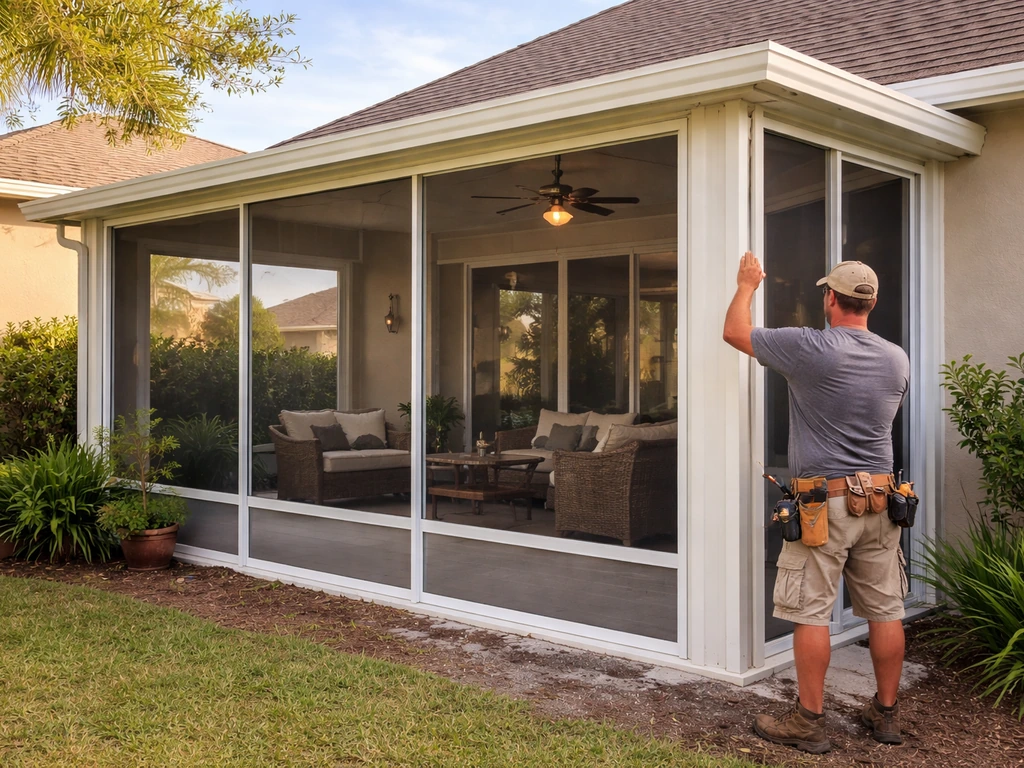
David Wesley Patio Rooms reviews breakdown: pros, cons, fit checklist, what to ask, and red flags to watch.
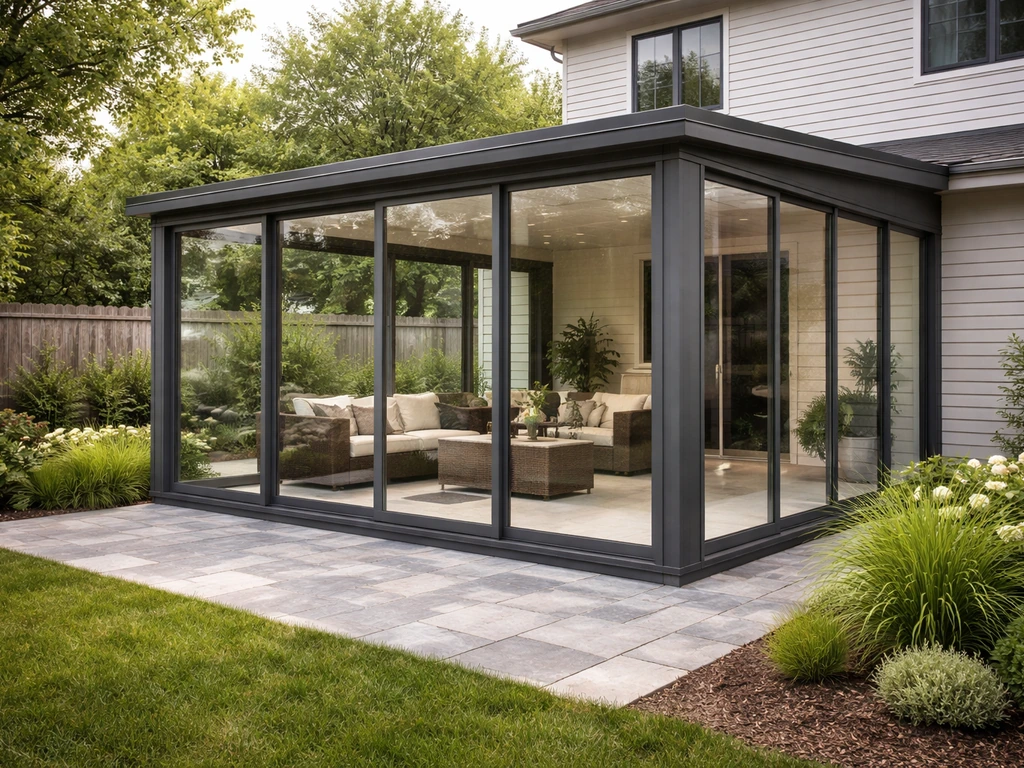
Champion patio enclosure reviews breakdown: how to judge ratings, installers, warranties, costs, and pick the right serv
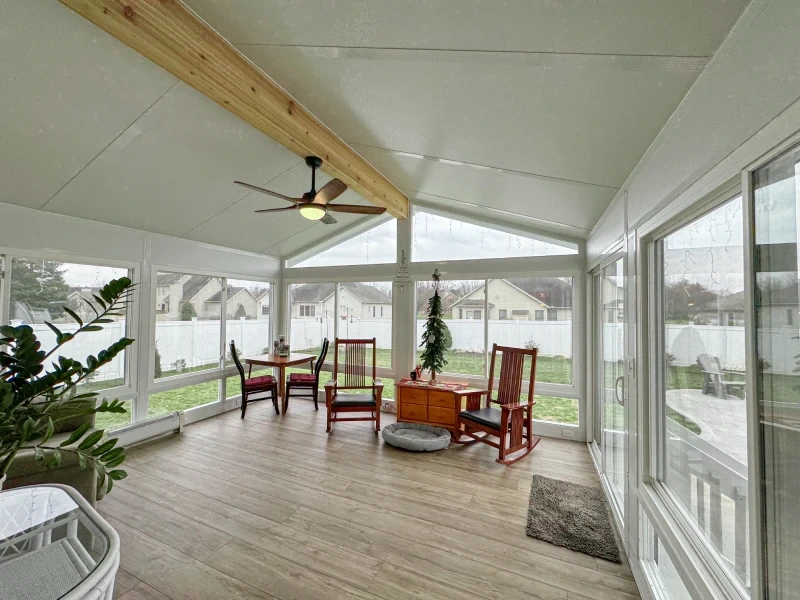
American Patio Rooms reviews guide: what to check on design, permits, install quality, warranty, pricing, and regional f